Algeria
 Egypt
 Libya
 Sudan
 Tunisia
 Benin
 Burkina Faso
 Cabo Verde
 Côte d'Ivoire
 Ghana
 Guinea
 Guinea-Bissau
 Liberia
 Mali
 Mauritania
 Niger
 Nigeria
 Senegal
 Sierra Leone
 The Gambia
 Togo
 Cameroon
 Central African Republic
 Chad
 DR Congo
 Equatorial Guinea
 Gabon
 Republic of the Congo
 São Tomé and Príncipe
 Burundi
 Comoros
 Djibouti
 Eritrea
 Ethiopia
 Kenya
 Madagascar
 Malawi
 Mauritius
 Mozambique
 Rwanda
 Seychelles
 Somalia
 South Sudan
 Tanzania
 Uganda
 Angola
 Botswana
 Eswatini
 Lesotho
 Namibia
 South Africa
 Zambia
 Zimbabwe
Normalisation advances at the top, but not in people’s minds
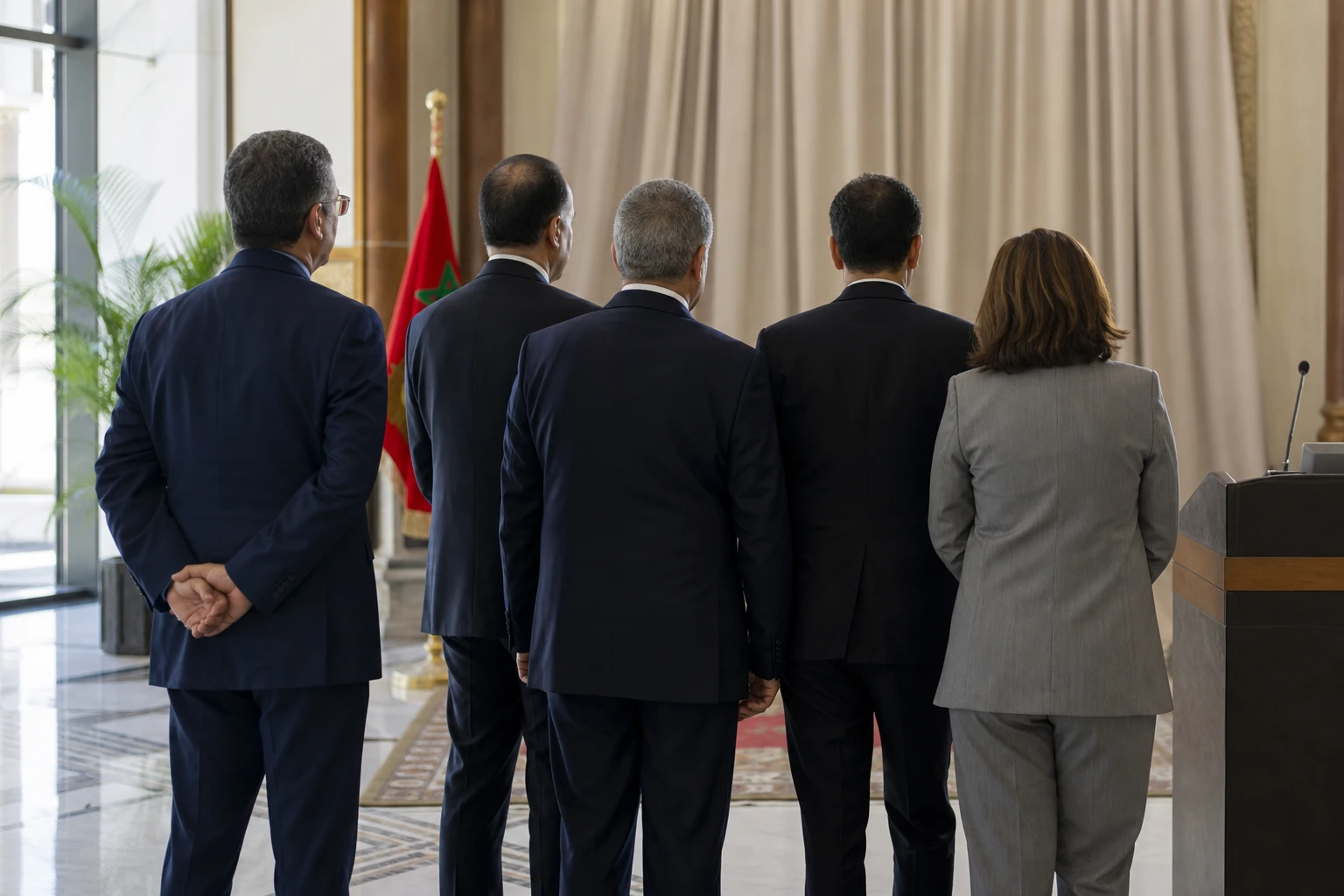
In Rabat, relations with Israel remain a matter of state power rather than national consensus. On paper, diplomatic and security channels have continued to function. Public opinion, by contrast, remains markedly cooler. The latest Arab Opinion Index shows that 89% of Moroccans surveyed reject recognising Israel, while 6% are in favour. The survey, conducted in 15 Arab countries between November 2024 and August 2025, places Morocco among the most hostile publics towards normalisation, on a par with Qatar on this issue.
This gap is nothing new. Since official relations resumed in December 2020 under the Abraham Accords, Morocco’s executive has maintained a policy of cooperation with Israel, while a large part of society has continued to support the Palestinian cause. The joint declaration in Rabat in December 2020 restored full official contacts and reopened diplomatic missions.
Two cases, one shared unease
The unease resurfaced in the spring and then at the end of summer 2026, with two separate cases. In March, recordings attributed to Ziv Agmon, then spokesman and acting chief of staff to Benjamin Netanyahu, circulated, containing insulting remarks about Israeli officials of Moroccan origin. Several Israeli media outlets reported that he had used openly derogatory terms, including the phrase “retarded Moroccan” and the image of a “baboon”.
In August, a new legal case targeted Sara Netanyahu. Rami Ben Hamo, a long-serving employee at the prime minister’s office and official residence, brought a claim before the Jerusalem Regional Labour Court. He is seeking 450,000 shekels, or about €115,000, and says he endured repeated humiliation for years, including a derogatory remark about his Moroccan origins. Israeli and Moroccan media have also reported that he describes gruelling working conditions and degrading tasks.
Taken together, the two episodes feed a longstanding political reading in Morocco: normalisation is a state decision, but it has never turned into social acceptance. Moroccan public debate remains highly sensitive to anything touching on national dignity, the memory of the Moroccan diaspora and the place of the Palestinian cause in the country’s political narrative. Rabat’s official response has been silence, reinforcing the impression that the issue is managed at the top, far from open debate.
What this means in practice for Morocco
On the diplomatic front, however, there is no sign of a freeze in cooperation. In early January 2026, Israel and Morocco signed a joint military work plan for 2026, following the third meeting of their joint military committee in Tel Aviv. The Israeli military described Morocco as a key regional stability partner, while several media outlets confirmed that the military channel remained active.
This dynamic has very concrete implications. It affects defence ties, training, the exchange of expertise and, more broadly, the security architecture of a Maghreb where alliances remain closely scrutinised. For the Moroccan government, these ties are part of a broader strategy: diversifying partnerships, consolidating diplomatic support and preserving room for manoeuvre on Western Sahara. For part of the public, by contrast, cooperation with Israel remains hard to accept as long as the situation in Palestine remains explosive.
The Kingdom is nevertheless trying to maintain a principled position on Al-Quds and the two-state solution. On 5 August 2026, Morocco took part in a ministerial meeting in Amman on protecting Al-Quds and its holy sites. The Moroccan delegation was led by Justice Minister Abdellatif Ouahbi. The final communique brought together several Arab countries in criticising Israeli measures in occupied Jerusalem and reaffirmed the importance of the role of the Al-Quds Committee, chaired by Mohammed VI.
Morocco’s balancing act is being closely watched in the region
Morocco is caught between two positions. On one side is a policy of continuity, keeping contact with Israel and building on the strategic gains of 2020. On the other is a society that is largely sceptical of, or even hostile to, recognising Israel. This divide is not unique to Morocco, but it is particularly visible there because the country chose rapid and overt normalisation at state level.
For its North African neighbours, the stakes go beyond relations between Rabat and Tel Aviv. The issue says something about how the continent’s states balance public opinion, security calculations and results-driven diplomacy. It also shows that relations with Israel are not shaped only in foreign ministries, but also by perceptions of dignity, respect and reciprocity. In Morocco, this has now become a central issue: as long as cases such as those in March and August 2026 continue to circulate, they will keep fuelling doubts that are already widespread in the country.
The next phase will play out on several fronts: managing domestic unease politically, continuing military cooperation and the Palace’s ability to maintain a regional policy without opening a wider conflict with a public that has already delivered its verdict.