Algeria
 Libya
 Morocco
 Sudan
 Tunisia
 Benin
 Burkina Faso
 Cabo Verde
 Côte d'Ivoire
 Ghana
 Guinea
 Guinea-Bissau
 Liberia
 Mali
 Mauritania
 Niger
 Nigeria
 Senegal
 Sierra Leone
 The Gambia
 Togo
 Cameroon
 Central African Republic
 Chad
 DR Congo
 Equatorial Guinea
 Gabon
 Republic of the Congo
 São Tomé and Príncipe
 Burundi
 Comoros
 Djibouti
 Eritrea
 Ethiopia
 Kenya
 Madagascar
 Malawi
 Mauritius
 Mozambique
 Rwanda
 Seychelles
 Somalia
 South Sudan
 Tanzania
 Uganda
 Angola
 Botswana
 Eswatini
 Lesotho
 Namibia
 South Africa
 Zambia
 Zimbabwe
When a tunnel runs beneath the city’s memory
In Cairo, the question is not simply how to move more passengers. It is also how to dig, build and modernise without damaging what is oldest in the Egyptian capital. In Historic Cairo, listed as a World Heritage site since 1979, every construction project affects daily flows, the way the city centre is used and an urban memory stretching back centuries.
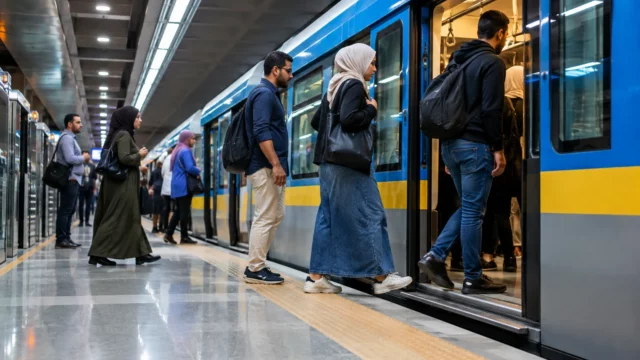
Egypt sees the project as part of a clear strategy: easing congestion in the megacity, strengthening public transport and linking growth centres in the Cairo region more efficiently. The Cairo Metro is already a central pillar of this strategy, while Line 4 is intended to extend it westwards, through the historic centre and towards the east of the capital. According to official documents, the line’s second phase is to link Fustat with New Cairo over 26.9 kilometres, with 21 stations, 15 underground and six elevated.
But in Cairo, infrastructure never advances on its own. It cuts through a dense, layered and fragile urban fabric, where mobility intersects with heritage, homes, businesses and the habits of a historic centre that remains inhabited. That is precisely why Line 4 has become a matter of urban governance, not just civil engineering.
A technical project with heritage and economic stakes
Egyptian authorities present Line 4 as a project of strategic importance to the capital. The official text on major projects lists it among the “green” transport schemes intended to support more sustainable urban mobility in Greater Cairo. The second phase is to extend the line for 26.9 kilometres, with 21 stations between Fustat and New Cairo. Another government document refers to a total of four phases, the second of which links Fustat to New Cairo.
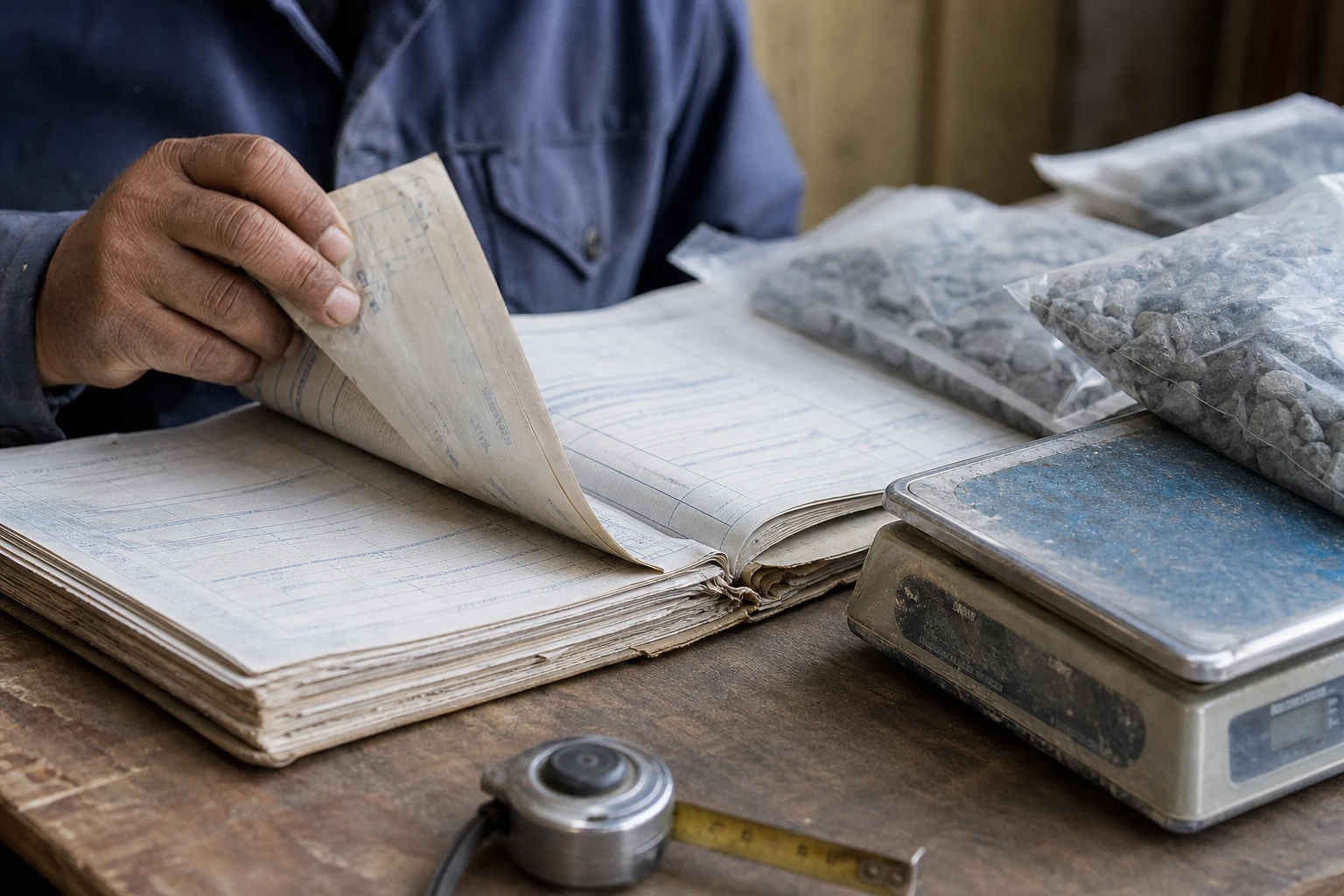
The route does not pass through an ordinary area. Historic Cairo contains an exceptional number of monuments and historic urban areas, and UNESCO notes that the district brings together layers of history, inherited street patterns and buildings from different periods. A technical document from JICA, a partner in the project, has long highlighted the area’s geotechnical and heritage sensitivities. The same concerns led the World Heritage Committee to require heritage impact assessments before any irreversible decisions are made concerning Cairo Metro Lines 4 and 6.
This scrutiny is not theoretical. In its recent decisions, UNESCO noted the submission of a heritage impact assessment for Lines 4 and 6, while calling for dedicated technical studies on each component of the project. The organisation also stressed the need to consider alternatives for certain sensitive locations, particularly around Al Azhar Park. In other words, the debate does not pit development against conservation in the abstract: it requires infrastructure to be designed differently.
The issue also has a very real economic dimension. The Egyptian government is banking on cultural tourism and Greater Cairo’s appeal. Official documents cite a target of 30 million tourists a year by 2030, while recent government figures show the Cairo Metro already carries several million passengers a day. For a capital of more than 20 million people in its metropolitan area, the equation is simple: without more efficient public transport, congestion takes a toll on working time, logistics costs and access to services.
What Line 4 says about Egypt today
Line 4 tells a story that goes beyond Cairo’s underground. It reflects Egypt’s ambition to modernise its major cities through high-profile projects that are funded and backed politically. It also highlights the importance of the Egyptian-Japanese partnership, with JICA at the heart of the technical and financial arrangements for several sections of the project. This co-operation matters to Cairo, but it also matters across the continent, where many capitals now have to balance network expansion, budget constraints and the protection of built heritage.
For residents, the stakes are immediate: less time lost in traffic jams, smoother connections and better service to the neighbourhoods along the route. For shopkeepers and local residents, by contrast, the construction phase means disruption, changed access and uncertainty over local traffic. For the authorities, Line 4 is a test of credibility. They must prove that a major project can improve mobility without further weakening a historic centre already under pressure from urban growth, traffic and the constraints of old buildings.
The decisive factor will therefore be the quality of execution. Impact assessments, route choices, excavation methods and vibration monitoring must remain central to oversight. In Historic Cairo, a tunnel is never merely an underground structure. It is also an intervention in a city where history is not a backdrop, but a living fabric. Egypt is now seeking to run a metro line through that fabric without upsetting the balance between heritage and modernisation.