Algeria
 Egypt
 Libya
 Morocco
 Sudan
 Tunisia
 Benin
 Burkina Faso
 Cabo Verde
 Côte d'Ivoire
 Ghana
 Guinea
 Guinea-Bissau
 Liberia
 Mali
 Mauritania
 Niger
 Nigeria
 Senegal
 Sierra Leone
 The Gambia
 Togo
 Cameroon
 Central African Republic
 Chad
 DR Congo
 Equatorial Guinea
 Gabon
 Republic of the Congo
 São Tomé and Príncipe
 Burundi
 Comoros
 Djibouti
 Eritrea
 Ethiopia
 Kenya
 Malawi
 Mauritius
 Mozambique
 Rwanda
 Seychelles
 Somalia
 South Sudan
 Tanzania
 Uganda
 Angola
 Botswana
 Eswatini
 Lesotho
 Namibia
 South Africa
 Zambia
 Zimbabwe
Transparency remains on hold in Antananarivo
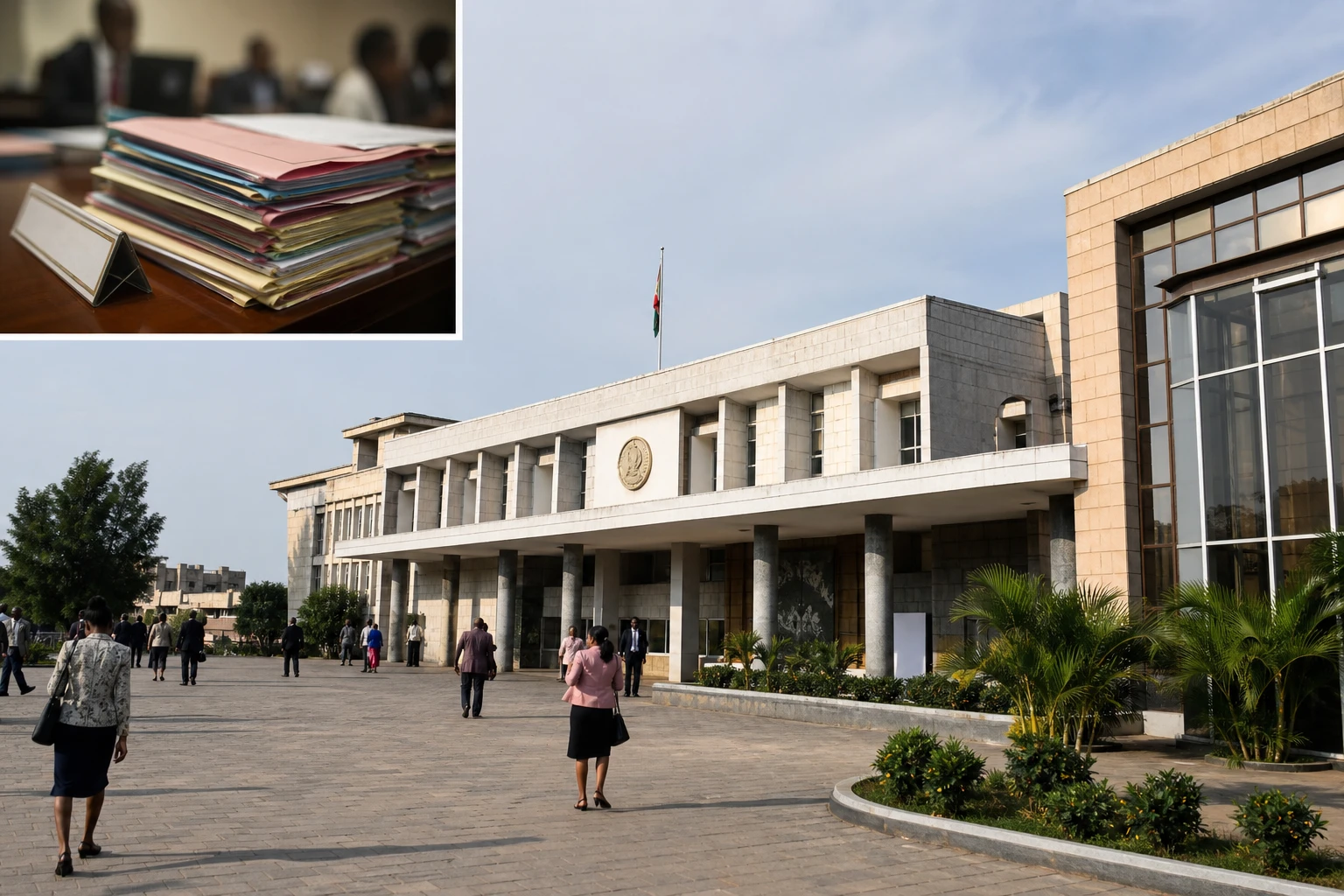
In Madagascar, parliamentary business moves quickly when it comes to bills deemed urgent. But when a proposal concerns administrative transparency, the machinery jams. The extraordinary session that opened at the National Assembly on 25 August 2026 illustrates this paradox: seven bills are under consideration, while a measure awaited for years, on access to information of a public nature, remains off the agenda.
The issue is not merely technical. It concerns how citizens, journalists, local elected officials and civil society organisations can scrutinise the administration’s work, track the use of public funds and demand accountability. In a country where calls for accountability are strong, the right to access public documents has become a political test as much as a legal undertaking.
An old bill championed by civil society and already discussed in committee
The bill on access to information of a public nature was submitted to the National Assembly on 3 December 2025, then raised in parliamentary proceedings during the following session. In spring 2026, discussions brought together MPs, technical staff from the relevant ministry and civil society organisations to revise sensitive provisions, particularly closed-door sessions and access to information held by the lower house itself.
This sequence says a great deal about the bill: it exists, has already circulated and has been discussed. Yet it was not included among the priorities of the second extraordinary session of 2026. On 25 August, the National Assembly confirmed that seven bills would be considered, but none concerned public information. Several Malagasy media outlets noted the same blind spot.
For those involved in the issue, the omission looks like a quiet postponement. The NGO Ilontsera, heavily involved in the consultations, describes the bill as one that is needed to clarify what the administration may keep secret, what must be disclosed, and under what conditions the National Assembly itself should make its documents available. This is important: without regulated access to information, transparency remains a general promise, not a concrete right.
What the bill’s absence means
The issue goes beyond Parliament. In Madagascar, Article 10 of the Constitution guarantees freedom of expression and information, but this principle needs practical rules to operate in administrative life. In 2025, UNESCO catalogued Madagascar’s framework for the right of access to information, while noting that bill No. 017/2025 was still under consideration. In other words, the country has the principle, but not yet a fully operational system.
In practice, the lack of a timetable perpetuates several very real constraints. For citizens, it prolongs reliance on informal channels to obtain administrative documents. For journalists, it slows access to the data needed to scrutinise a public contract, a budget, a recruitment decision or a local ruling. For elected officials, it also limits their ability to oversee the executive. In a country where the fight against corruption is central to public debate, this delay carries significant weight.
The contrast is all the sharper because other bills are moving forward. The parliamentary programme also lists measures on cybercrime, electronic communications and digital infrastructure. The contrast is clear: Madagascar wants to modernise its digital tools and secure its information space, but is still slow to open up the information held by the state. This creates a familiar tension between controlling the flow of digital information and opening up public data.
A Malagasy issue, but also a regional one
The issue extends beyond Antananarivo. Madagascar has been a member of the African Union since 25 May 1963 and of SADC, the Southern African Development Community, since 2005. Across the region, public governance, the flow of information and the quality of institutions are becoming increasingly important, particularly for investment, electoral confidence and the monitoring of public policies.
At continental level, the issue is part of a broader trend: several African states are strengthening their access-to-information frameworks in line with AU standards, Agenda 2063 and the work of organisations monitoring civil liberties. Madagascar, meanwhile, is at a stage where the bill has already been drafted, discussed and amended, but has not yet been scheduled at the right political moment. This gap matters because it shows that the issue is not only legal. It also reflects the balance of power between institutional openness and the instinct to control information.
The coming days’ schedule will show whether the bill remains stalled or reappears at a future committee meeting and then in plenary. For now, the August 2026 extraordinary session confirms one thing: in Madagascar, the issue of access to public information has not gone away. It is still waiting for a place on the legislative agenda.