Algeria
 Egypt
 Libya
 Morocco
 Sudan
 Tunisia
 Benin
 Burkina Faso
 Cabo Verde
 Côte d'Ivoire
 Ghana
 Guinea
 Guinea-Bissau
 Liberia
 Mali
 Mauritania
 Niger
 Nigeria
 Senegal
 Sierra Leone
 The Gambia
 Togo
 Cameroon
 Central African Republic
 Chad
 DR Congo
 Equatorial Guinea
 Gabon
 Republic of the Congo
 São Tomé and Príncipe
 Burundi
 Comoros
 Djibouti
 Eritrea
 Ethiopia
 Kenya
 Madagascar
 Malawi
 Mauritius
 Rwanda
 Seychelles
 Somalia
 South Sudan
 Tanzania
 Uganda
 Angola
 Botswana
 Eswatini
 Lesotho
 Namibia
 South Africa
 Zambia
 Zimbabwe
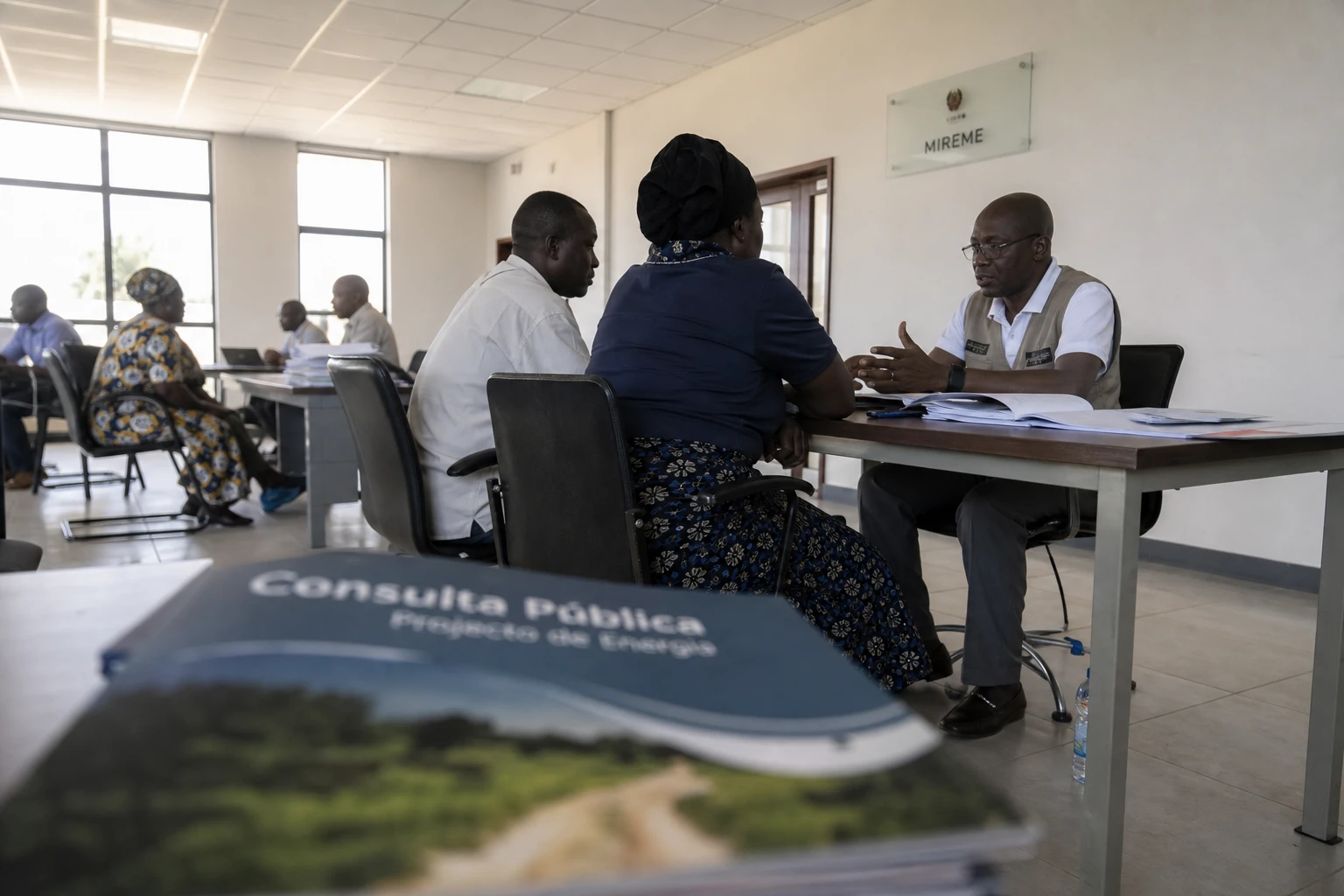
In the Beira Corridor, electricity is about more than comfort. It determines whether schools can reopen, workshops can operate smoothly, irrigation can function and areas still marked by climate shocks can recover. In Nhamatanda, in Sofala province, a new solar project aims to add capacity to Mozambique’s national grid as the country steps up its drive towards universal access to energy.
A mid-sized solar project with significant local impact
The project involves a 45 MW photovoltaic plant planned for Lamego, in Nhamatanda district. Estimated to cost $69 million, it is being developed by Electricidade de Moçambique, the state-owned power utility, and VBC Corporation, a Mozambican group with local capital. It has already cleared an initial regulatory hurdle with the launch of public consultation on the environmental impact assessment, a required step before final permits can be issued.
The proposed scope is clearly defined. The plant would cover about 160 hectares and be connected to the Lamego substation by two 110-kilovolt lines running 11.9 kilometres. The aim is straightforward: feed the electricity generated into the national grid and strengthen distribution, which remains uneven between major urban centres and inland districts.
Nhamatanda is no arbitrary choice. The district lies on the Beira-Chimoio Corridor, a strategic route for domestic and regional trade. It was also badly hit by Cyclone Idai in March 2019, which caused lasting damage to infrastructure and basic services in Sofala. Against this backdrop, adding a solar source connected to the national grid is both a form of territorial recovery and an element of energy planning.
The project is not an isolated one. VBC Corporation is already working with EDM on another 60 MW solar project near the Corumana Dam, in Maputo province, with an announced investment of $110.6 million. The group says it has worked in engineering, energy and real estate for more than 15 years. The repeat partnerships show that Mozambique’s solar sector is increasingly relying on public-private arrangements rather than a solely state-led or donor-funded approach.
What solar power means for Mozambique today
The Mozambican government places this type of initiative within the “Energia para Todos” programme, co-ordinated by the Ministry of Mineral Resources and Energy. The official ambition remains unchanged: universal access to electricity by 2030. The World Bank has noted that the country nearly doubled its access rate, from 31% in 2018 to 60% at the end of 2024, thanks in part to the ProEnergia programme. The institution also says that more than 514,000 households were connected between 2020 and 2024.
Figures published by EDM confirm the acceleration. The company announced 75,411 new connections in the first quarter of 2026. At the same time, its chief executive, Joaquim Ou-Chim, said that 420,000 new connections were planned by the end of 2026, with a budget of $82 million, of which $70 million would come from the World Bank-funded ProEnergia project. This trajectory points to a two-pronged strategy: expanding the grid where possible, while using stand-alone solar and small hydropower systems in areas that are harder to serve.
For households, the stakes are tangible. Electricity stabilises spending, extends working hours and improves access to healthcare and education. For small businesses, it reduces reliance on generators and helps secure cold chains, light manufacturing and digital services. In rural and peri-urban areas, it can also support water points, irrigation and agricultural processing. In the centre of the country, where access remains more precarious than in the capital, Maputo, and its surrounding areas, the impact of a grid-connected plant is all the more visible.
The environmental impact assessment will nevertheless be decisive. It must identify possible effects on farmland, local economic activities and sites of cultural importance. The project also envisages a resettlement plan and a livelihood restoration plan for affected families. This is a sensitive issue, because the energy transition must not come at the expense of land use or local incomes. In an agricultural district, the balance between land, compensation and collective benefit will be closely watched.
At regional level, the project forms part of a broader dynamic within SADC, the Southern African Development Community. The organisation has adopted several energy plans through to 2030 and notes that private-sector participation is now a central lever for closing the infrastructure gap. The region continues to face unequal access to electricity, especially in rural areas. Mozambique, which for a long time was among the least-connected countries in the region, is therefore seeking to turn its solar potential into installed capacity and then into effective service for the population.
The continental significance is clear. The country is moving in the same direction as several African states combining regulatory reform, grid connections and mini-grids to accelerate access to electricity. In the short term, attention will turn to the outcome of the public consultation in Nhamatanda, followed by the environmental decision and construction timetable. This is often the stage at which the difference emerges between a promising announcement and a plant actually serving Mozambique’s grid.