
 Algeria
 Egypt
 Libya
 Sudan
 Tunisia
 Benin
 Burkina Faso
 Cabo Verde
 Côte d'Ivoire
 Ghana
 Guinea
 Guinea-Bissau
 Liberia
 Mali
 Mauritania
 Niger
 Nigeria
 Senegal
 Sierra Leone
 The Gambia
 Togo
 Cameroon
 Central African Republic
 Chad
 DR Congo
 Equatorial Guinea
 Gabon
 Republic of the Congo
 São Tomé and Príncipe
 Burundi
 Comoros
 Djibouti
 Eritrea
 Ethiopia
 Kenya
 Madagascar
 Malawi
 Mauritius
 Mozambique
 Rwanda
 Seychelles
 Somalia
 South Sudan
 Tanzania
 Uganda
 Angola
 Botswana
 Eswatini
 Lesotho
 Namibia
 South Africa
 Zambia
 Zimbabwe
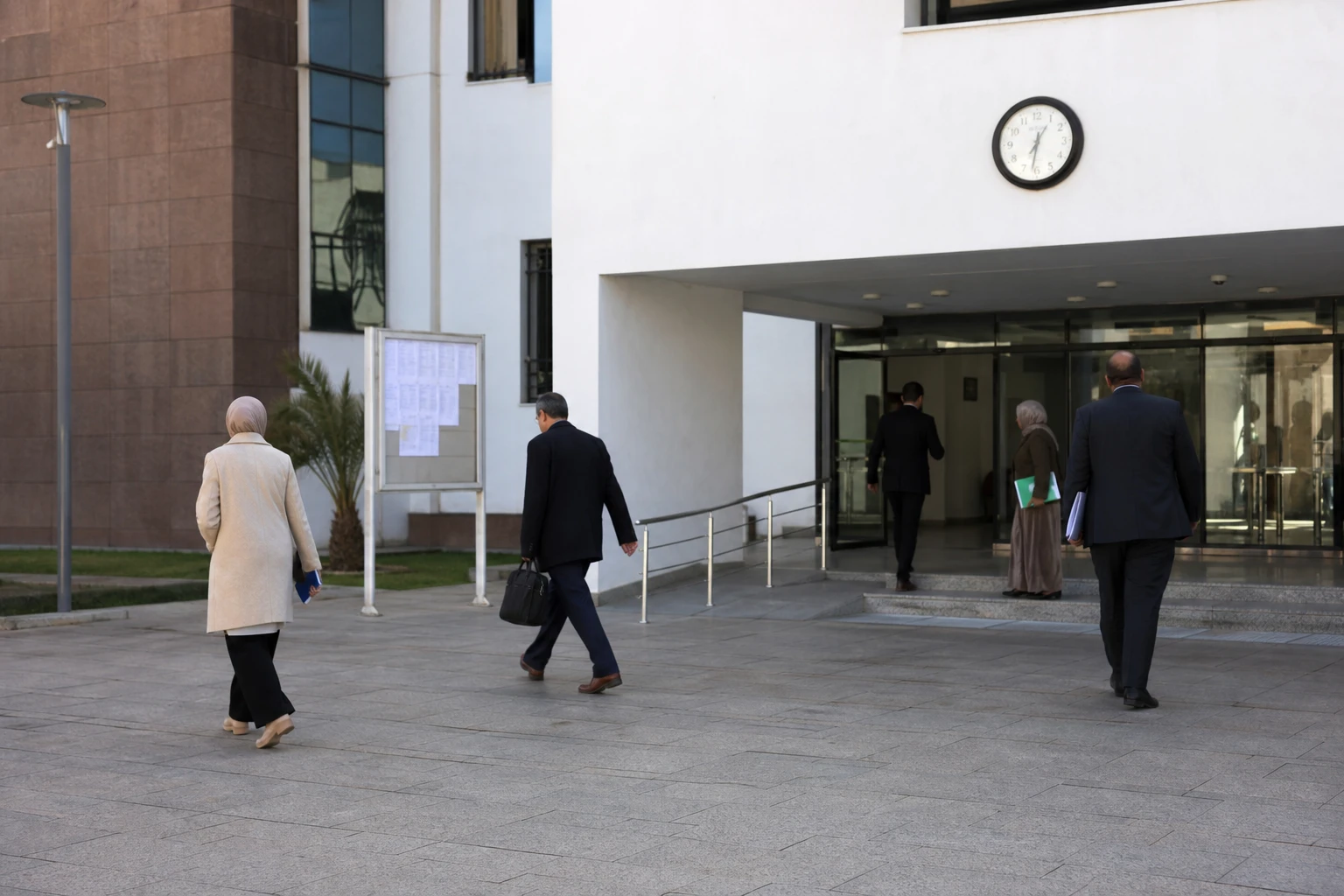
One hour less, but a broader political signal
In Morocco, changing the clocks is never a trivial matter. When they go back by an hour, everyday life is also reorganised: morning commutes, school hours, public services, business activity and working patterns in large cities and rural areas alike. The Kingdom has chosen to make a lasting return to Greenwich Mean Time, with the change scheduled for Sunday 20 September 2026 at 2am.
The decision comes amid a significant institutional sequence. Prime Minister Aziz Akhannouch announced on 25 June 2026 that the country would return to legal GMT, saying the move responded to expectations expressed by citizens. The legal framework was subsequently published by the General Secretariat of the Government, the body responsible for publishing the Official Bulletin and monitoring regulatory texts.
The issue also falls within a busy political calendar. Elections for members of the House of Representatives are set for Wednesday 23 September 2026, three days after the announced clock change. The Ministry of the Interior has already begun preparations for the elections and the revision of voter lists, giving this time change very tangible implications for the administration, political parties and voters.
What the text published by the Moroccan government provides
Decree No. 2.26.530, adopted by the Government Council on 25 June 2026 and published in the Official Bulletin on 29 June, sets the move from GMT+1 to GMT from 20 September 2026. In practical terms, clocks must be put back by 60 minutes at 2am, to show 1am. The measure applies throughout Morocco.
The new text repeals Decree No. 2.18.855 of 26 October 2018, which introduced the permanent addition of one hour to the Kingdom’s legal time. Since that reform, Morocco had observed GMT+1 all year, with a temporary return to GMT during Ramadan. The return announced for 2026 therefore closes an eight-year regulatory cycle.
The legal basis already referred to Dahir No. 455.67 of 2 June 1967 on legal time, which sets Morocco’s official time on the basis of the Greenwich meridian. The government is therefore not creating a new time zone: it is returning to the reference standard while ending the general use of the additional hour.
Why the decision matters beyond the clock
In Morocco, the question of legal time touches on very practical issues. It affects public health, schooling, family life and the organisation of work. Public debate, reignited several times since 2018, has shown that winter time or the additional hour is not simply a matter of time zones: it affects urban habits, morning travel and coordination between government departments, businesses and schools. The government says it took these expectations into account.
The contrast between Casablanca, Rabat or Tangier and some regions with less access to peak-time transport remains significant. In major urban centres, an additional hour can facilitate late activity. But in areas where school and work journeys start early, the shift can be experienced as a constraint. This differing impact helps explain the issue’s sensitivity in Moroccan public opinion.
The election timetable further raises the stakes. Three days before the 23 September legislative election, the authorities will have to coordinate the time change with an already demanding administrative mobilisation. The Ministry of the Interior has held numerous preparatory meetings with political parties, showing that at this time, even the smallest change to the calendar can have practical effects on the campaign, public communication and the conduct of the vote.
Institutionally, the decision also illustrates how Morocco’s executive balances regulatory stability with social pressure. The government spokesperson described it as a definitive decision, a formulation intended to close a controversy that had resurfaced at regular intervals. The message is clear: the question is no longer open, even though citizen debate had already become a significant part of public life.
Regional significance in a changing North African landscape
Within North Africa, Morocco follows a distinctive path. The Kingdom does not belong to a regional monetary union such as CEMAC or WAEMU, and the Arab Maghreb Union remains largely dormant. In this context, legal time becomes a marker of practical administrative sovereignty as much as a technical detail. It is a reminder that policies on time, mobility and public administration remain highly visible national choices in the Maghreb.
At continental level, the issue is less trivial than it may appear. Many African states continue to weigh the harmonisation of time, trade needs, school schedules and social expectations. Morocco, which maintained a permanent advanced time for years before reversing course, offers a concrete example of the back-and-forth between administrative efficiency and social acceptability.
The next steps will therefore unfold on two fronts. On one side, the technical implementation of the clock change on 20 September 2026. On the other, the 23 September legislative elections, an immediate test for the Moroccan administration. Between those two dates, the Kingdom will have to show that a time adjustment can remain a matter of a simple hour, without becoming a source of institutional tension.



