Algeria
 Egypt
 Morocco
 Sudan
 Tunisia
 Benin
 Burkina Faso
 Cabo Verde
 Côte d'Ivoire
 Ghana
 Guinea
 Guinea-Bissau
 Liberia
 Mali
 Mauritania
 Niger
 Nigeria
 Senegal
 Sierra Leone
 The Gambia
 Togo
 Cameroon
 Central African Republic
 Chad
 DR Congo
 Equatorial Guinea
 Gabon
 Republic of the Congo
 São Tomé and Príncipe
 Burundi
 Comoros
 Djibouti
 Eritrea
 Ethiopia
 Kenya
 Madagascar
 Malawi
 Mauritius
 Mozambique
 Rwanda
 Seychelles
 Somalia
 South Sudan
 Tanzania
 Uganda
 Angola
 Botswana
 Eswatini
 Lesotho
 Namibia
 South Africa
 Zambia
 Zimbabwe
A further step, but no end to the transition yet
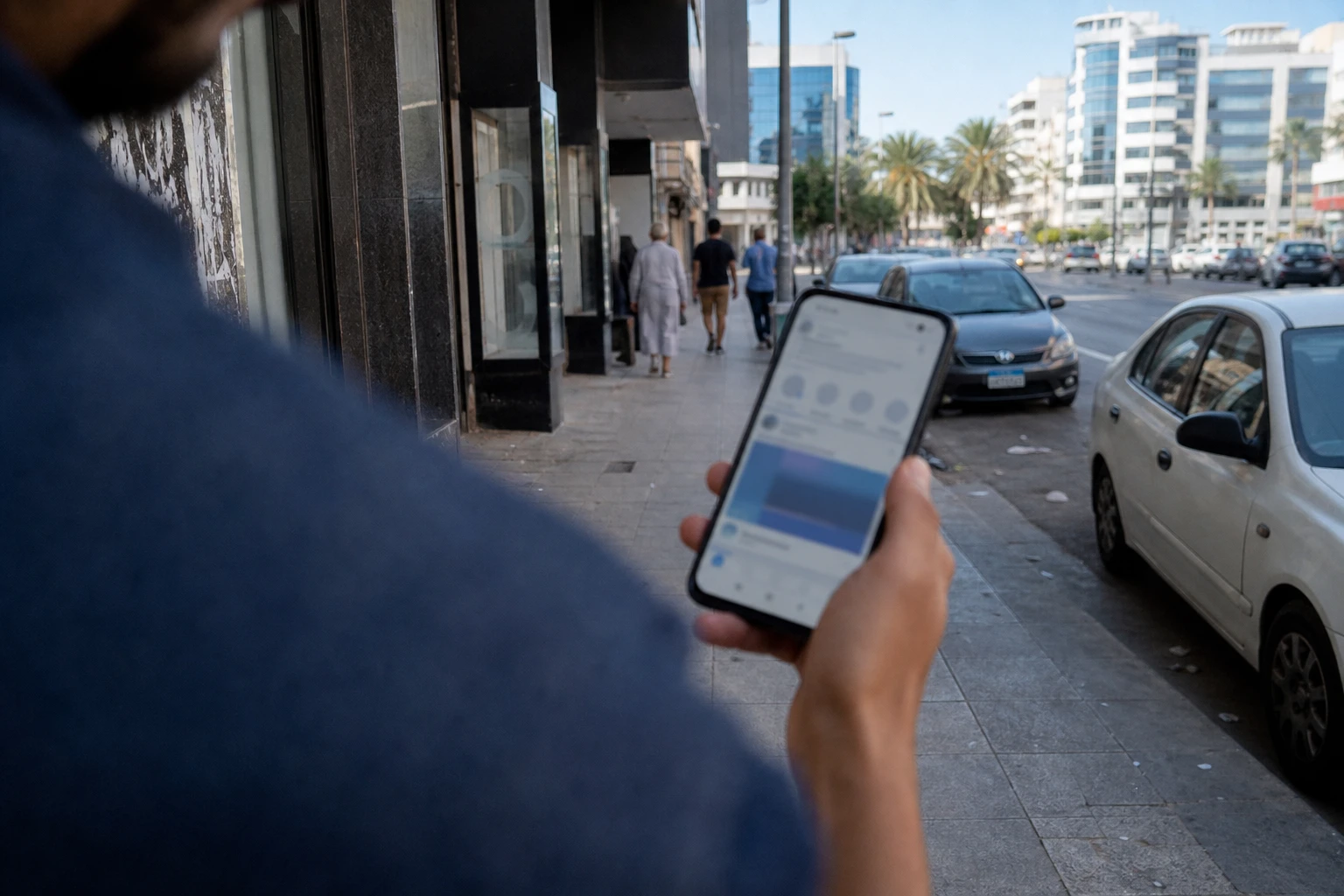
In Tripoli, many Libyans are waiting for firm dates rather than announcements. For years, political life has moved forward in fits and starts, only to stall again. The new text discussed in Tunis is part of this fragile pattern: it seeks to bring east and west closer around a shared electoral framework, after a long series of institutional deadlocks.
Libya’s political process remains tied to a fragmented institutional architecture. In the west, the Government of National Unity still holds most of the levers of power in Tripoli, while the east remains influential through the House of Representatives and the political structures linked to it. In this landscape, the United Nations Support Mission in Libya, UNSMIL, is pursuing a multi-stage roadmap designed first to produce applicable electoral laws, then a more unified executive authority. The aim is to move beyond the provisional arrangements without reigniting the war over legitimacy.
The Tunis talks, held on 20 August 2026, brought together representatives of Libya’s two centres of power in a limited format. The process builds on work that began in the spring and gathered pace in June and July. The Libyan press and the national news agency reported that in July UNSMIL had set the beginning of August as the target for finalising an agreement on the legal framework for presidential and parliamentary elections. On 6 August, participants had already agreed on the method for appointing the president of the High National Elections Commission, a key issue for the credibility of the vote.
The compromise rests on two points. First, the legal framework for presidential and parliamentary elections must be secured. Second, the High National Elections Commission must be able to operate without suspicion of political capture. That is why the question of its board has come to the fore. In practice, this kind of institutional detail is no mere technicality: in Libya, the appointment of electoral referees has often mattered as much as the text governing the ballot. UNSMIL has also explained that the process remains vulnerable to disinformation and premature announcements, confirming the climate of extreme caution surrounding the issue.
This latest step does not start from scratch. On 18 June 2026, the leaderships of the House of Representatives, the High Council of State and the Presidential Council had already agreed on a document of principles aimed at ending the transitional period and holding simultaneous elections no later than 17 February 2027. The text was based on the so-called “6+6” electoral laws and the 13th constitutional amendment. It also provided for a broader monitoring committee, including the Central Bank, the High National Elections Commission and representatives of the security sector. In other words, Tunis is not starting with a blank slate: the current negotiations are chiefly seeking to turn political intent into an implementable mechanism.
Why the issue remains so sensitive in Libya
The reservations expressed in Tripoli nevertheless show that the agreement remains politically vulnerable. Mohamed Al-Menfi, president of the Presidential Council, has already criticised the method and the lack of transparency in shaping the compromise. In the west, several political actors are also challenging the way consultations are being conducted, while calling for a clearer process more firmly anchored in national institutions. This mistrust is not a secondary concern: it encapsulates the main weakness of the Libyan process, namely the lack of trust between rival centres of power.
For the population, the stakes go beyond electoral technicalities. Without a credible timetable, institutions remain fragmented, budget management remains contested and public services continue to depend on unstable political arbitration. In a country where oil, the exchange rate, salaries, electricity and everyday security are tied to power struggles between competing administrations, the prospect of elections is not merely a matter of democratic legitimacy. It also determines the state’s ability to speak with one voice. Debates over the legal framework for the vote therefore have a direct bearing on economic life, the flow of oil revenues and the continuity of public administrations in Tripoli, a capital still weighed down by national uncertainty.
The regional context also matters. Libya does not operate in isolation. Its transition remains under close scrutiny from its neighbours in the Maghreb, the African Union and the partners involved in the Berlin Process. UNSMIL has reiterated that its roadmap aims to deliver presidential and parliamentary elections, followed by a unified executive capable of governing the entire country. This is a matter of stability for North Africa as a whole, but also for the Sahel, where porous borders, trade flows, migration networks and the movement of arms make every development in Libya an immediate regional concern.
The message at continental level is clear: after several years of partial initiatives, Libyan actors are no longer simply trying to push back the deadline. They are seeking to build a shared legal basis for a simultaneous vote. But until the composition of the High National Elections Commission, the scope of the laws and the guarantees for implementation are definitively settled, the window will remain narrow. The next announced step is to resume consultations inside Libya before the end of August. That will show whether Tunis has produced a real agreement or merely another layer of institutional promises.