Algeria
 Egypt
 Libya
 Morocco
 Sudan
 Tunisia
 Benin
 Burkina Faso
 Cabo Verde
 Côte d'Ivoire
 Ghana
 Guinea
 Guinea-Bissau
 Liberia
 Mali
 Mauritania
 Niger
 Nigeria
 Senegal
 Sierra Leone
 The Gambia
 Togo
 Cameroon
 Central African Republic
 DR Congo
 Equatorial Guinea
 Gabon
 Republic of the Congo
 São Tomé and Príncipe
 Burundi
 Comoros
 Djibouti
 Eritrea
 Ethiopia
 Kenya
 Madagascar
 Malawi
 Mauritius
 Mozambique
 Rwanda
 Seychelles
 Somalia
 South Sudan
 Tanzania
 Uganda
 Angola
 Botswana
 Eswatini
 Lesotho
 Namibia
 South Africa
 Zambia
 Zimbabwe
A pardon that frees, but does not end the debate
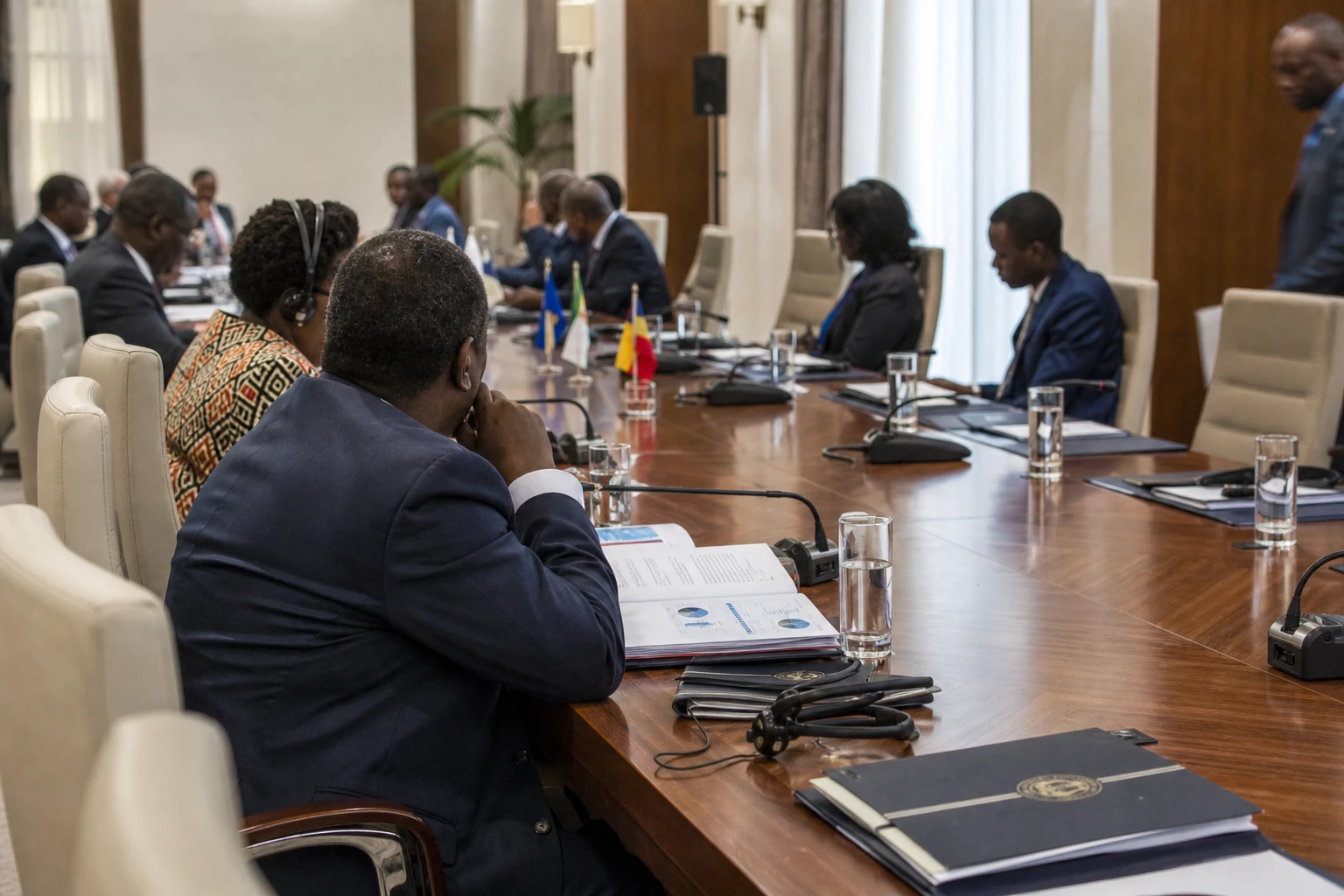
In N’Djamena, the presidential pardon granted on 14 August to nine political leaders did more than empty prison cells. It also reopened a broader question: can an act of clemency alone settle a political dispute, or must its legal effects and limits still be clarified? The debate is all the more sensitive because Chad’s political scene remains marked by recent arrests, heavy sentences and persistent mistrust between the government and the opposition.
Chad operates within an institutional framework in which political stability matters both to the country and to the sub-region. A member of CEMAC, the country has only just emerged from a long and contested transition, followed by a return to constitutional order in 2024. The African Union, for its part, repeatedly reminded Chad’s transitional authorities that they were not to take part in the elections scheduled at the time, citing the African Charter on Democracy, Elections and Governance. This recent history explains the extreme sensitivity surrounding any gesture involving opposition figures.
Government cites the law, opposition says issues are being conflated
On 20 August, Deputy Prime Minister for Territorial Administration and Decentralisation Limane Mahamat reminded political parties of the requirements of the Charter of Political Parties. According to the statement reported by the Chadian press, he argued that a presidential pardon does not constitute a “legal pardon” that erases a sentence, and that Article 11 of Law No. 032/PR/2019 requires those leading a party to enjoy their civil and political rights. The government does not name the beneficiaries, but the message clearly targets the new circumstances of the freed opposition figures.
The opposition responded on 21 August at a press conference in N’Djamena. The eight former leaders of the ex-GCAP called for the full exercise of their civil and political rights. Their position is simple: the 14 August pardon ended the execution of the sentence, but did not turn the conviction into an automatic political disqualification. They say they remain entitled to lead their organisations and reject the idea that a measure of clemency alone can bar someone from leading a party.
Max Kemkoye and his colleagues are primarily challenging the executive’s conflation of two distinct areas: the judicial and the political. Their argument is that, in law, a presidential pardon is not equivalent to an amnesty. Chadian lawyers quoted by the local press also point out that the measure does not overturn the conviction or any civil obligations that may result from it. In other words, the government can release someone, but it cannot rewrite their criminal record on its own.
What the battle over Article 11 reveals
Behind the legal dispute lies a clearer political battle. The government is seeking to set a framework: yes to release, no to an automatic return to leadership positions. The opposition, meanwhile, wants to prevent the pardon from becoming a lasting means of exclusion. This divergence is not insignificant. In Chad, political parties remain fragile instruments, often built around individual figures, in an environment where access to the media, funding and public meetings remains tightly regulated.
For those granted pardons, the stakes are tangible: regaining physical freedom is not enough if the freedom to engage in political action remains in question. For the government, the stakes are equally clear: it wants to prevent an act of clemency from being interpreted as erasing all the consequences of a conviction, at the risk of undermining the state’s authority. Between the two, much of the Chadian public is watching above all for consistency from the institutions. After years of transition, the country needs clear rules, not interpretations that shift with the balance of power.
The security and social context also weighs heavily. The case of the pardoned opposition figures comes amid a series of sensitive issues: communal violence, political detentions, debates over civic space and challenges to certain judicial proceedings. In this climate, every word used by the executive matters, as it can either ease tensions or be seen as a new obstacle. That is precisely why the ex-GCAP reacted so quickly.
A signal to watch for Chadian politics and the sub-region
At regional level, the episode goes beyond the case of the nine people granted pardons. Within CEMAC and in continental debate, Chad is being watched for its ability to combine a return to constitutional order with the management of opposition and respect for civil liberties. The African Union and the African Commission on Human and Peoples’ Rights have already stressed the need to protect Chadian political actors. How N’Djamena handles this case will therefore say a great deal about its understanding of pluralism.
What happens next will depend on two things. First, the precise effect given to the 14 August pardon under Chadian law. Second, the actors’ ability to avoid verbal escalation over Article 11 of the Charter of Political Parties. If the government maintains a strictly legal position and the opposition secures a clear ruling on its status, the crisis could subside. If, on the other hand, each side hardens its interpretation, the freedom regained by some could remain incomplete and the political climate could become tense again.