Algeria
 Egypt
 Libya
 Morocco
 Sudan
 Tunisia
 Benin
 Burkina Faso
 Cabo Verde
 Côte d'Ivoire
 Ghana
 Guinea
 Guinea-Bissau
 Liberia
 Mali
 Mauritania
 Niger
 Nigeria
 Senegal
 Sierra Leone
 The Gambia
 Togo
 Cameroon
 Central African Republic
 DR Congo
 Equatorial Guinea
 Gabon
 Republic of the Congo
 São Tomé and Príncipe
 Burundi
 Comoros
 Djibouti
 Eritrea
 Ethiopia
 Kenya
 Madagascar
 Malawi
 Mauritius
 Mozambique
 Rwanda
 Seychelles
 Somalia
 South Sudan
 Tanzania
 Uganda
 Angola
 Botswana
 Eswatini
 Lesotho
 Namibia
 South Africa
 Zambia
 Zimbabwe
A pardon that opens a door without closing the case
In Chad, release does not always bring a political battle to an end. It can, on the contrary, shift the fight to another arena: parliament, the courts and ineligibility. That is precisely the issue surrounding Succès Masra, who was freed after the presidential pardon of 14 August 2026, but whose associates now want the legal effects of his conviction erased.
Chad is navigating this period within a broader institutional framework than simply a face-off between the authorities and their main opponent. The country is part of CEMAC, the economic and monetary community of Central Africa, whose aim is to foster a common market and free movement across the sub-region. In a state still shaped by the transition that began in 2021 and the return to constitutional order in 2024, every political crisis therefore also weighs on regional stability.
The presidential decision of 14 August covered Succès Masra and eight other political figures from the former GCAP. The decree cited by the Chadian press grants a reduction in sentence, not the quashing of a conviction. That is where the difference with an amnesty lies: an amnesty is enacted by law and, in principle, erases the legal consequences of the offence. A pardon secures release; an amnesty more broadly wipes the criminal record clean.
On the evening of 15 August, the former prime minister addressed his supporters in N’Djamena. He said he wanted to work with the head of state and other political forces to move the country forward. He also publicly thanked Mahamat Idriss Déby Itno for the pardon, while reaffirming his innocence. The episode presented the image of an opposition figure freed, but not yet exonerated.
The legal case remains serious. Succès Masra was sentenced in August 2025 to 20 years’ imprisonment for spreading messages of a hateful and xenophobic nature, as well as for complicity in murder, in the case linked to the violence in Mandakao. The Supreme Court dismissed his appeal on points of law on 21 May 2026, making the conviction final. His lawyers are therefore now seeking an amnesty law, arguing that a pardon alone is not enough to remove the political and legal consequences of the verdict.
Mandakao, southern Chad and the question of responsibility
Mandakao was the trigger for a case that became a national issue. On 16 May 2025, Succès Masra was arrested in N’Djamena after intercommunal clashes in Logone-Occidental, in the country’s south-west. Human Rights Watch recalled that the authorities linked him to the case over messages deemed to incite violence, while prosecutors cited a death toll of 42. Tensions between herders and farmers in the same area go back a long way and are often fuelled by land disputes, demographic pressure and local vulnerabilities.
This matters because it shows the complexity of the Chadian case. On the one hand, there is real intercommunal violence, which primarily affects villages, families and rural economies. On the other, civil society groups have interpreted the investigation and trial as a hardening of the political climate. Human Rights Watch has spoken of a shrinking political space and repeated repression of peaceful dissent. That assessment does not erase local tensions; it simply underlines that, in this kind of situation, justice also becomes an instrument in a power struggle.
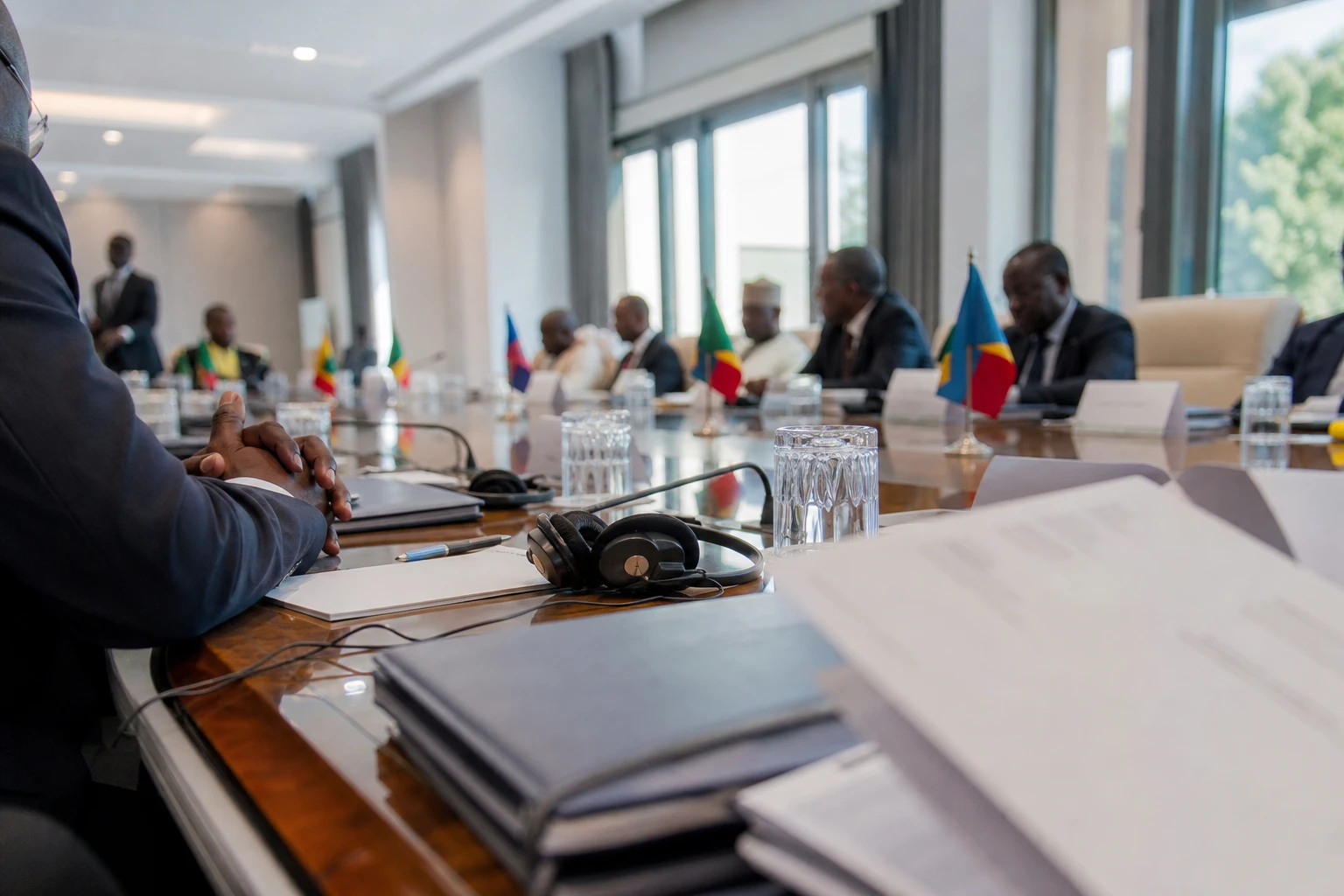
In Chad’s political equation, the question of amnesty is as much institutional as political. A pardon rests with the head of state. An amnesty, by contrast, requires a legislative act. In other words, the ball is now in the national assembly’s court. If such a law were debated, it would force a choice between two imperatives that the authorities often present as contradictory: political peace and accountability.
This tension is not unique. Chad is entering a phase in which the authorities have been strengthened by a new constitutional architecture, while the institutions for dialogue remain fragile. The African Development Bank’s 2026-2031 report describes a “calm but fragile” political climate, notes the ruling party’s absolute majority in parliament and points out that governance challenges remain greater than the African average. In this context, an amnesty for Succès Masra would be more than an act of clemency; it would signal how the country now treats its opposition.
What this episode says about Chad and Central Africa
For Mahamat Idriss Déby Itno, the pardon can be seen as a conciliatory gesture at a time when the authorities are seeking to stabilise the domestic political scene and project a less confrontational approach. For Succès Masra, it makes a partial political comeback possible, but leaves a major vulnerability untouched: as long as the conviction stands, his electoral future and his party’s full ability to plan ahead remain uncertain. Between the two camps, Chadian society is watching one simple question: can political forgiveness go as far as reopening democratic competition?
The implications extend beyond N’Djamena. In Central Africa, where transitions are often prolonged, dominant parties are powerful and checks and balances are exposed, the Chadian case resonates with other debates about the role of the opposition, criminal justice and mechanisms for reconciliation. Chad’s central place in CEMAC adds another dimension: a calmer political climate also encourages movement, business and regional confidence, while a neutralised opposition fuels uncertainty.
One development now bears watching: the possible parliamentary initiative sought by Succès Masra’s lawyers. That will show whether the pardon of 14 August 2026 was merely a one-off gesture or the beginning of a broader political compromise. In Chad, where questions of justice often overlap with the balance of power, the answer will say much about the real state of national reconciliation.