Algeria
 Egypt
 Libya
 Morocco
 Sudan
 Tunisia
 Benin
 Burkina Faso
 Cabo Verde
 Côte d'Ivoire
 Ghana
 Guinea
 Guinea-Bissau
 Liberia
 Mali
 Mauritania
 Niger
 Nigeria
 Sierra Leone
 The Gambia
 Togo
 Cameroon
 Central African Republic
 Chad
 DR Congo
 Equatorial Guinea
 Gabon
 Republic of the Congo
 São Tomé and Príncipe
 Burundi
 Comoros
 Djibouti
 Eritrea
 Ethiopia
 Kenya
 Madagascar
 Malawi
 Mauritius
 Mozambique
 Rwanda
 Seychelles
 Somalia
 South Sudan
 Tanzania
 Uganda
 Angola
 Botswana
 Eswatini
 Lesotho
 Namibia
 South Africa
 Zambia
 Zimbabwe

Transparency advances in Dakar, but political divisions remain
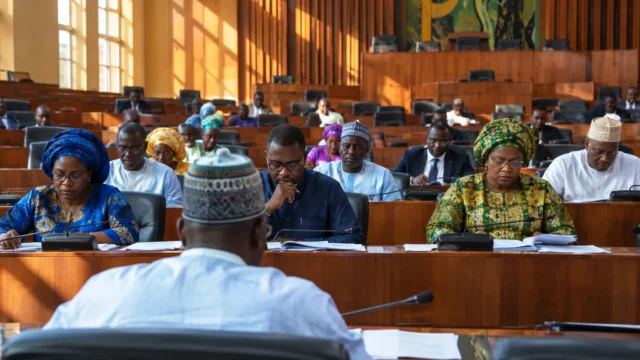
In Senegal, debates over public integrity are no longer confined to speeches. They are now playing out through bills, procedures and institutional decisions. At the National Assembly this week, the process showed that a reform can be adopted without immediately becoming applicable law.
The issue is sensitive because it touches on power itself. On one side, the Pastef-led majority is pushing for stricter oversight measures. On the other, the executive is stressing that political will alone is not enough to alter the balance of powers between parliament, government and the Constitutional Council.
An active parliament within a tested constitutional framework
The extraordinary session opened in Dakar on 10 August had a packed agenda: three government bills and several parliamentary proposals, including two linked to Article 37 of the Constitution and the system of special appropriations, meaning budget allocations reserved for certain sensitive state spending.
This timetable did not come out of nowhere. Senegal had already seen procedural tensions over constitutional reform in 2026. On 9 July, the Constitutional Council ruled that the law passed by the National Assembly on 29 June on the same institutional issue was unconstitutional. The decision shaped the subsequent parliamentary debate and put the constitutional court back at the centre of proceedings.
At the same time, asset disclosure has emerged as a defining issue in the current political climate. In early August, OFNAC, the national body responsible for fighting corruption, said that thousands of people subject to the rules still had to comply with asset declaration requirements, a system already in force in Senegal’s administration.
Two proposals from the majority, two different paths forward
One of the bills passed by MPs requires the three highest state officials to declare their assets at the end of their terms. The principle is clear: holding the highest offices should come with enhanced scrutiny of changes in the assets held. But the government has said it wants to include this measure in a broader constitutional revision and put it to a referendum first, with no timetable set at this stage.
In other words, a bill can be passed by parliament without being immediately promulgated in the form its sponsors intended. That is one of the week’s lessons. The impasse is not necessarily about the substance. It is also about the method, the status of the legislation and the body empowered to determine its final scope.
The second bill concerns special appropriations, often called secret funds in public debate. It seeks to regulate their oversight, against a backdrop of promises from the presidential camp to make sensitive state spending more transparent. But on 18 August the government referred the matter to the Constitutional Council, arguing that it fell within the regulatory sphere, and therefore the executive’s remit. The constitutional court is due to rule on the issue by 26 August.
The two bills tell the same story by different routes: the parliamentary majority wants to move faster than the government machinery, while the executive intends to retain control over the legal contours of the reform. The result is a subdued but real power struggle between the logic of political promises and the logic of institutional jurisdiction.
A confrontation that goes beyond individuals
Political science professors cited in public debate describe this as a test of prerogatives and an escalation between camps at the top of the state. This interpretation points to more than a simple technical disagreement: each actor is seeking to avoid surrendering the initiative, because giving ground today could set a precedent tomorrow.
For citizens, the stakes are tangible. An asset declaration at the end of a term could strengthen confidence in institutions, particularly in a country where demand for accountability remains strong. Conversely, if the process gets bogged down in legal back-and-forth, the signal is more ambiguous: the principle of transparency remains, but its practical application still depends on an internal balance of power within the state.
For public officials, the message is also different. Political and administrative leaders already subject to asset declaration requirements are seeing the system tightened. Programme managers, director-generals and several local officials are already covered by this framework. The current reform therefore does not invent transparency; it broadens its symbolic and institutional reach.
In the background, the question of special appropriations is just as important. These funds cover sensitive spending, sometimes related to security, diplomacy or situations the state does not detail publicly. Regulating them therefore raises a delicate balance: greater democratic oversight without undermining the executive’s ability to act.
What Dakar is watching, the region is watching too
Senegal is not alone in grappling with this question. Across West Africa, public transparency, the separation of powers and institutional credibility are issues in several ECOWAS capitals. Dakar, however, occupies a particular place: the country is often seen as an institutional testing ground, where reforms are debated in a relatively open political environment.
If asset declarations and oversight of special appropriations are eventually put on a stable footing, Senegal could help consolidate a regional standard of accountability. If, instead, the procedural dispute takes precedence, the risk is that the reform will become a jurisdictional battle rather than a tool of governance. Either way, the stakes extend beyond the current majority. They concern how a West African state organises transparency at the highest levels of its hierarchy.
The immediate milestone is 26 August, the announced deadline for the Constitutional Council’s decision on special appropriations. Until then, Senegal’s latest political sequence will remain closely watched: a test of a government that promises a break with the past, but must still prove it can translate that promise into law.