
 Algeria
 Egypt
 Libya
 Morocco
 Sudan
 Tunisia
 Benin
 Burkina Faso
 Cabo Verde
 Côte d'Ivoire
 Ghana
 Guinea
 Guinea-Bissau
 Liberia
 Mali
 Mauritania
 Niger
 Nigeria
 Senegal
 Sierra Leone
 The Gambia
 Togo
 Cameroon
 Chad
 DR Congo
 Equatorial Guinea
 Gabon
 Republic of the Congo
 São Tomé and Príncipe
 Burundi
 Comoros
 Djibouti
 Eritrea
 Ethiopia
 Kenya
 Madagascar
 Malawi
 Mauritius
 Mozambique
 Rwanda
 Seychelles
 Somalia
 South Sudan
 Tanzania
 Uganda
 Angola
 Botswana
 Eswatini
 Lesotho
 Namibia
 South Africa
 Zambia
 Zimbabwe
In Zamboye, gold has once again exacted a human cost
In the west of the Central African Republic, an artisanal gold-mining site did not simply collapse under the earth. It also laid bare a familiar reality, but one rarely addressed with the rigour it demands: thousands of Central Africans make a living from artisanal mining, often without equipment or robust technical oversight, in areas where the border with Cameroon remains porous. In Zamboye, near Baboua, the disaster turned a workplace into a scene of collective mourning.
The tragedy comes in a country where the mining economy carries significant weight, but oversight remains weak. The Central African Republic has hundreds of recorded mining sites, and gold, like diamonds, is among its most strategic resources. Yet poverty remains widespread, especially in rural areas, and the state still struggles to bring lasting stability to mining zones. This tension between underground wealth and workers’ vulnerability is not new. It is also reflected in relations between Bangui, the western prefectures and the economic corridors running along the Cameroonian border.
What happened in Zamboye
On Tuesday 18 August 2026, several underground shafts collapsed at the artisanal site of Zamboye, in Nana-Mambéré prefecture. The ground then gave way, burying miners working in the pits. The death toll, initially put at several dozen, quickly exceeded 100, according to local officials and volunteers mobilised at the scene. Searches were still under way two days after the accident, with bodies being recovered over the hours and people still reported missing.
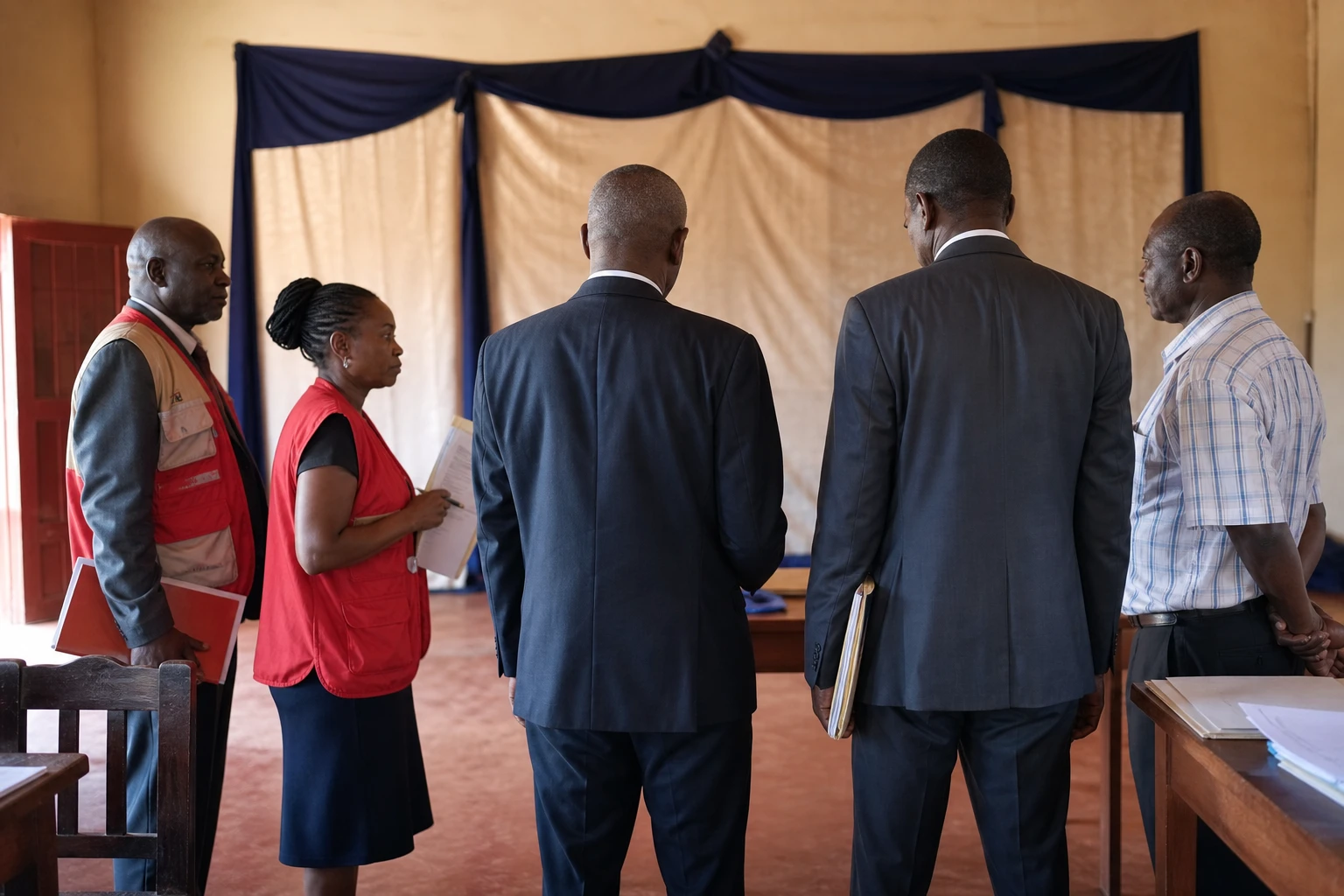
Rescue workers operated with limited resources. Red Cross volunteers, residents and miners present at the site took part in the initial operations. But the same assessment came from several quarters: equipment is lacking, as is risk management. In such circumstances, every hour counts. Unstable ground slows the recovery of victims and complicates the identification of bodies. The Baboua prosecutor’s office has opened an investigation to establish the exact causes of the collapse, identify the victims and determine any criminal responsibility. Central African criminal procedure provides that a complaint or the discovery of an offence triggers the involvement of the judicial authorities.
A vital sector, but poorly secured
The Zamboye case is not an isolated accident. In Nana-Mambéré, another mining collapse had already struck Kinyémé a few months earlier, highlighting an area where gold attracts labour, informal capital and, at times, opaque networks. Artisanal mining often involves hand-dug pits, narrow galleries and little structural support. During the rainy season, or after poorly managed work, the ground can quickly give way. In conditions of extreme hardship, workers accept risks for which no one really compensates them.
This vulnerability goes beyond technical issues. It concerns mining governance. In several parts of the country, gold extraction also feeds parallel economies, with informal taxation networks, land disputes and, in some places, the influence of armed actors. Recent research on the Central African Republic notes that organised crime, gold and diamonds are often intertwined with conflict dynamics. In other words, mining is not just an economic issue. It is also a matter of security, justice and territory.
A warning for Bangui and for all of Central Africa
For the Central African government, the immediate challenge is to establish who is responsible, protect the families affected and regain control of a sector that too often operates outside regulatory standards. But the case also raises questions for the sub-region. Nana-Mambéré is a transit area towards Cameroon, and the disaster affected workers from several backgrounds. In the CEMAC region, where borders are often spaces of movement rather than fixed lines, mining accidents quickly transcend national boundaries.
At continental level, Zamboye is a reminder that a resource can become a trap when formalisation is delayed. Central Africa has considerable mineral wealth, but the value captured by states remains low if safety, transparency and oversight do not keep pace. The Central African tragedy therefore says more than that a local disaster has occurred: it shows what happens when gold supports families but also exposes lives to avoidable danger. The next steps will unfold before the courts in Baboua, in the region’s health facilities and through Bangui’s ability to enforce rules where urgency and informality still prevail.



