Algeria
 Libya
 Morocco
 Sudan
 Tunisia
 Benin
 Burkina Faso
 Cabo Verde
 Côte d'Ivoire
 Ghana
 Guinea
 Guinea-Bissau
 Liberia
 Mali
 Mauritania
 Niger
 Nigeria
 Senegal
 Sierra Leone
 The Gambia
 Togo
 Cameroon
 Central African Republic
 Chad
 DR Congo
 Equatorial Guinea
 Gabon
 Republic of the Congo
 São Tomé and Príncipe
 Burundi
 Comoros
 Djibouti
 Eritrea
 Ethiopia
 Kenya
 Madagascar
 Malawi
 Mauritius
 Mozambique
 Rwanda
 Seychelles
 Somalia
 South Sudan
 Tanzania
 Uganda
 Angola
 Botswana
 Eswatini
 Lesotho
 Namibia
 South Africa
 Zambia
 Zimbabwe
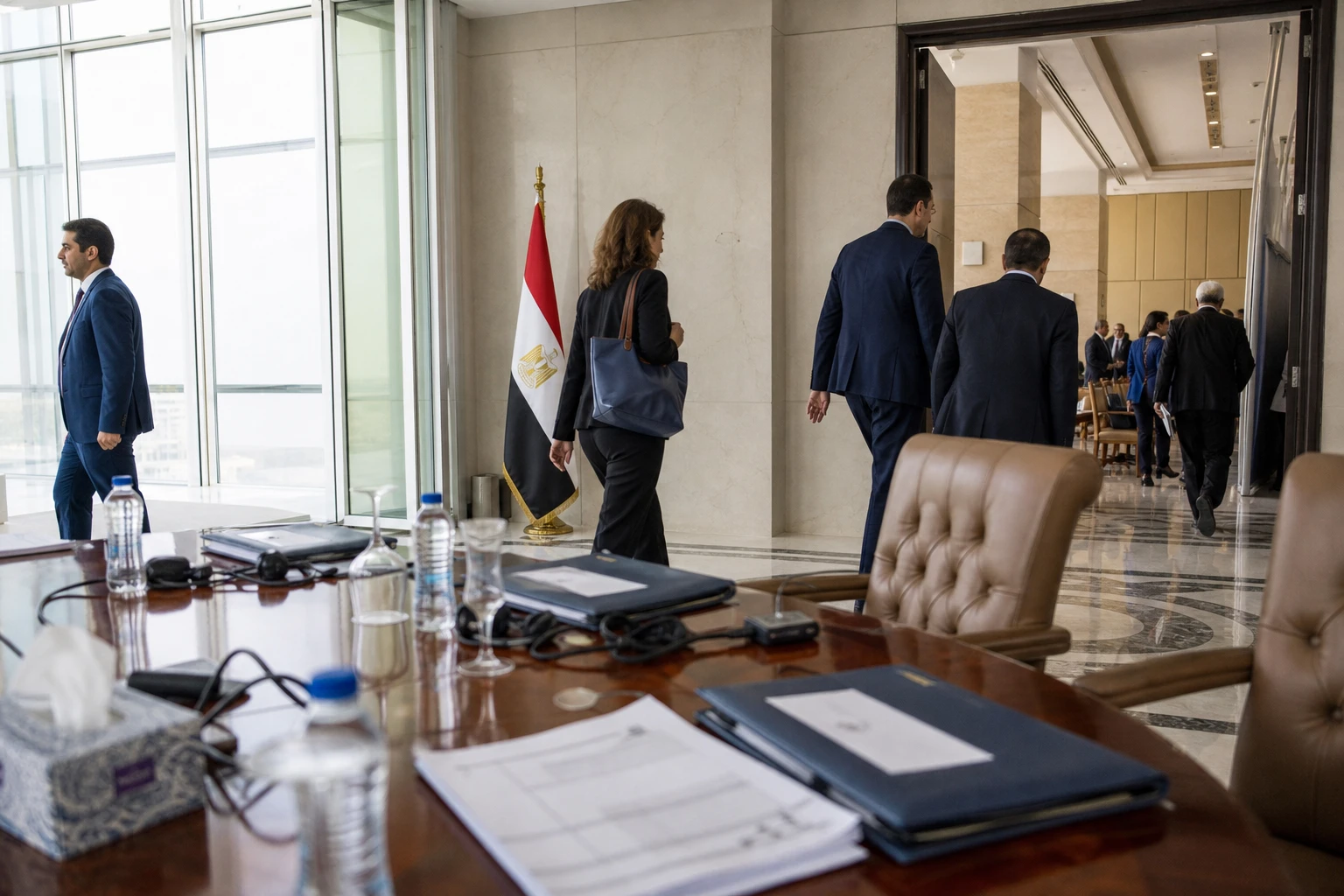
When the northern coast becomes a diplomatic showcase
On Egypt’s Mediterranean coast, major property projects do more than build homes and hotels. They also say something about the confidence foreign investors place in the country, and how Cairo intends to revive growth without giving up its political role in the region.
It is in this context that Egypt and Qatar have strengthened their rapprochement around a major project at Alam El-Roum, in Matrouh governorate on the northern coast. The stakes go beyond a real-estate deal. They concern growth financing, the appeal of major coastal cities and Egypt’s place in the balance of power in the Middle East.
The project is also located in an area that has become strategic for Cairo. Since New Alamein was created and development along the coast accelerated, the Egyptian state has pursued a strategy to unlock the value of the country’s north. The idea is simple: to turn a long-neglected stretch of coastline into a tourism, residential and financial hub.
A $29.7 billion investment — and a political signal
On 6 November 2025, Egypt announced the signing of a partnership with Qatari Diar, the property arm of Qatar’s sovereign wealth fund, to develop the Alam El-Roum and Samla area on the north-western coast. The total announced value is $29.7 billion. Official documents refer to an area of about 20.6 million square metres and state that the first phase is to cover between 20 and 25 per cent of the site.
The project is not presented as a simple land sale. Egyptian officials describe it as an investment partnership, with funding allocated to construction, development and services linked to a future integrated tourist city. Egypt’s state press has also said that work is to begin in phases from 2026.
Cairo sees the agreement as an endorsement of its strategy of opening up to Gulf capital. At the signing ceremony, Egypt’s prime minister stressed the role of the northern coast in the country’s development vision, noting that the new city of Alamein had already served as a springboard for this ambition. Qatar, for its part, presented the deal as a long-term investment in a site with strong potential.
This view is borne out by other official documents. A few months earlier, exchanges between the two countries had already referred to a $7.5 billion investment package linked to the bilateral rapprochement, separate from the Alam El-Roum megaproject. In other words, the northern coast deal did not come out of nowhere. It is part of a broader period of economic normalisation and political repositioning between Cairo and Doha.
What the rapprochement means for Egypt and the region
For Egypt, the benefits are immediate. The country is seeking foreign currency, jobs and projects capable of attracting other investors. The government has already highlighted other major developments on the Mediterranean coast, including Ras El-Hekma, as evidence of an improved business climate. In this narrative, Alam El-Roum is a second visible milestone.
For the local population, the effects will be more mixed. A project on this scale could boost jobs in construction, services, transport and tourism. But it could also increase pressure on land, change access to the coast and concentrate the benefits among the best-capitalised players. The question, then, is not only the announced investment figure. It is also how the returns will be shared between the state, investors and the people of Matrouh and the northern coast. This interpretation is an inference based on the project’s characteristics and the development priorities set out by the authorities.
Diplomatically, the deal reflects a visible shift. Egypt and Qatar had long had strained relations before gradually moving closer. In 2025, the two capitals demonstrated closer co-operation, particularly on Gaza. Qatari and Egyptian statements highlighted co-ordination on mediation, while talks in August 2025 in New Alamein also addressed the situation in Gaza, maritime security and several regional crises.
This is where economics meets geopolitics. Qatar remains an indispensable player in mediation efforts around Gaza. Egypt, meanwhile, retains a central role in Arab diplomacy and in discussions on the security of the Suez Canal, the Red Sea and trade routes towards the Strait of Hormuz. When the two countries demonstrate their agreement on a major project in Egypt, they are also sending a message of stability at a time when markets and capitals are closely watching regional tensions.
Implications beyond the bilateral relationship
At the continental level, the deal reflects a broader trend: African countries are seeking to combine economic sovereignty, the appeal of Gulf capital and the development of their own urban centres. Egypt, a key member of the African Union and an important North African actor, is testing a model in which high-end property, tourism and infrastructure act as financing tools. The model is attractive, but it also calls for scrutiny of debt, the quality of jobs created and the territorial impact of megaprojects.
What happens next will depend on a concrete timetable. The project’s first phases are due to begin in 2026, while Egyptian-Qatari discussions on deepening the economic partnership and addressing regional issues are expected to continue through their bilateral mechanisms. If the commitments translate into actual investment, the Alam El-Roum deal could be seen as a turning point. Otherwise, it will remain a useful but incomplete symbol of rapprochement between Cairo and Doha.