
 Algeria
 Egypt
 Libya
 Sudan
 Tunisia
 Benin
 Burkina Faso
 Cabo Verde
 Côte d'Ivoire
 Ghana
 Guinea
 Guinea-Bissau
 Liberia
 Mali
 Mauritania
 Niger
 Nigeria
 Senegal
 Sierra Leone
 The Gambia
 Togo
 Cameroon
 Central African Republic
 Chad
 DR Congo
 Equatorial Guinea
 Gabon
 Republic of the Congo
 São Tomé and Príncipe
 Burundi
 Comoros
 Djibouti
 Eritrea
 Ethiopia
 Kenya
 Madagascar
 Malawi
 Mauritius
 Mozambique
 Rwanda
 Seychelles
 Somalia
 South Sudan
 Tanzania
 Uganda
 Angola
 Botswana
 Eswatini
 Lesotho
 Namibia
 South Africa
 Zambia
 Zimbabwe
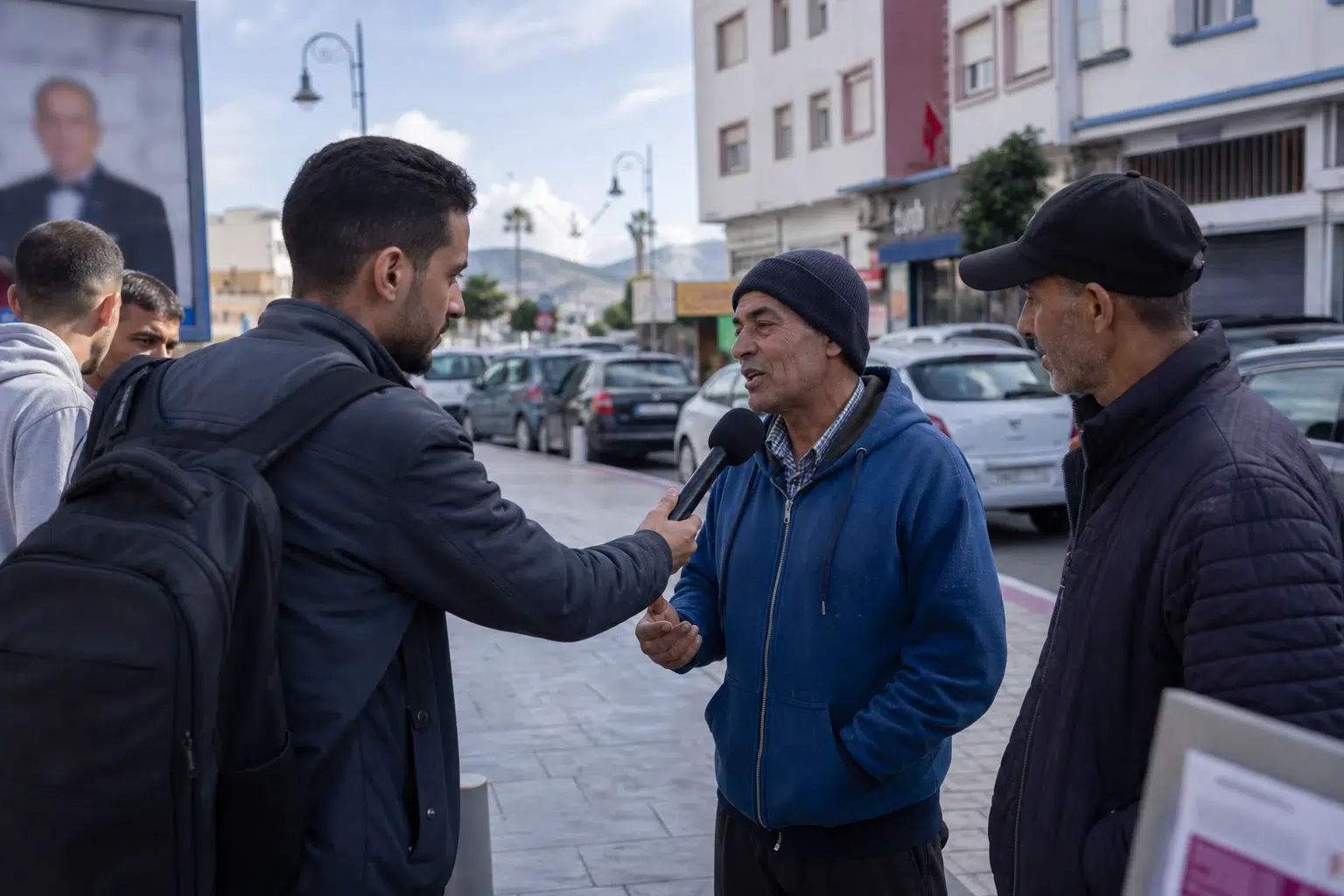
For some young Moroccans, the sea no longer represents merely a border. It has become a stark calculation: stay in a poorly paid job, or attempt to cross to Ceuta, the Spanish enclave facing northern Morocco. This tension says something broader than migration alone: it tells of social expectations that remain unmet, especially among young people, in a country where unemployment among 15- to 24-year-olds stood at 45.3% in the first quarter of 2026, according to the High Commission for Planning (HCP).
Morocco has, however, made visible investments, launched social programmes and pursued an investment strategy championed by Rabat. But the question arising in border towns, from Casablanca to Fnideq, remains simple: who is really benefiting from this momentum? In 2025, the government highlighted an increase in the minimum wage in the public sector and a gradual rise in the guaranteed interprofessional minimum wage, while the authorities also presented direct social assistance and housing support as responses to pressure on purchasing power.
Young people under pressure from precarious work and the cost of living
The case of young Moroccans tempted by Ceuta is not an isolated episode. It reflects a labour market where underemployment remains high and entry into adult life often begins with unstable jobs, inadequate protections or work that has little connection to the qualifications people have earned. In the second quarter of 2025, the HCP again reported a national unemployment rate of 12.8%, rising to 35.8% among 15- to 24-year-olds, while underemployment affected 1.147 million people.
In this context, housing is a major burden. The Kingdom did announce a housing assistance programme that had benefited 36,576 people under 40 by October 2025, but the policy does not erase the difficulty of finding affordable rent in major cities or the gap between public promises and actual incomes. In its 2025 annual report, the Economic, Social and Environmental Council also stressed that improving living conditions requires housing connected to employment centres and priced within reach of people’s purchasing power.
In other words, the challenge is not simply to create assistance. It is to create pathways. Without them, work often amounts to survival. And when a job offers neither independence nor prospects, the temptation to leave grows, especially in northern cities where Europe seems close but remains difficult to reach legally.
Ceuta, Fnideq and the reflection of social discontent
In early August 2026, a new surge in departures towards Ceuta highlighted the strength of this migration corridor. Thousands of would-be migrants, mostly Moroccan, headed for the Spanish enclave before some were pushed back into Morocco, according to AFP and the Associated Press. Reports described Fnideq, the town next to Ceuta, as the most common starting point for a crossing often attempted by sea or on foot.
Such episodes are often viewed through a security lens. But they also reveal social discontent. For young people with few qualifications or graduates with no job prospects, Ceuta does not embody an abstract dream. It represents the possibility of a wage, legal status or simply a different future. The border thus becomes a litmus test, revealing the distance between Morocco’s grand projects and the daily struggle to make ends meet.
The Moroccan government has undertaken social and budgetary reforms. It has also highlighted social dialogue, the expansion of direct assistance and pay rises for some public-sector workers. But on the ground, these announcements have yet to dispel the sense of injustice felt by some young people in urban and peri-urban areas. Public policy is moving forward, but slowly, while the cost of delay is paid every day in working-class neighbourhoods, border areas and the most exposed jobs.
What this signal from Morocco says about the Maghreb and the continent
The Ceuta issue goes beyond Morocco. It also concerns Spain, the European Union and, more broadly, how North Africa manages its demographic transitions. Across the region, young people remain numerous, mobile and alert to income disparities. When the gap between aspiration and reality grows too wide, the sea, the enclaves and the routes south stop being symbols and once again become crossings attempted at the risk of one’s life.
For Rabat, then, the challenge is twofold. It must continue to secure its borders, but also strengthen employment, housing and social protection. The credibility of Morocco’s model is at stake, in Rabat as much as in Casablanca, Tangier or Fnideq. At the continental level, the issue is also a reminder of an often-overlooked truth: mobility is not merely a matter of control. It is also an indicator of confidence in the national future.



