Algeria
 Egypt
 Libya
 Morocco
 Sudan
 Tunisia
 Benin
 Burkina Faso
 Cabo Verde
 Côte d'Ivoire
 Ghana
 Guinea
 Guinea-Bissau
 Liberia
 Mali
 Mauritania
 Niger
 Nigeria
 Sierra Leone
 The Gambia
 Togo
 Cameroon
 Central African Republic
 Chad
 DR Congo
 Equatorial Guinea
 Gabon
 Republic of the Congo
 São Tomé and Príncipe
 Burundi
 Comoros
 Djibouti
 Eritrea
 Ethiopia
 Kenya
 Madagascar
 Malawi
 Mauritius
 Mozambique
 Rwanda
 Seychelles
 Somalia
 South Sudan
 Tanzania
 Uganda
 Angola
 Botswana
 Eswatini
 Lesotho
 Namibia
 South Africa
 Zambia
 Zimbabwe
Local election timetable already weighs on the presidency
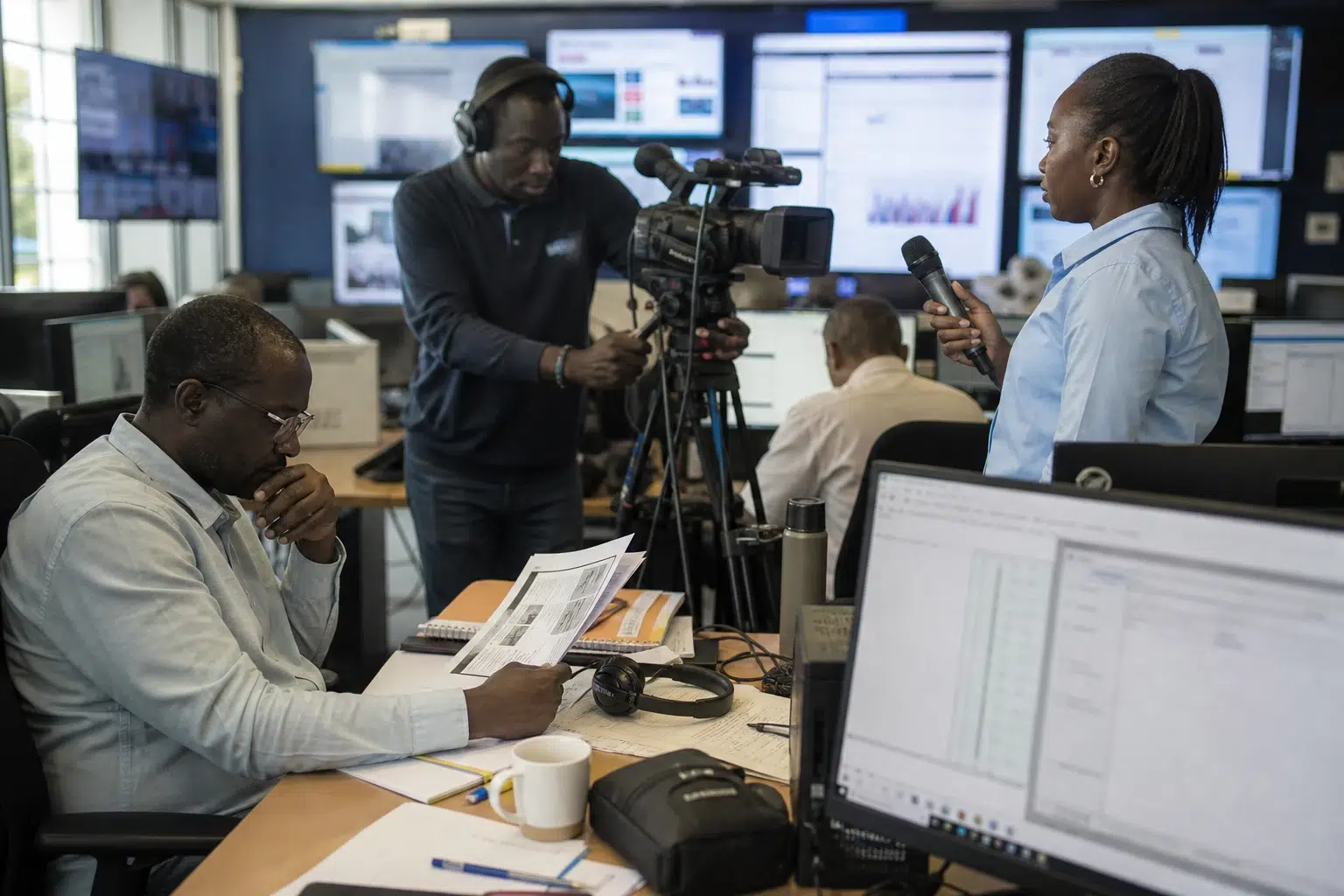
In Senegal, territorial elections are never merely a local affair. They measure a political camp’s real foothold, the strength of alliances and a government’s ability to hold sway over the streets, municipalities and departments at the same time. In Dakar, this contest has taken on particular significance because it is unfolding amid an open rift between Bassirou Diomaye Faye and Ousmane Sonko.
Since the break between the two former allies, Senegal’s governing majority has lost its appearance of unity. In May 2026, the president dismissed Ousmane Sonko as prime minister, then formed a new government with no ministers from Pastef. At the end of July, he also launched his own party, Les Patriotes républicains, formalising a split already visible within the ranks of the government.
This reshaping gives local elections a significance beyond the running of town halls. They could become the first real test of strength between the two camps that emerged from the 2024 victory. The municipal and departmental vote is now seen as a barometer of the president’s popularity, Sonko’s influence and the cohesion of a camp that governs but no longer speaks with one voice.
What electoral law says, and what the opposition fears
The debate is not only political; it is also legal. Senegal’s Electoral Code sets several milestones ahead of a territorial election: the deposit must be set according to a specific timetable, candidacies filed within defined time limits, and voters summoned by decree. The Front for the Defence of Democracy and the Republic, one of the main opposition coalitions, believes these deadlines make it increasingly difficult to hold the vote before 17 January 2027.
In its statement of 5 August 2026, the coalition called for urgent consultations to prevent what it describes as a de facto postponement. It also notes that a regular revision of the electoral roll should have begun on 1 February 2026, or, failing that, been replaced by an exceptional revision once the decree summoning voters had been published. For the opposition, the executive’s silence is fuelling a straightforward concern: a shift in the timetable could lead to an extension of the current local officials’ terms.
The law imposes another constraint. The FDR says voters should be summoned no later than 19 October 2026, and candidate lists should be filed between 24 and 29 October. If these dates are correct, the political window is closing fast. The president has not, as yet, signed the expected decrees to formally launch the process.
A local contest in a country under budgetary pressure
The standoff goes beyond personal rivalry. It is unfolding in Senegal, which faces heavy debt and a tight economic agenda. In 2025, the International Monetary Fund confirmed that an audit by the Court of Auditors had revealed significant under-reporting of deficits and debt between 2019 and 2023, with central government debt revised to 99.7% of GDP at the end of 2023, up from 74.4% previously. In June 2026, the institution again judged fiscal and debt vulnerabilities to be high.
In this context, every electoral deadline becomes a choice of priorities. Holding local elections on time means opening the electoral roll, setting deposits, mobilising the administration and accepting an immediate political risk. Postponing the vote, by contrast, could give the executive some breathing space, but at the cost of suspicion that it is acting out of partisan calculation. That is the view of some opposition figures, who see the current delay as a way to buy time before an unfavourable verdict at the ballot box.
The equation weighs differently on each player. For municipalities still governed by the former presidential party, a postponement would prolong uncertainty but also preserve fragile local positions. For Sonko’s camp, a swift vote could once again become a tool for political revenge after the break with Diomaye Faye. For the president, however, the danger is twofold: appearing inert or entering a territorial contest too soon, before his own political machinery has stabilised.
Voters’ concerns also matter. In cities, the issues include basic public services, sanitation, markets, roads and local taxation. In rural areas, departments have greater influence over access to civil registration, mobility, water and social mediation. This is precisely why territorial elections often serve as the first large-scale opinion poll ahead of the next presidential election.
A test for Dakar, and for West Africa
This Senegalese issue is of interest across West Africa. Senegal remains one of ECOWAS’s democratic heavyweights, and its electoral cycles are often seen as an indicator of institutional stability in the sub-region. A poorly explained postponement of local elections would therefore fuel broader debates about compliance with electoral timetables, the integrity of elections and Parliament’s role in managing political transitions.
The Senegalese president also has a second front to watch: Parliament. According to statements reported in the local press, the executive is considering a dissolution in December and early legislative elections, while discussions have reportedly taken place about possibly holding local and legislative elections simultaneously in 2027. If this plan were confirmed, it would turn the electoral sequence into a comprehensive institutional undertaking, with implications for parties, alliances and perceptions of the balance of power in Dakar.
For now, the sticking point remains the same: the government must strike a balance between the legal timetable, internal cohesion and strategic calculation. The opposition, for its part, is trying to prevent an administrative vacuum from becoming a de facto extension of terms. Caught between the two, Senegalese people are above all waiting for one simple certainty: when will they vote for their mayors and departmental councillors? The answer will say far more than who sits on local councils. It will also show whether the break between Diomaye Faye and Ousmane Sonko has become a lasting governance crisis.