Algeria
 Egypt
 Libya
 Morocco
 Sudan
 Tunisia
 Benin
 Burkina Faso
 Cabo Verde
 Côte d'Ivoire
 Ghana
 Guinea
 Guinea-Bissau
 Liberia
 Mali
 Mauritania
 Niger
 Nigeria
 Senegal
 Sierra Leone
 The Gambia
 Togo
 Cameroon
 Chad
 DR Congo
 Equatorial Guinea
 Gabon
 Republic of the Congo
 São Tomé and Príncipe
 Burundi
 Comoros
 Djibouti
 Eritrea
 Ethiopia
 Kenya
 Madagascar
 Malawi
 Mauritius
 Mozambique
 Rwanda
 Seychelles
 Somalia
 South Sudan
 Tanzania
 Uganda
 Angola
 Botswana
 Eswatini
 Lesotho
 Namibia
 South Africa
 Zambia
 Zimbabwe
An artisanal mining site can feed families. It can also swallow them.
In the Central African Republic, gold remains a source of hope for many seeking a quick income. But in the west of the country, on the border with Cameroon, that hope has once again turned to tragedy. At Zamboyé, in Nana-Mambéré prefecture, the collapse of an artisanal gold-mining site killed more than 100 people, according to rescuers and local officials interviewed on Wednesday 19 August 2026. Survivors with serious injuries were evacuated, while several people remained missing.
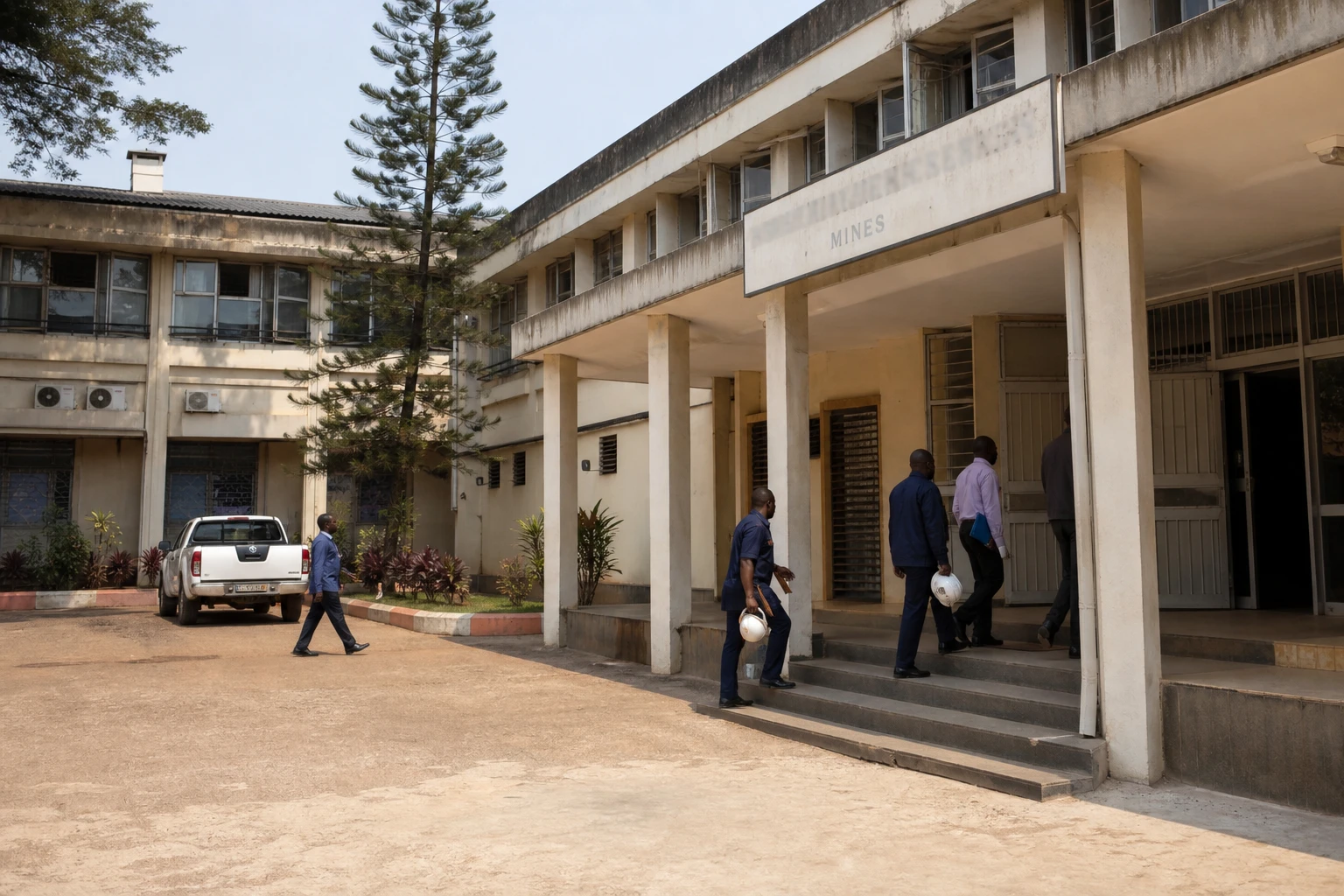
The shock extends beyond the Zamboyé site. It highlights the vulnerability of a Central African mining sector that is still largely artisanal, often poorly regulated and exposed to smuggling. The Central African Republic’s Ministry of Mines nevertheless says that mining activity, whether exploration, extraction or processing, must be governed by an agreement with the state and by a valid licence or authorisation. The Central African Republic Extractive Industries Transparency Initiative (ITIE-RCA) notes, for its part, that the country has significant mining potential, but that in practice gold and diamonds are the main resources mined artisanally.
In Nana-Mambéré, gold draws people in, but safety remains precarious
The disaster occurred on the morning of Tuesday 18 August, according to initial reports, at a rudimentary site where artisanal miners were working. According to accounts gathered at the scene, tunnels gave way and people were buried. A local Red Cross volunteer said more than 100 bodies had been recovered, while a representative of Zamboyé’s youth said the death toll could rise further, as missing people were still being sought. The Baboua prosecutor’s office announced that an investigation had been opened to establish the exact causes of the collapse and identify any potential criminal liability.
The site’s geography partly explains the severity of the accident. Nana-Mambéré is one of the most active gold-mining areas in the west of the Central African Republic. It also lies on a busy border route with Cameroon. In this region, mining operations are multiplying around villages, tracks and wooded areas, often far from mining administration services. ITIE-RCA says the country has at least 470 mineral occurrences, but that mining is still dominated by artisanal operations. This creates local income, but also an economy of precariousness, where pressure to maximise output often takes precedence over prevention.
A useful sector, but still too often beyond control
The Central African Republic is not dealing with an isolated accident. In early June 2026, another collapse had already killed at least eight people at Kinyémé, in Nana-Mambéré, near Baboua. In May 2026, a site at Bé-Mbari was also hit by a deadly collapse. The recurrence of these tragedies shows that the problem is not purely geological. It also stems from the depth of the shafts, a lack of support equipment, inadequate inspections and the spread of informal operations beyond any system of traceability.
Data published by ITIE-RCA provide a useful indication of scale. In 2024, the country exported 112,807.10 carats of rough diamonds worth $12,849,905.50, and 1,172 artisanal miners were recorded in eight compliant zones. But the same document acknowledges that fraud, smuggling and activity outside official channels remain major challenges. In other words, the sector exists, produces and can generate revenue. Yet some of its value still leaks out of official channels, while the most exposed workers bear the risks.
This weak oversight is also fuelling political tensions. In the hours after the disaster, Central African opposition figures accused the state of allowing dangerous sites to proliferate without adequate supervision. This accusation of responsibility is not new. In the Central African Republic, mining has long intersected with questions of public authority, ownership rights over subsoil resources, traceability and the actual presence of the administration in rural areas. As long as artisanal operators work without authorisation, or under authorisations that are poorly monitored, accidents will continue to recur.
A warning for the Central African Republic and the wider region
The Zamboyé disaster reaches beyond the Central African Republic’s borders. The area borders Cameroon, where the state is also trying to bring informal mining under better control and address discrepancies between declared exports and imports recorded by buyer countries. The two countries therefore face the same challenge: bringing gold out of the informal sector without depriving thousands of rural workers of their income. In a sub-region shaped by CEMAC, the issue affects workers’ safety, public revenue and the credibility of traceability chains.
For Bangui, the immediate priorities are to carry out rescue operations, identify the victims, support families and regulate the site. For the state, the challenge is broader: it must prove that the mining code, artisanal permits and oversight mechanisms are more than words on paper. ITIE-RCA says a mining police force is being deployed and several procedural reforms are still advancing in stages. The Zamboyé disaster shows how far the legal framework remains from the reality on the ground. Today, that gap is costing the lives of Central Africans and people who came to work from across the border.