Algeria
 Egypt
 Libya
 Morocco
 Sudan
 Tunisia
 Benin
 Burkina Faso
 Cabo Verde
 Côte d'Ivoire
 Ghana
 Guinea
 Guinea-Bissau
 Liberia
 Mali
 Mauritania
 Niger
 Nigeria
 Senegal
 Sierra Leone
 The Gambia
 Togo
 Cameroon
 Central African Republic
 DR Congo
 Equatorial Guinea
 Gabon
 Republic of the Congo
 São Tomé and Príncipe
 Burundi
 Comoros
 Djibouti
 Eritrea
 Ethiopia
 Kenya
 Madagascar
 Malawi
 Mauritius
 Mozambique
 Rwanda
 Seychelles
 Somalia
 South Sudan
 Tanzania
 Uganda
 Angola
 Botswana
 Eswatini
 Lesotho
 Namibia
 South Africa
 Zambia
 Zimbabwe
A measured return after a break presented as an act of sovereignty
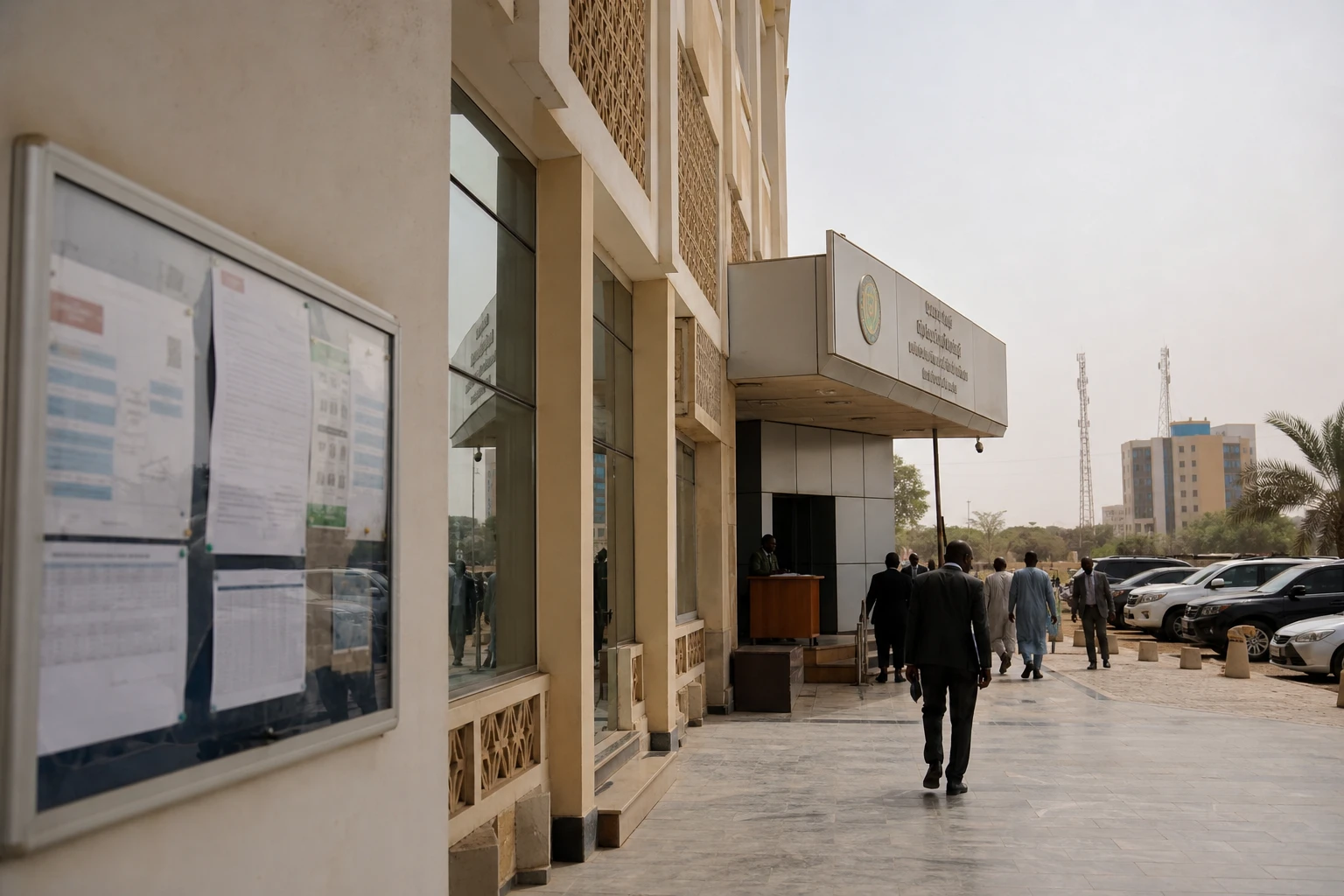
In N’Djamena, the question is no longer simply who is leaving or returning. It is how a state can retain control of its security when Lake Chad remains unstable, the Sudanese border remains fragile and the Chadian army has to cover several fronts at once. In this context, the resumption of military cooperation with France is not merely a diplomatic gesture: it reflects a security choice, without restoring a permanent foreign presence.
Chad has experienced this kind of swing before. On 28 November 2024, N’Djamena ended its defence cooperation agreement with Paris, and the last French soldiers left the country in late January 2025, after around six decades of continuous military presence. Their departure marked the end of a long-established deployment in N’Djamena and Abéché. Chadian authorities presented the decision at the time as an act of sovereignty, while Paris stressed that other forms of cooperation could continue.
An agreement refocused on training, intelligence and air support
The momentum nevertheless resumed after the meeting between Emmanuel Macron and Mahamat Idriss Déby Itno at the Élysée on 29 January 2026. The joint statement refers to a “revitalised partnership”, based on mutual respect and shared interests, and says the two capitals agreed on guidelines to relaunch bilateral relations. In the days that followed, several sources said discreet military cooperation was taking shape again, without a return to permanent bases.
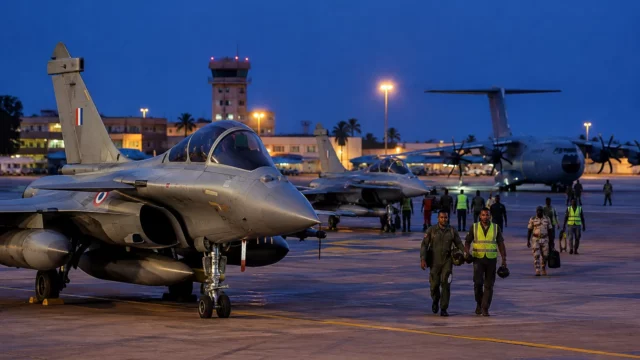
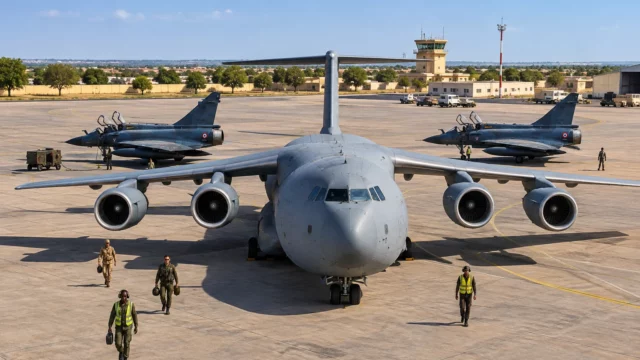
The scope of this arrangement is more limited than before. It is based on training Chadian military personnel, intelligence-gathering and occasional air support since April 2026. A French team returned to N’Djamena in the spring in a reduced format to work with Chadian forces. Diplomatic sources also mentioned an April visit by a delegation from the Directorate General of Armaments to examine the possible sale of helicopters and aircraft to Chad.
This matters. It shows that Franco-Chadian relations are not returning to their former model. Chad is accepting targeted support that is useful in the short term, while retaining the principle of a limited and controlled presence. For France, it is also a way to maintain a foothold in a country that remains strategically important in the central Sahel and the Lake Chad basin, as its permanent deployments have receded across much of West Africa.
Domestic security, border pressures and political calculations
The immediate priority remains security. Lake Chad continues to be a transit area for Boko Haram and Islamic State West Africa Province, two groups that continue to attack Chadian forces and lakeside communities. The United Nations system in Chad confirmed that a Boko Haram attack on 4 May 2026 targeted a Chadian position on Barka Tolorom island, killing 23 people and injuring 26, including military personnel and civilians. Meanwhile, the Lake Chad Basin Commission and the Lake Chad Basin Governors’ Forum continue to pursue a regional strategy for stabilisation, recovery and resilience.
In the north and east of the country, the situation is even more challenging. Chad remains exposed to the effects of the war in Sudan, with heavy pressure on local resources and border security arrangements. UNHCR says the country hosts a very large refugee population from Sudan, while humanitarian agencies warn that funding remains fragile. In this context, any air support, surveillance capability and intelligence-sharing have immediate practical value for the Chadian military command.
Politically, Chad’s leadership is walking a narrow line. It wants to project a clear commitment to sovereignty without giving up partners able to provide capabilities that the national army cannot deploy on its own. The reopening of the French file also comes at a time when N’Djamena is seeking to diversify its alliances, including with other security and defence actors. The message to the domestic public is therefore twofold: Chad no longer wants military tutelage, but it is not closing the door to support it considers useful.
A development with implications for Central Africa, watched well beyond Chad
The issue extends beyond the bilateral relationship. Chad is a security pivot in Central Africa and the Sahel, and also holds a particular place in CEMAC, the Central African regional economic organisation. When N’Djamena adjusts its military cooperation, this affects the balance in the Lake Chad basin, cross-border cooperation with Cameroon, Niger and Nigeria, and the way external partners engage in regional security.
The continental significance is clear. For several years, a number of African states have been reassessing military agreements concluded with Paris or other foreign partners. The Chadian case illustrates a broader trend: African capitals want cooperation that is shorter-term, more technical and more reversible, with a smaller permanent footprint. For France, the challenge is to move from a base-based approach to a mission-based one. For Chad, it is to retain room for manoeuvre against armed groups without ceding political control of its territory.
What happens next will depend above all on how this discreet return takes shape in practice. If it is confirmed, it will be necessary to see whether cooperation is limited to training and a few air assets, or expands into other areas. In an environment where security conditions change rapidly, every defence agreement is now judged against a simple question: does it genuinely help the Chadian state protect its borders and people without reviving the dependencies of the past?