Algeria
 Egypt
 Libya
 Morocco
 Sudan
 Tunisia
 Benin
 Burkina Faso
 Cabo Verde
 Côte d'Ivoire
 Ghana
 Guinea
 Guinea-Bissau
 Liberia
 Mali
 Mauritania
 Niger
 Nigeria
 Sierra Leone
 The Gambia
 Togo
 Cameroon
 Central African Republic
 Chad
 DR Congo
 Equatorial Guinea
 Gabon
 Republic of the Congo
 São Tomé and Príncipe
 Burundi
 Comoros
 Djibouti
 Eritrea
 Ethiopia
 Kenya
 Madagascar
 Malawi
 Mauritius
 Mozambique
 Rwanda
 Seychelles
 Somalia
 South Sudan
 Tanzania
 Uganda
 Angola
 Botswana
 Eswatini
 Lesotho
 Namibia
 South Africa
 Zambia
 Zimbabwe
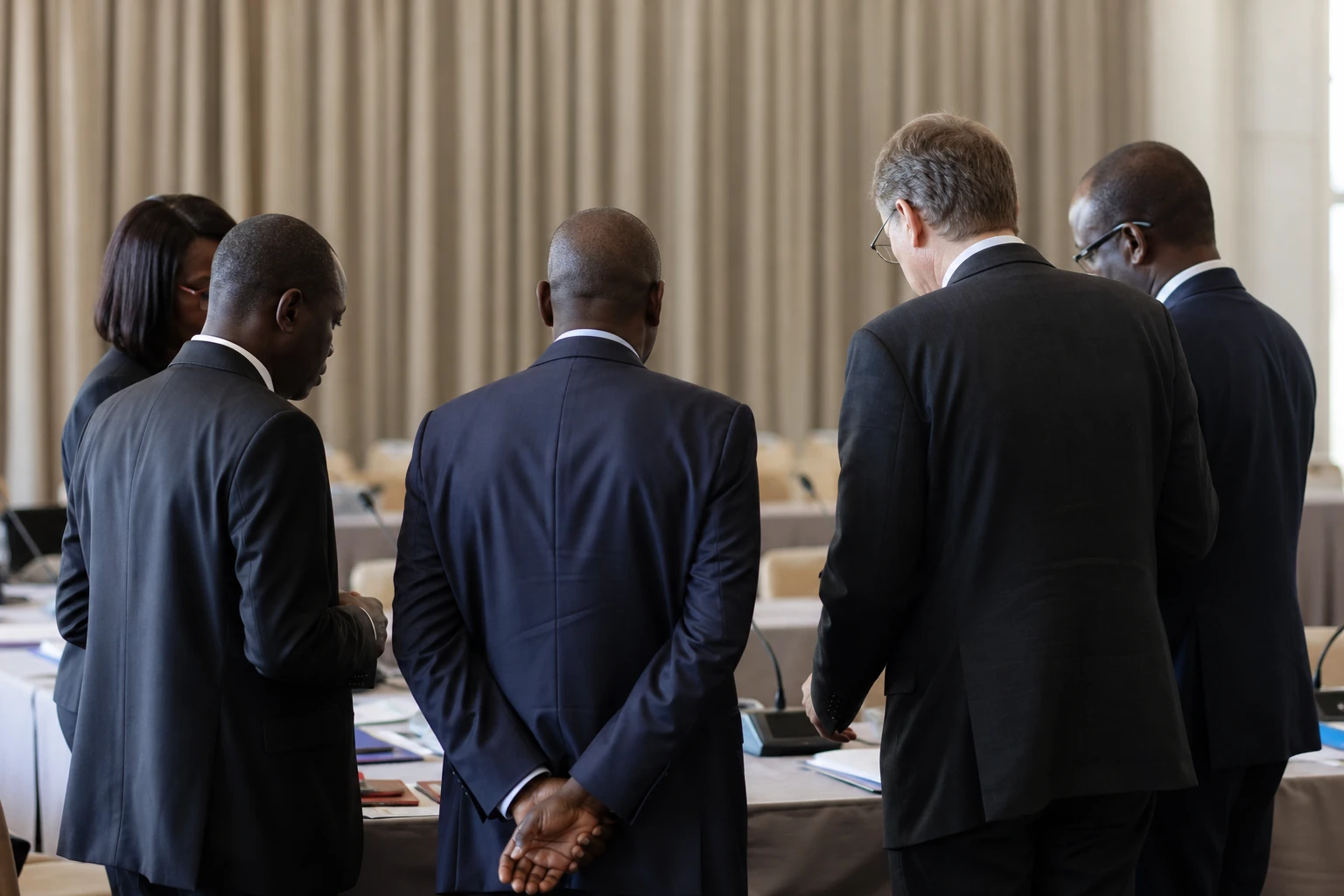
Another meeting in negotiations weighing on the entire economic agenda
In Dakar, the case involving the International Monetary Fund is no longer just a matter for technical experts. It now affects state financing, market confidence and the Senegalese government’s room for manoeuvre. Since major errors in the reporting of debt and the deficit came to light, every exchange with the IMF has been scrutinised as a test of credibility.
Senegal is still seeking to close the chapter that opened in 2024, when the new authorities denounced budget figures that had been understated under the previous administration. The affair led to the suspension of the IMF-backed programme and tighter scrutiny of public finances. In West Africa, such a deadlock never remains isolated: it reverberates across the WAEMU regional market, where Dakar is increasingly refinancing itself to meet its obligations.
Debt, cash flow and reforms: the figures framing the discussion
The most sensitive issue remains the debt stock. The IMF estimates it at 132% of GDP at the end of 2024, an exceptionally high level for the country. The institution also said the overall budget deficit had fallen significantly in 2025, to 6.4% of GDP, thanks to better spending control, but that financial vulnerabilities remained acute.
This pressure on public finances is reflected in the cost of debt service. In 2026, repayments and interest would reach about 5,500 billion CFA francs, or nearly $9.7 billion, according to information reported in the public debate and reflected in the markets. Meanwhile, in March 2026 S&P downgraded Senegal’s local-currency rating to CCC+, with a negative outlook, citing refinancing risks. Moody’s, for its part, assigned the sovereign a Caa1 rating.
In response to these constraints, Dakar has launched the SEN-FINTRAC 2025-2029 programme, focused on public-finance transparency, domestic revenue mobilisation and fiscal consolidation. The World Bank confirmed its support for this reform framework in 2025. Aligned with Vision 2050, it now serves as the Senegalese government’s guiding framework.
What the IMF wants to secure before a new agreement
This is not the first exchange between the IMF and the Senegalese authorities. In June 2026, an IMF mission had already visited Dakar to assess the macroeconomic situation and discuss the measures needed to make progress. The institution then praised “open and constructive” discussions and stressed that the deficit reduction in 2025 was not enough to erase debt-related vulnerabilities.
A few months earlier, in September 2025, IMF spokesperson Julie Kozack said teams had discussed with the Senegalese authorities corrective measures related to the misreporting case, as well as the contours of a possible new programme backed by the institution. This confirms a two-stage approach: first settle the legacy of the previous period, and only then rebuild a financing framework.
Against this backdrop, the early payment of two bond coupons in early June 2026 was seen as a signal to investors. RTS reported that the state had paid €53.75 million on a eurobond due in 2037 and $38.8 million on a dollar bond due in 2031. The move does not ease the cash-flow strain, but it shows that Dakar wants to avoid any visible slippage just as talks with the IMF resume.
What this means for Senegalese people, and why the region is watching closely
For households, the stakes are not abstract. When the state finances more of its debt in the short term, it leaves less room for public investment, targeted subsidies, social services and spending to support economic activity. The effects quickly show up in prices, delays in government payments and the government’s ability to deliver on its employment pledges. Senegal’s large informal sector often feels these pressures before they appear in official accounts.
For the authorities, by contrast, a future agreement with the IMF would have strategic value. It would open the door to cheaper financing, facilitate access to development partners and could stabilise a fragile sovereign credit standing. But the Fund wants clear assurances: reliable budget data, monitoring of commitments and reform of debt-management mechanisms. In other words, the issue is not just the amount of financing, but the governance approach surrounding it.
The implications extend beyond Senegal. In the WAEMU, financing pressures on a member state can affect regional auctions, the yields offered by public treasuries and the broader financial climate. At continental level, the case also shows that an economy with hydrocarbons is not protected by its new resources if budget transparency does not keep pace. Senegal is therefore seeking to turn a crisis of confidence into a lasting recalibration. The next step will depend on whether Dakar and the IMF can agree on a credible programme that is compatible with the country’s cash-flow constraints and the reform requirements set by the Senegalese authorities.