Algeria
 Egypt
 Libya
 Morocco
 Sudan
 Tunisia
 Benin
 Burkina Faso
 Cabo Verde
 Côte d'Ivoire
 Ghana
 Guinea-Bissau
 Liberia
 Mali
 Mauritania
 Niger
 Nigeria
 Senegal
 Sierra Leone
 The Gambia
 Togo
 Cameroon
 Central African Republic
 Chad
 DR Congo
 Equatorial Guinea
 Gabon
 Republic of the Congo
 São Tomé and Príncipe
 Burundi
 Comoros
 Djibouti
 Eritrea
 Ethiopia
 Kenya
 Madagascar
 Malawi
 Mauritius
 Mozambique
 Rwanda
 Seychelles
 Somalia
 South Sudan
 Tanzania
 Uganda
 Angola
 Botswana
 Eswatini
 Lesotho
 Namibia
 South Africa
 Zambia
 Zimbabwe
A long-awaited return to Conakry
For years, Guinean football has lived with a frustrating contradiction. The country had players, supporters and clubs. What it lacked was the essential: an approved venue to host major international fixtures at home, in Conakry. With the 28 September Stadium temporarily approved as a category 3 venue, Guinea is finally reopening a door that has been shut for far too long.
This decision is about more than a building. It affects Guinea’s place in the continental calendar, the ability of its sporting institutions to meet the Confederation of African Football’s standards, and the relationship between the national team, its supporters and its territory. In West Africa, where home matches carry considerable weight in qualification campaigns, playing in Conakry changes far more than the atmosphere at a game.
What the CAF says, and what it changes
According to CAF documents, temporary approval means that a stadium broadly meets the minimum requirements, while retaining a few points to be addressed within a timeframe set by the governing body. The same regulations also specify that a country without an approved stadium must host its matches in another authorised territory. Category 3 approval opens the door to leading continental competitions, including the group stages and quarter-finals of men’s club competitions.
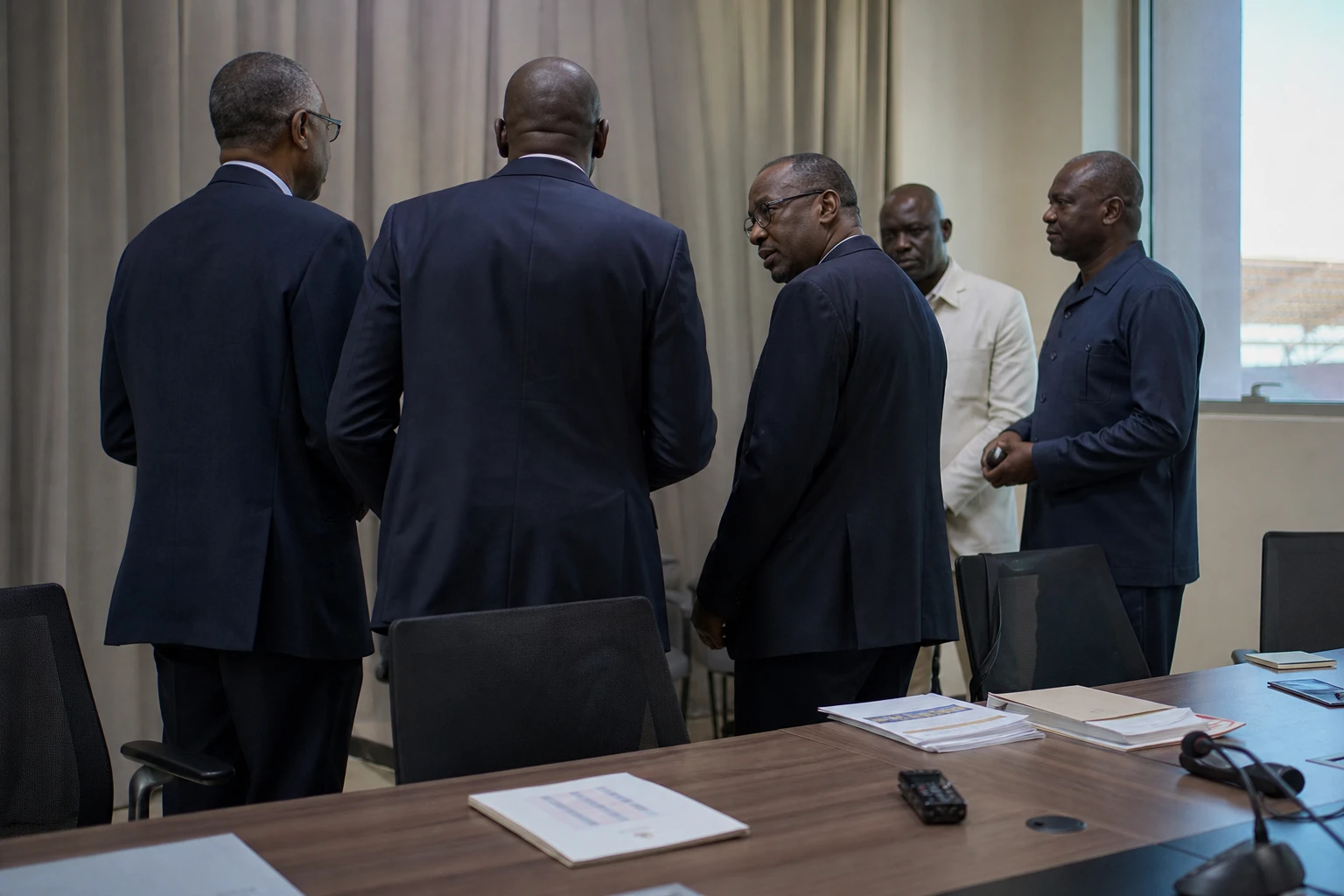
In Guinea’s case, the return to the 28 September Stadium should be seen as the culmination of work monitored over several months. On 5 March 2026, a video conference between the Guinean Football Federation, CAF and the company in charge of the work had already confirmed that the process was moving towards a compliance inspection. The federation said at the time that category 3 approval was being sought, with an inspection mission subsequently announced.
This progress also sheds light on the calendar. The qualifying window for the 2027 Africa Cup of Nations opens from 21 September to 6 October 2026, then resumes in November. Guinea, placed in a group that includes Kenya, among others, had no interest in remaining without a credible home venue for long. Returning to Conakry means regaining home advantage, but also having a simpler logistical base for national teams and clubs competing in Africa.
The symbolism is powerful, because the 28 September Stadium is tied to the country’s sporting and political history. Built to embody a sovereign Guinea, it remains one of the landmarks of national football in Conakry. Bringing it up to standard is therefore no small matter. It says something about how the state, private operators and sporting bodies can — or cannot — work together to restore a shared space.
Relief is evident among those involved in the game. Sports journalists, who for years followed the Syli National’s matches far from home, are returning to a more vibrant workplace. Supporters, meanwhile, are regaining a practical role. In a country where football shapes a significant part of public life, this is no minor detail: Guinean fans are once again part of the balance of power in a match.
It is also worth recalling why this situation lasted so long. In June 2022, the home match between Guinea and Malawi was marred by a pitch invasion at the General Lansana Conté Stadium in Nongo. The incident affected perceptions of the safety and organisation of matches in Guinea. It also served as a reminder that stadium approval depends not only on concrete or the pitch, but on discipline across the event as a whole.
Sporting, economic and regional stakes
The return of international matches to Conakry has a direct impact on clubs and the football economy. A home match cuts travel costs, makes preparation easier and boosts the appeal of ticket sales, even when the market remains modest. It also brings work back to sport-related sectors: the press, security, transport, catering, street vendors and technical service providers. In an urban economy such as Conakry’s, these benefits are tangible.
The impact is also institutional. For the Guinean Football Federation, this temporary approval validates an approach, but does not close the matter. The statement circulated about the stadium notes that further corrective work is still needed to achieve full and lasting compliance. In other words, the challenge is not simply to host a match in September or early October 2026. It is to prove that Guinea can sustain the standard over time, without another suspension.
Regionally, the issue extends beyond Guinea. ECOWAS is not directly involved here, but the stakes are clearly West African: the movement of competitions, federations’ ability to host matches and the credibility of sports infrastructure are often matters of regional importance before they are visible globally. A Guinea that hosts matches at home also strengthens competition in West Africa, where several national teams still have to alternate between genuine home venues and replacement venues.
Two things will now need to be watched. First, whether the first matches announced at the 28 September Stadium actually take place, particularly those involving Hafia and Horoya in club competitions, which will serve as a practical test. Second, whether the sporting authorities can turn temporary approval into stable compliance. That is the real measure of the return: not simply a first match back, but a lasting end to Guineans’ sporting exile from Conakry.