
 Algeria
 Egypt
 Libya
 Morocco
 Sudan
 Tunisia
 Benin
 Burkina Faso
 Cabo Verde
 Côte d'Ivoire
 Ghana
 Guinea
 Guinea-Bissau
 Liberia
 Mali
 Mauritania
 Niger
 Nigeria
 Senegal
 Sierra Leone
 The Gambia
 Togo
 Cameroon
 Central African Republic
 Chad
 Equatorial Guinea
 Gabon
 Republic of the Congo
 São Tomé and Príncipe
 Burundi
 Comoros
 Djibouti
 Eritrea
 Ethiopia
 Kenya
 Madagascar
 Malawi
 Mauritius
 Mozambique
 Rwanda
 Seychelles
 Somalia
 South Sudan
 Tanzania
 Uganda
 Angola
 Botswana
 Eswatini
 Lesotho
 Namibia
 South Africa
 Zambia
 Zimbabwe
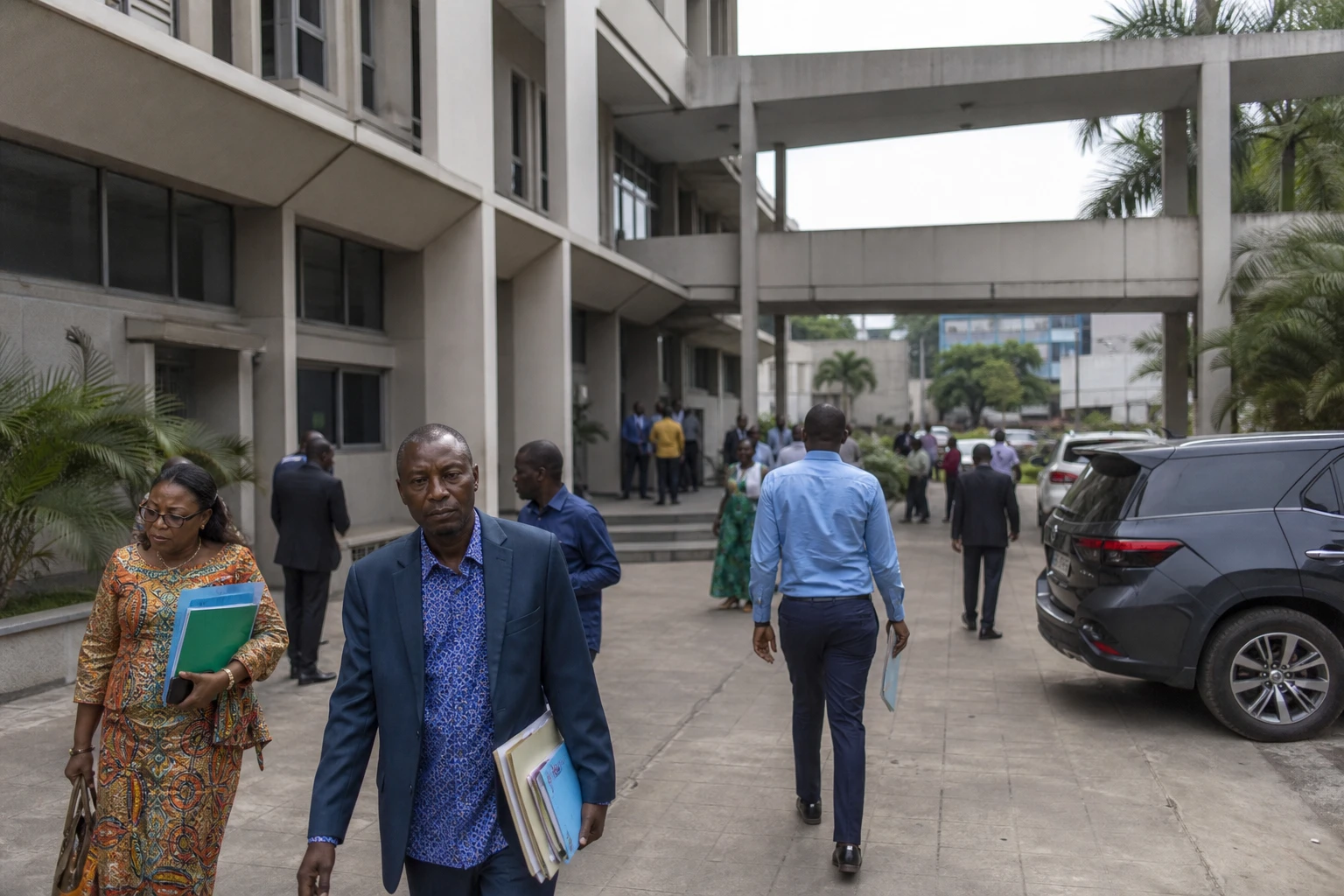
A local peace extending beyond Maï-Ndombe
In western Democratic Republic of Congo, security cannot be reduced to a front line. It also plays out on tracks, in markets, on customary lands and along roads used every day by traders, families and displaced people. When a militia retreats, the real question is not only military. It is also about land, administration and society.
The crisis that began in Kwamouth, in Maï-Ndombe, quickly spread to Kwilu, Kwango and the outskirts of Kinshasa, notably Maluku. It therefore affects a pivotal area between the capital and the Bandundu hinterland, along routes such as the RN17, which is essential for agricultural trade and the movement of people. In this case, western Congo is not a distant periphery: it is a vital corridor between the province-city of Kinshasa and several production zones.
What Kinshasa says, and what corroborated sources show
The Congolese government says it has made progress against the Mobondo, an armed movement that emerged in 2022 in Kwamouth territory following a land dispute between communities on the Batéké Plateau. Elements of the case corroborated by Congolese sources and monitoring organisations indicate that the violence caused more than 5,000 deaths and displaced around 280,000 people, although other humanitarian counts at times cited even higher tolls. The latest figure should therefore be read as a cautious estimate, not a definitive tally.
In this context, Éliezer Ntambwe, deputy minister in charge of former combatants, said that nearly 600 former militiamen had been transferred to Kaniama Kasese, in Haut-Lomami, for training by the National Service. This figure is consistent with several reports published in recent months by Congolese media and the Presidency, which show that the Kaniama Kasese site is now used as a training and reintegration centre for volunteers from several provinces, including former Mobondo members.
The minister also cited 146 weapons officially handed over to the authorities and 72 villages pacified. Here too, the progress is real, but should be viewed with caution. First, surrenders do not automatically mean that armed networks have disappeared. Second, fighters are still reported to be in the bush, and security operations continue along several routes in Grand Bandundu. The FARDC also announced in late July 2026 the arrest of a Mobondo leader nicknamed “Odon” and his bodyguards, a sign that the movement has not been completely dissolved.
Why Kinshasa’s chosen approach matters
The government is now relying on awareness-raising, surrender and reintegration rather than a purely offensive escalation. This choice is not neutral. In a crisis rooted in a land dispute, a military response alone can contain the violence without resolving it. Conversely, an exit through disarmament, demobilisation and reintegration, often summarised by the acronym DDR, can reduce the capacity to cause harm while leaving the central question open: who controls the land, who arbitrates disputes, and with what authority?
The government also offers a political interpretation of the case. According to this view, it is not a war between communities, but a land dispute that has turned violent and been exploited by armed actors. This distinction matters. It avoids trapping the Teke and Yaka in a fixed communal interpretation. Above all, it serves as a reminder that local governance, access to land, weak administration and the gradual retreat of the state all played a major role in the outbreak of violence. This is precisely what several independent analyses of the crisis in western Congo have highlighted.
On the ground, the impact is tangible. Villages that reopen can restart farming, small businesses and transport. Displaced families can consider returning, but only if roads are safe, homes still exist and customary disputes do not flare up again. The RN1 and RN17 routes, as well as secondary roads, therefore remain strategic. When a road becomes passable again, it is not only the army that can breathe easier. The informal economy, weekly markets and supplies to Kinshasa also benefit.
Regional significance: a test for stabilisation in Congo
The DRC belongs both to ECCAS, the Economic Community of Central African States, and SADC, the Southern African Development Community. It has also been a member of the East African Community since 2022. This dual, and now triple, regional affiliation gives every security crisis a significance beyond the national framework alone. Instability in the west affects access to the capital, but also weighs on domestic security dynamics monitored by regional partners.
For Central Africa, the Mobondo case is a reminder that a local crisis can become entrenched when access to land, the presence of the state and customary mediation are not addressed together. For the DRC, it also raises a question of consistency: stabilisation cannot remain focused on the east of the country while the west is also experiencing organised violence. The next steps will therefore be closely watched: whether surrenders continue, villages are secured, collected weapons are dealt with, and, above all, whether Kinshasa can turn announced returns into lasting peace without leaving the root causes untouched.



