Algeria
 Egypt
 Libya
 Morocco
 Sudan
 Tunisia
 Benin
 Burkina Faso
 Cabo Verde
 Côte d'Ivoire
 Ghana
 Guinea
 Guinea-Bissau
 Liberia
 Mali
 Mauritania
 Niger
 Nigeria
 Senegal
 Sierra Leone
 The Gambia
 Togo
 Cameroon
 Central African Republic
 DR Congo
 Equatorial Guinea
 Gabon
 Republic of the Congo
 São Tomé and Príncipe
 Burundi
 Comoros
 Djibouti
 Eritrea
 Ethiopia
 Kenya
 Madagascar
 Malawi
 Mauritius
 Mozambique
 Rwanda
 Seychelles
 Somalia
 South Sudan
 Tanzania
 Uganda
 Angola
 Botswana
 Eswatini
 Lesotho
 Namibia
 South Africa
 Zambia
 Zimbabwe
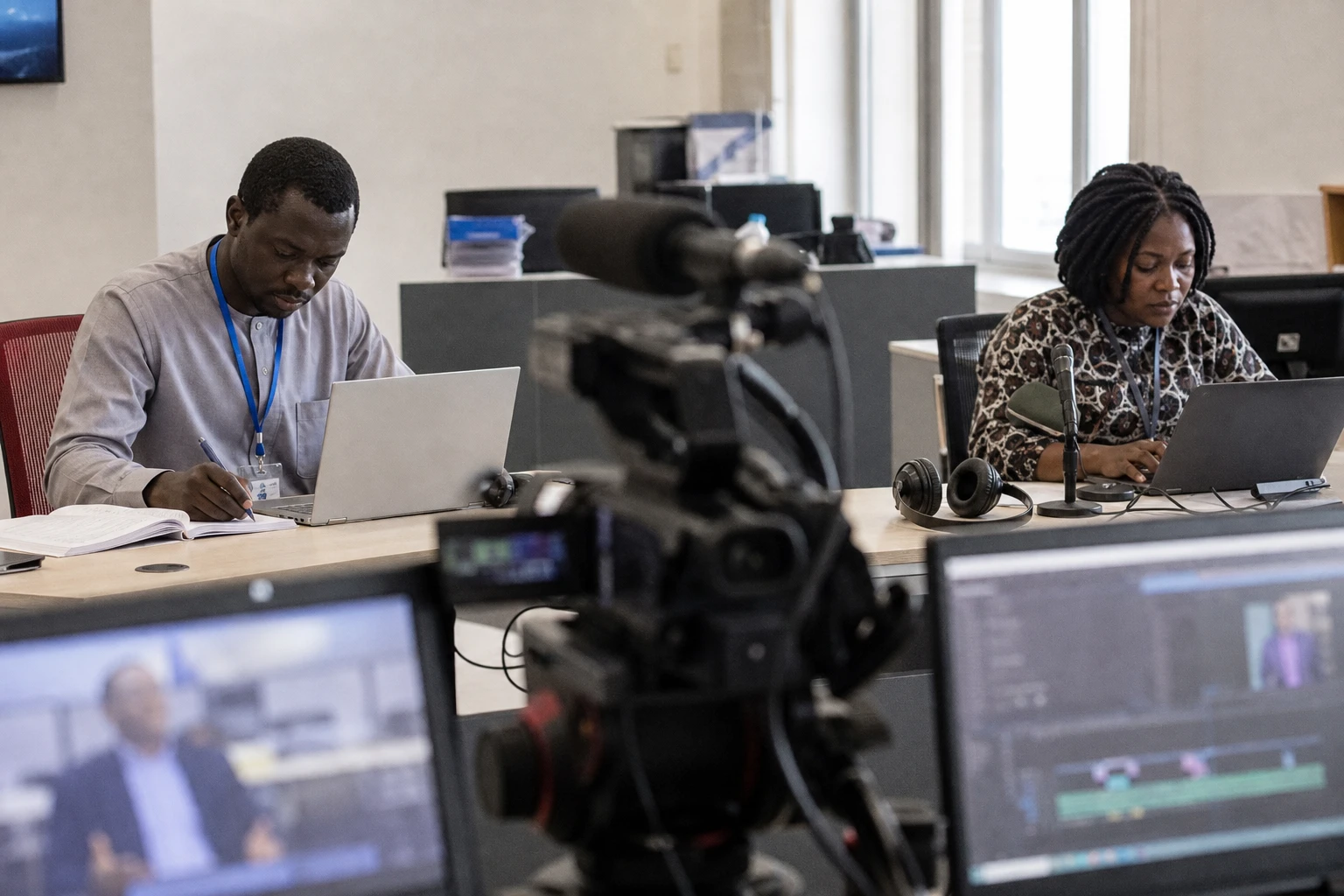
In N’Djamena, reconciliation remains a political project, not a slogan
The move has reignited a debate that Chad has revisited in successive phases: should the circle of power be widened to stabilise the country, or should a more restrictive line be maintained in the name of state authority? The release of Succès Masra, former prime minister and leader of Les Transformateurs, has put the question back at the centre of political life. But as soon as the opposition leader raised the idea of a government of national unity, the presidential camp shut the door, saying the possibility was « not at all on the agenda ».
This episode comes in a country where the transition that began after Idriss Déby Itno’s death in April 2021 led to a return to constitutional order in 2025, without dispelling tensions over political inclusion, civil liberties and the role of the opposition. The United Nations welcomed the institutional return while recalling that restrictions on civil and political rights remain a sensitive reality.
A political signal in a highly presidential system
In Chad, executive power remains largely centred in N’Djamena. The president chairs the Council of Ministers, sets the political direction and arbitrates government power balances. Communications Minister Gassim Chérif Mahamat speaks for the cabinet. Chadian institutional documents confirm this role, while recent public statements have shown him at the forefront on security and political issues.
It is in this context that the response to Succès Masra should be read. The opposition leader long embodied a political alternative to Mahamat Idriss Déby Itno, first as a critic of the system, then as prime minister from January to May 2024 in an attempt at political compromise. His trajectory subsequently took a harsher turn, with his conviction to 20 years in prison in 2025, a decision upheld by Chad’s higher courts in May 2026, according to several media outlets and human rights monitoring organisations.
The pardon does not erase the recent past. It recasts it. Politically, it opens a door to dialogue. Institutionally, it does not, at this stage, change the actual balance of power. The message from the executive is clear : an opponent’s return to public life does not automatically entail power-sharing.
Why the idea of national unity keeps returning in Chad
Chad has no shortage of precedents. Political agreements, transitional openings and promises of reconciliation have marked recent public life, without always producing lasting coalitions. The war in Sudan, on the eastern border, also weighs on domestic politics. The United Nations has stressed that the country remains exposed to a multidimensional crisis, amid security pressures, the mass reception of Sudanese refugees and restrictions on civic space.
In this context, talking about national unity is not just a question of ministerial posts. It is a way of raising the question of access to decision-making, regional representation and the place afforded to political forces that do not control the state apparatus. For part of the urban population, especially young people in N’Djamena and other major cities, the issue is the credibility of the political process. In rural areas, it is measured more by security, prices, displacement and the effective presence of the state.
Chad also has a strong regional dimension. A member of CEMAC, the Economic and Monetary Community of Central Africa, the country occupies a pivotal position between the Sahel, the Lake Chad basin and Central Africa. Political stability in Chad therefore affects more than its national institutions : it influences trade, security balances and regional mediation. CEMAC also notes that its member states share the goal of a common market and free movement.
What the government’s position reveals
By saying that national unity was « not on the agenda », the executive is seeking to control the pace. It wants to show that it remains master of the political calendar, even as Succès Masra’s release could be read as a gesture of appeasement. This is a way of distinguishing judicial clemency from a political concession. The message is aimed as much at supporters of the government as at foreign partners, who are often attentive to Chad’s institutional stability.
But this calculation has its limits. In Central Africa, governments that close avenues for negotiation too quickly risk fuelling a resentful opposition. Conversely, inclusionary formulas without real guarantees can generate frustration in the other direction. The Masra case therefore lies on a familiar knife-edge : too much openness can blur state authority, while too much closure can fuel mistrust.
For Les Transformateurs, the challenge is to turn a release into political leverage without appearing to capitalise on an individual favour. For the government, the challenge is the opposite : to ensure that a gesture presented as humanitarian or republican is not interpreted as the beginning of a forced shift in the balance of power. Between the two, Chadian society is above all waiting for tangible signs : security, justice, jobs and more predictable institutions.
A Chadian affair, but a test for all of Central Africa
This case goes beyond the rivalry between Mahamat Idriss Déby Itno and Succès Masra. It raises questions about how the region’s states manage the end of transitions, powerful opposition movements and the balance between public order and pluralism. In Bangui, Yaoundé, Libreville and Brazzaville, regional observers are also watching such episodes for signs of whether political systems can absorb dissent without stifling debate.
The next point to watch is less an immediate announcement than the institutional steps that follow : what conditions apply to the pardon ? How much room to speak will the opposition retain ? Will there be a new forum for political dialogue, even without a government of national unity ? In Chad, the answers will show whether the current easing of tensions is merely an episode or the beginning of a more lasting reshaping of power in N’Djamena.