Algeria
 Egypt
 Libya
 Morocco
 Sudan
 Tunisia
 Benin
 Burkina Faso
 Cabo Verde
 Côte d'Ivoire
 Ghana
 Guinea
 Guinea-Bissau
 Liberia
 Mali
 Mauritania
 Niger
 Nigeria
 Senegal
 Sierra Leone
 The Gambia
 Togo
 Cameroon
 Central African Republic
 Chad
 DR Congo
 Equatorial Guinea
 Gabon
 Republic of the Congo
 São Tomé and Príncipe
 Burundi
 Comoros
 Djibouti
 Eritrea
 Kenya
 Madagascar
 Malawi
 Mauritius
 Mozambique
 Rwanda
 Seychelles
 Somalia
 South Sudan
 Tanzania
 Uganda
 Angola
 Botswana
 Eswatini
 Lesotho
 Namibia
 South Africa
 Zambia
 Zimbabwe
A local war spilling beyond internal borders
In Addis Ababa, an announcement of an armed coalition is never read as a simple factional dispute. In Ethiopia, where political lines often overlap with regional identities, every rapprochement between armed groups affects the balance between the federal government, the regions and the neighbours of the Horn of Africa. The latest signals from Amhara and Tigray have put this dynamic under renewed strain.
The context remains that of a country only just emerging from several periods of war and instability. The cessation of hostilities agreement signed in Pretoria in November 2022 between the Ethiopian federal government and the TPLF, under the auspices of the African Union, was meant to close the deadliest chapter of the conflict in the north. But its implementation left sensitive questions unresolved: disarmament, the status of the TPLF, the return of displaced people, internal borders and security in neighbouring regions.
What the announced alliance says
According to an announcement by Zemene Kassie, the head of the Fano militia, alliances have been forged with other armed forces, including Tigrayan actors. The move is being presented as a tactical understanding against Prime Minister Abiy Ahmed, as Fano remains locked in a protracted standoff with the federal centre. In practice, Fano has established itself as an influential Amhara armed force, and several sources have already described its offensives as a direct threat to the state’s ability to control the north of the country.
Tigray, for its part, remains a politically sensitive area. The African Union continues to stress that the 2022 agreement was intended to bring lasting stability to the region after the war between the federal army and the TPLF. But in 2026, several signs show that the situation remains fragile, with persistent tensions over the TPLF’s institutional status, regional security and relations between the federal and Tigrayan authorities.
Why the rapprochement worries Addis Ababa
For the federal government, a coalition between former adversaries blurs the usual lines of the Ethiopian conflict. During the Tigray war, Amhara Fano fighters fought alongside federal forces against Tigrayan forces. Their now discussing an understanding, even a tactical one, with actors from Tigray means that yesterday’s hostility is no longer enough to define today’s loyalties. Above all, this shift reflects a shared rationale: opposition to Abiy Ahmed has become the most immediate unifying factor for several armed groups.
This reshaping is not only military. It also reflects a deep political crisis over the distribution of power, disputed territories and the place of the regions within the Ethiopian federal state. In Amhara, people have lived for months with the effects of fighting, movement restrictions and insecurity. In Tigray, the authorities and residents remain marked by the human and material consequences of the war, while the return to institutional normality remains incomplete. The effects are therefore not the same: leaders are seeking room for manoeuvre, but civilians bear the direct cost of escalation.
The federal government, meanwhile, continues to portray several armed groups as coordinated threats. In recent statements, Addis Ababa has accused insurgent forces of working together to disrupt movement, security and administrative operations in several regions. This security-focused interpretation deepens mistrust, but does not erase the underlying problem: as long as political and territorial grievances remain without a lasting resolution, tactical alliances will find fertile ground.
The Horn of Africa in focus
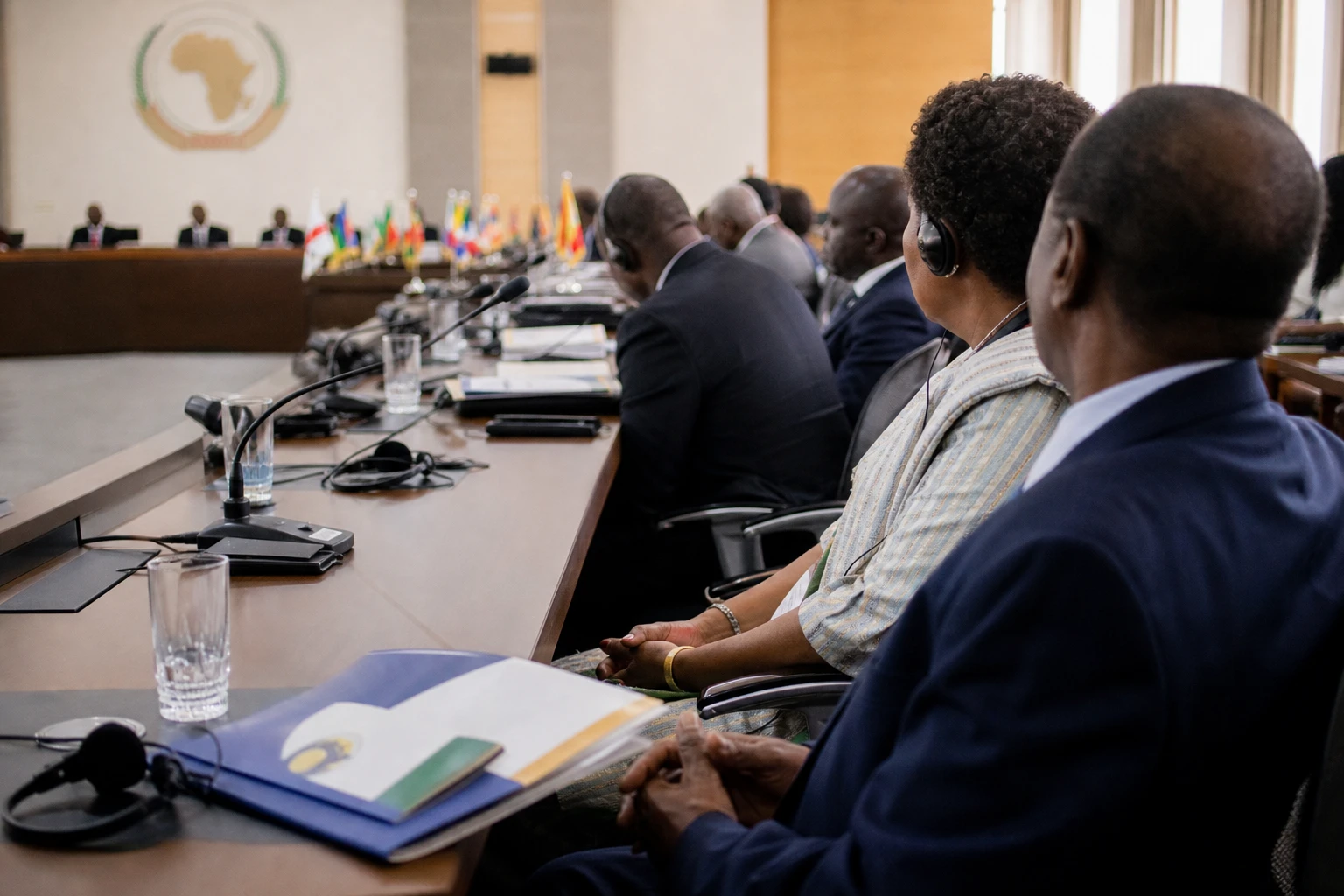
The significance of this announcement extends beyond Ethiopia. Ethiopia is a pivotal country in the Horn of Africa, and any prolonged weakening of Addis Ababa affects regional balances, particularly within the IGAD area, where border tensions, the movement of fighters and humanitarian repercussions are closely monitored. The African Union, based in Addis Ababa, has also made implementation of the Pretoria ceasefire a major test of the credibility of peace on the continent.
Specialist analysts also point out that a new cycle of fighting could revive old rivalries in the north and west of the country, and complicate relations with Eritrea, Sudan and other neighbouring centres of crisis. In an environment already burdened by the war in Sudan and security tensions in several countries in the region, an escalation of armed conflict in Ethiopia would have knock-on effects on displacement, trade and regional diplomacy.
The point to watch now is not only the strength of the announced alliance. It is its actual ability to hold together in the face of internal divisions, territorial rivalries and pressure from the federal government. In Ethiopia, armed coalitions change shape quickly. But when they emerge around a shared rejection of Addis Ababa, they can reshape the balance of power between centre and periphery across East Africa, far beyond any one region.