Algeria
 Egypt
 Libya
 Morocco
 Sudan
 Benin
 Burkina Faso
 Cabo Verde
 Côte d'Ivoire
 Ghana
 Guinea
 Guinea-Bissau
 Liberia
 Mali
 Mauritania
 Niger
 Nigeria
 Senegal
 Sierra Leone
 The Gambia
 Togo
 Cameroon
 Central African Republic
 Chad
 DR Congo
 Equatorial Guinea
 Gabon
 Republic of the Congo
 São Tomé and Príncipe
 Burundi
 Comoros
 Djibouti
 Eritrea
 Ethiopia
 Kenya
 Madagascar
 Malawi
 Mauritius
 Mozambique
 Rwanda
 Seychelles
 Somalia
 South Sudan
 Tanzania
 Uganda
 Angola
 Botswana
 Eswatini
 Lesotho
 Namibia
 South Africa
 Zambia
 Zimbabwe
A recovery that is advancing, but without sustained acceleration
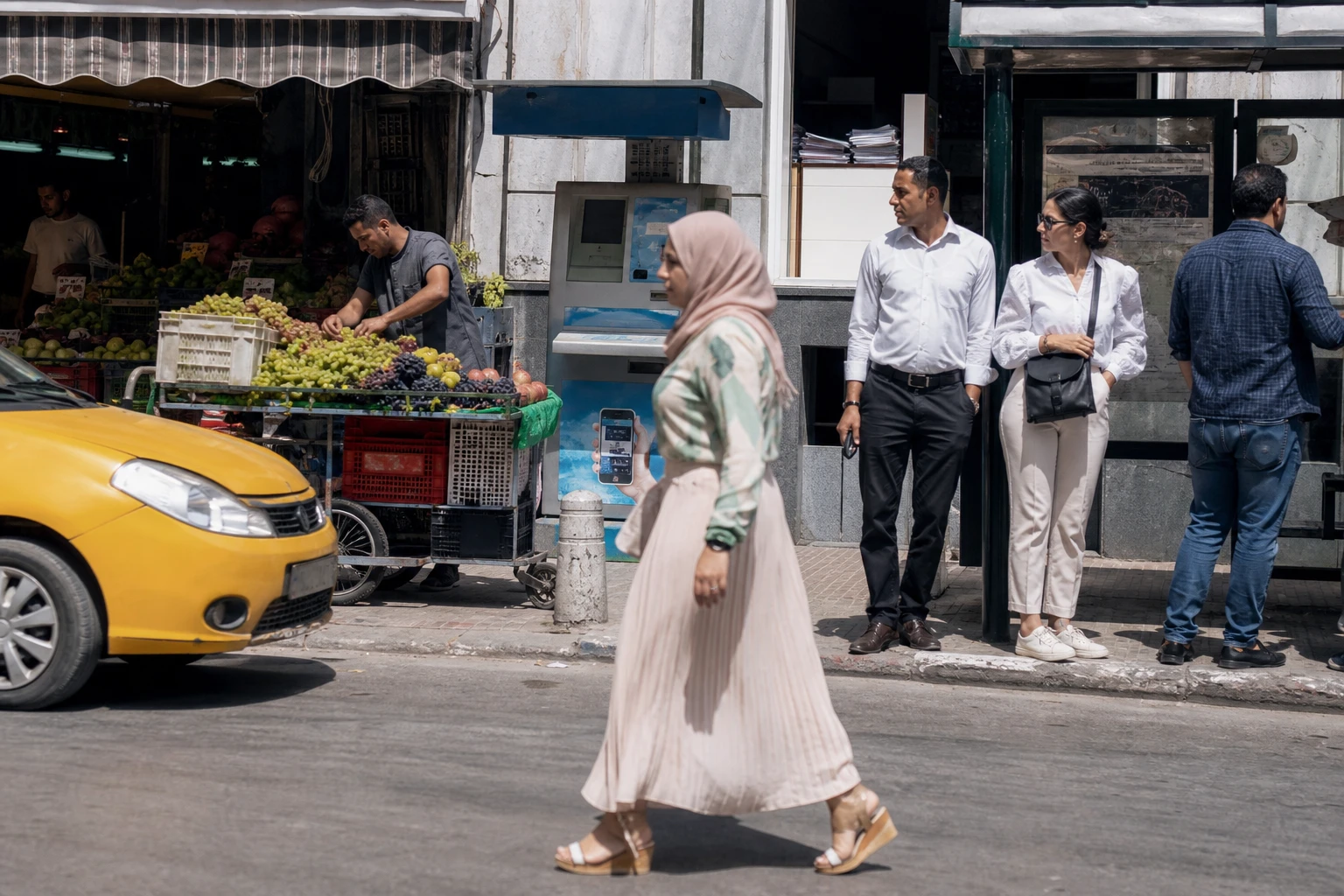
In Tunis, the figures for the second quarter of 2026 tell the story of an economy holding steady, but not gaining momentum. Tunisia’s gross domestic product grew by 2.3% year on year, according to the National Institute of Statistics, after 2.6% in the first quarter and 3.2% in the second quarter of 2025. The momentum remains positive. But it also confirms a slowdown that has been perceptible for several quarters.
This kind of trajectory matters well beyond macroeconomic tables. In Tunisia, where services account for a large share of employment and agriculture remains a social stabiliser in several regions, slower growth can quickly be felt in consumption, investment and fiscal room for manoeuvre. It also says something about the country’s ability to turn its strengths into a more solid recovery.
Agriculture and services drive activity, while mining holds it back
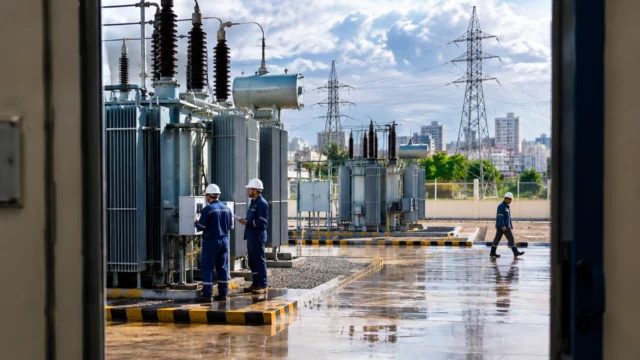
The sectoral breakdown is revealing. Agriculture grew by 5.5%, services by 1.9% and construction by 3.6%. By contrast, the energy, mining, water, sanitation and waste sector contracted by 1.7%, as mining activity fell by 9.6% and oil and natural gas extraction by 1.1%. The quarter was therefore saved by domestic drivers, but penalised by extractive sectors that continue to weigh on the economy as a whole.
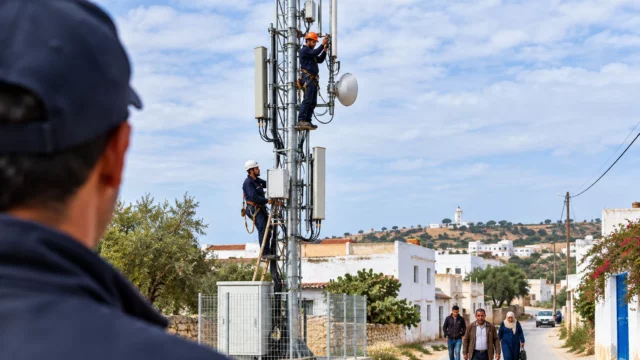
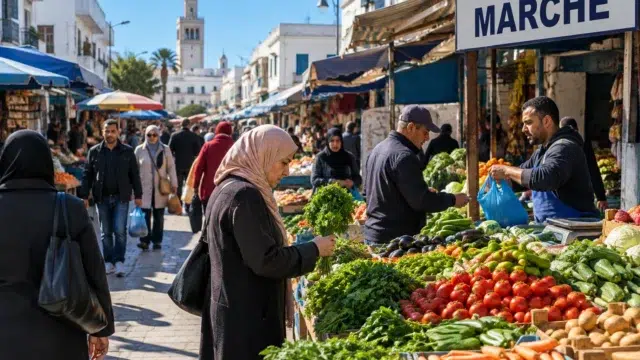
This configuration is no trivial matter for Tunisia. Agriculture remains sensitive to water availability, weather events and seasonality. Services, meanwhile, account for a large share of urban activity, from trade and transport to tourism and communications. When these two pillars advance, the economy can breathe. But when hydrocarbons and mining decline, the country loses a share of its revenue, associated jobs and foreign currency. This is one of the factors behind the slowdown observed in spring 2026.
The contrast with previous quarters confirms this trend. In the first quarter of 2026, growth had already come in at 2.6%, and the INS had reported a limited quarterly increase of 1.4% compared with the previous quarter. The rise in the second quarter therefore does not reverse the slowdown: it merely cushions it.
What this pace says about Tunisia’s room for manoeuvre
The slowdown comes amid continued financial constraints. Talks between Tunis and the International Monetary Fund have been stalled since 2023, following the failure of a $1.9 billion financing agreement linked to reforms considered politically sensitive, particularly those concerning subsidies and some state-owned enterprises. Since then, Tunisia has been moving forward without a substantial external safety net, seeking to preserve its fiscal balance and essential imports.
In this context, every point of growth matters. Slower activity reduces potential tax revenue, complicates state financing and limits the ability to invest in infrastructure, water, energy and transport. Conversely, stronger agriculture and more dynamic services provide immediate support to households and small businesses. But this foundation remains fragile as long as the extractive industry fails to recover sustainably and financing conditions remain tight.
The social picture also warrants close attention. In the capital, the effects are felt mainly through commercial activity, prices, skilled employment and demand for services. In the country’s interior, agriculture and some mining sites have a greater impact on local incomes. When water, mining or hydrocarbons slow, regional disparities widen faster than they narrow. This is an economic reality, but also a question of territorial balance.
A signal to watch for North Africa and the continent
For North Africa, Tunisia remains a useful case to watch. The country is seeking to combine macroeconomic stability, a productive recovery and a transition to a model less dependent on climate shocks and energy imports. This issue extends beyond its borders. It also affects neighbouring countries, in a region where supply chains, tourist flows, trade and energy pressures quickly interact.
At the continental level, the signal is clear: Tunisia’s growth has some momentum, but remains incomplete as long as high-value-added sectors, investment and external financing are not brought back into alignment. The African Continental Free Trade Area, which aims to expand intra-African markets, offers a framework in which an economy such as Tunisia’s can seek greater regional depth. But local production, logistics and business confidence will all need to follow.
The next indicator to watch will therefore be not only the rise in GDP, but its composition. If agriculture remains strong, services sustain their growth and energy and mining stop declining, Tunisia will be able to consolidate its recovery. Otherwise, the country risks remaining on a respectable but too narrow growth path to change the economic daily lives of Tunisians quickly.