Algeria
 Egypt
 Libya
 Morocco
 Sudan
 Tunisia
 Benin
 Burkina Faso
 Cabo Verde
 Côte d'Ivoire
 Ghana
 Guinea
 Guinea-Bissau
 Liberia
 Mauritania
 Niger
 Nigeria
 Senegal
 Sierra Leone
 The Gambia
 Togo
 Cameroon
 Central African Republic
 Chad
 DR Congo
 Equatorial Guinea
 Gabon
 Republic of the Congo
 São Tomé and Príncipe
 Burundi
 Comoros
 Djibouti
 Eritrea
 Ethiopia
 Kenya
 Madagascar
 Malawi
 Mauritius
 Mozambique
 Rwanda
 Seychelles
 Somalia
 South Sudan
 Tanzania
 Uganda
 Angola
 Botswana
 Eswatini
 Lesotho
 Namibia
 South Africa
 Zambia
 Zimbabwe
In western Mali, roads have become a source of power
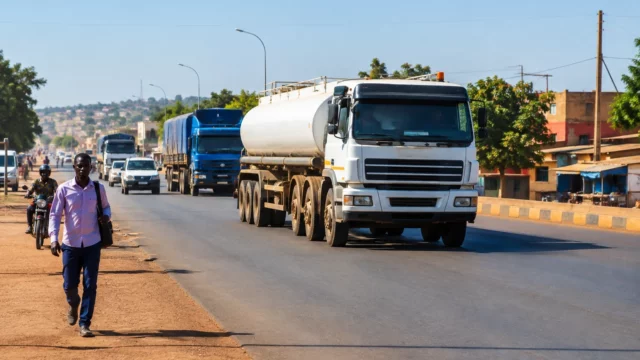
In western Mali, travelling is no longer just a matter of distance. It has become a question of control, fear and economic survival. Between Kayes, Nioro du Sahel and Bamako, the road routes weigh heavily on daily life because they connect the capital to supply networks from Senegal and the port of Dakar. When these corridors are disrupted, Malian families, traders and transporters are the first to bear the brunt.
This pressure is part of a wider context. For several months, the Group for the Support of Islam and Muslims, or JNIM, which is linked to al-Qaeda, has stepped up its operations in the Kayes region. At the same time, Mali’s security crisis is not confined to jihadists: it also continues to involve separatist groups in the north, notably the Azawad Liberation Front, or FLA, in a war fought across zones, routes and fragments of territory.
Civilians released, but blockade conditions persist
Between Thursday 13 August and Friday 14 August 2026, around 60 civilians held hostage by JNIM were released, according to information cross-checked by several international and African news sources. Those released had been abducted on different routes in the west of the country and then dropped near Nioro du Sahel, before rejoining their families in Nioro, Kayes or Bamako. A father quoted by the press said his son had been left at the entrance to Nioro at about 5am, blindfolded at the time of his release.
The relief felt by relatives is real. But it does not dispel their anxiety. The same roads remain exposed to attacks, abductions and restrictions imposed by armed groups. The Bamako-Kayes corridor, which is also used to transport freight from Senegal, remains vital to Mali’s economy. Its partial or intermittent closure drives up transport costs, complicates fuel deliveries and puts pressure on urban markets and the rural communities along these routes.
The releases took place discreetly. Neither the Malian authorities nor the armed groups had, at this stage, issued a detailed statement on the operation. This silence does not prevent a clear political reading: in a context where the state says it is holding a firm line, indirect exchanges remain possible when civilian or military hostages become bargaining chips. This is a cautious hypothesis, but one consistent with the sequence of events observed on the ground.
Meanwhile, soldiers held by the FLA were also released
On 13 August, 82 Malian soldiers held by the FLA were also freed, according to the Malian army and a spokesperson for the separatist movement quoted by the Associated Press. According to that source, some of the soldiers had been held captive since the coordinated attacks of April 2026. The FLA described the decision as a humanitarian gesture. The timing of the two releases fuels the idea that channels for discussion exist, even though no party has publicly acknowledged broader negotiations.
This matters because it shows that Mali’s conflict does not follow a single fault line. In the north, the confrontation pits the state against separatist groups and their occasional allies. In the west and centre, JNIM is instead seeking to control roads, exert influence over trade and wear down Bamako’s logistical capabilities. For the population, the difference is tangible: one country can experience several forms of war at once, with distinct effects on travel, prices and access to services.
Figures and casualty tolls must nevertheless be treated with caution. In episodes of this kind, the first accounts often come from families, transporters, the army or the armed groups themselves. Cross-checking by several sources confirms that the releases took place. However, the exact number of civilians freed is still put at an estimated 60, rather than a definitive judicial or administrative count.
What this sequence means for Bamako, the region and the continent
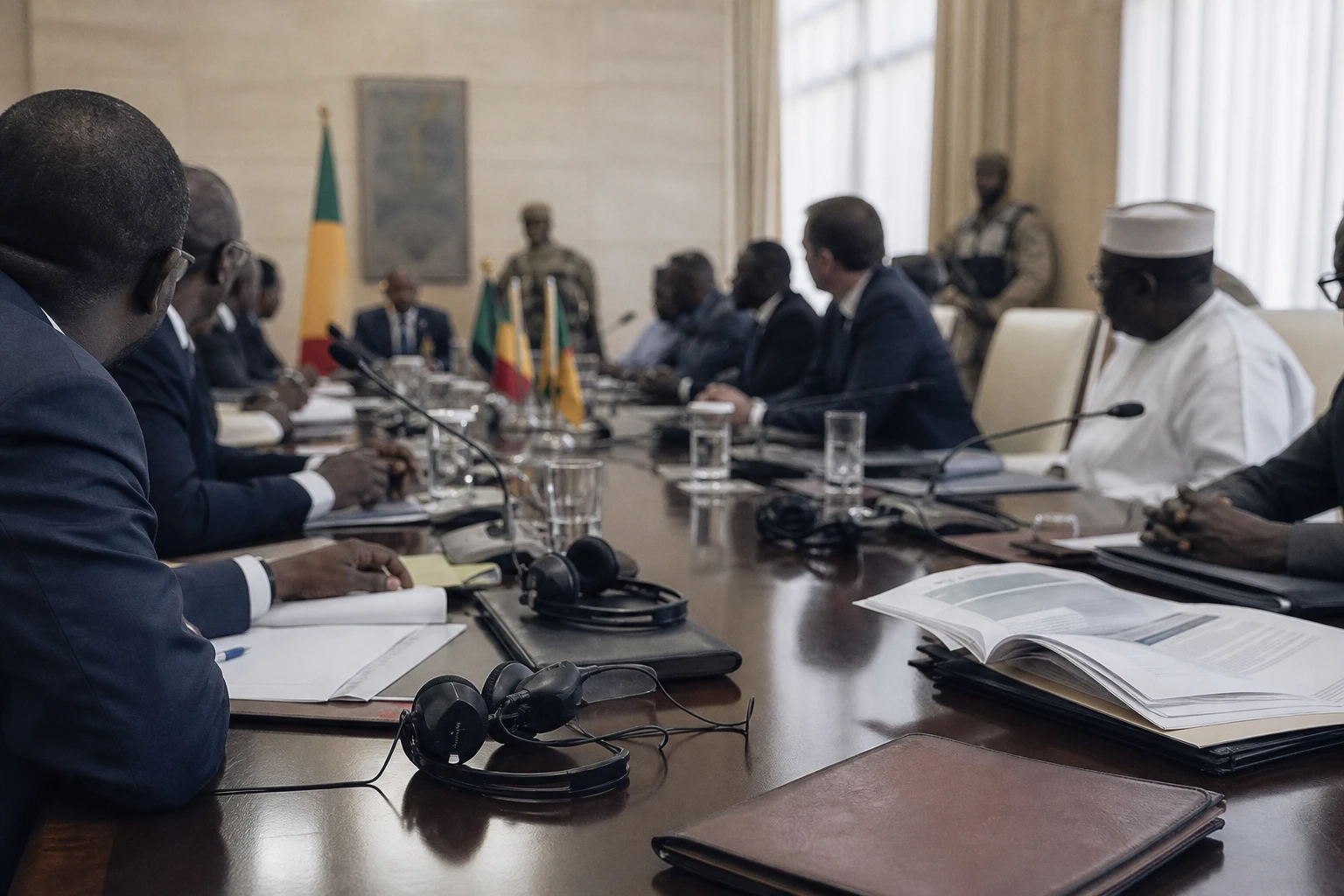
For Bamako, the immediate challenge is twofold. On security, it must reopen and hold the corridors to the west; otherwise, the cost of supplies will rise and the state will lose practical control of the territory. Politically, it must also ensure that crisis management does not rely solely on tacit arrangements, which may ease pressure in the short term without addressing the underlying threat.
For residents of Kayes, Nioro du Sahel and the outskirts of Bamako, the priority is simpler: to travel, trade and send children to school without fear of abduction or attack. Transporters bear the most direct financial risk. A convoy brought to a halt, a lorry burned or a journey suspended is enough to disrupt an entire supply chain. This is where Mali’s crisis moves beyond the military sphere and affects the everyday economy.
At regional level, this sequence is a reminder that security in the Sahel remains tied to western borders and trade corridors to Senegal and Mauritania. It therefore concerns ECOWAS, even though Mali has left the organisation, as well as neighbouring countries that depend on flows of goods and people. At continental level, it illustrates a broader trend: the rise of armed groups that combine territorial pressure, predatory economic activity and hostage-taking to exert influence over states. It is this mechanism, more than hostage-taking alone, that must now be watched.