Algeria
 Egypt
 Libya
 Morocco
 Sudan
 Tunisia
 Benin
 Burkina Faso
 Cabo Verde
 Côte d'Ivoire
 Ghana
 Guinea
 Guinea-Bissau
 Liberia
 Mali
 Mauritania
 Niger
 Nigeria
 Senegal
 Sierra Leone
 The Gambia
 Togo
 Cameroon
 Central African Republic
 Chad
 DR Congo
 Equatorial Guinea
 Gabon
 Republic of the Congo
 São Tomé and Príncipe
 Burundi
 Comoros
 Djibouti
 Eritrea
 Ethiopia
 Kenya
 Madagascar
 Malawi
 Mauritius
 Mozambique
 Rwanda
 Seychelles
 Somalia
 South Sudan
 Tanzania
 Angola
 Botswana
 Eswatini
 Lesotho
 Namibia
 South Africa
 Zambia
 Zimbabwe
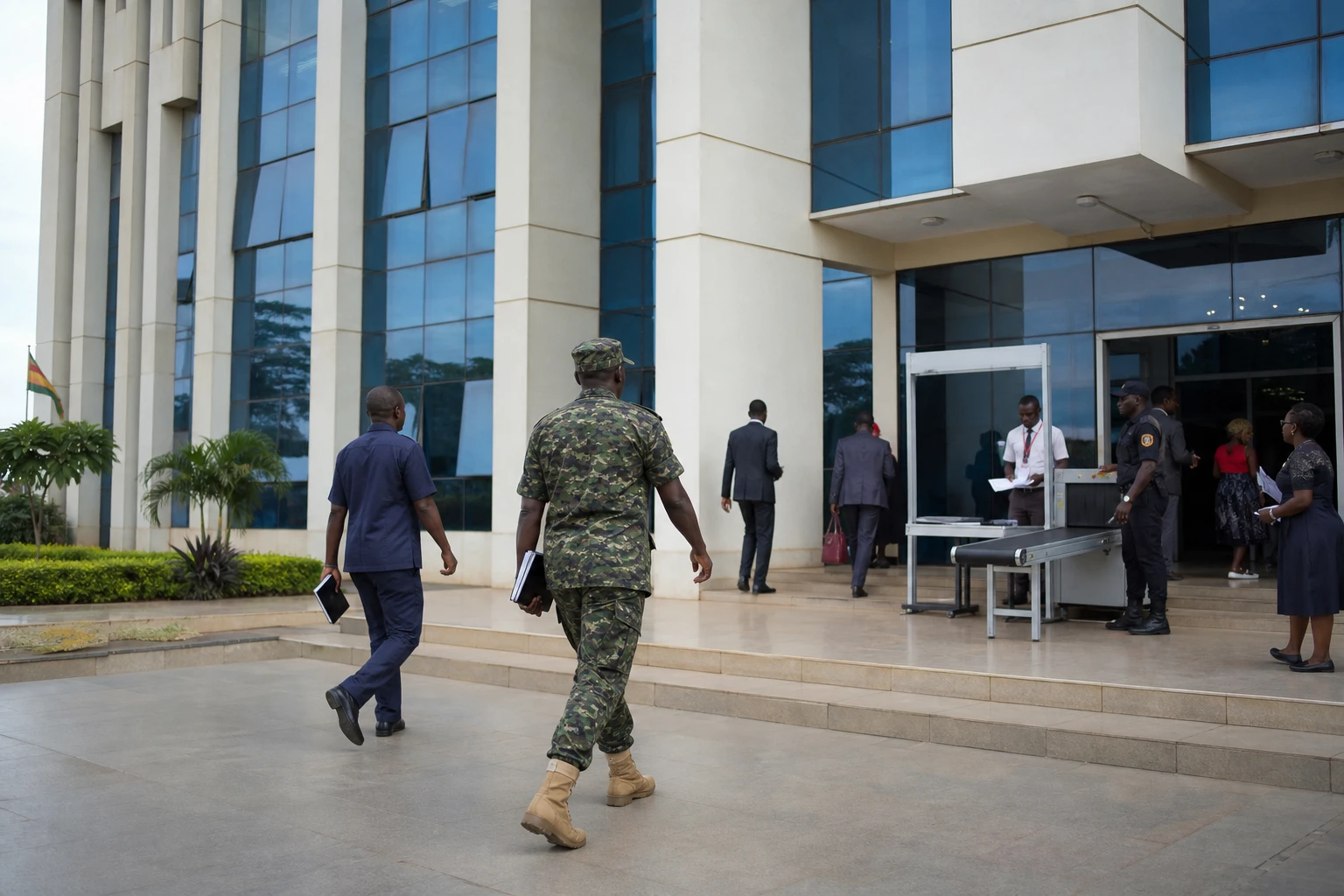
For Kampala, Somalia remains a national security issue
For Uganda, Somalia is not a distant concern. It is a regional front line, but also a matter of domestic security. Since the Kampala attacks of 11 July 2010, attributed to Al-Shabaab, the Somali threat has moved beyond the Somali theatre and become part of Uganda’s history. Several authoritative sources, including UN documents and local media, put the death toll from the attacks at 76.
In this context, Kampala’s decision to keep troops in Somalia reflects a strategy of continuity. Uganda remains the African mission in Somalia’s largest military contributor. This is not merely a gesture of solidarity with Mogadishu, but a choice to project military power, gather intelligence and exert influence in the Horn of Africa.
An African mission under budgetary and political pressure
The framework in which Ugandan troops operate has changed. The African Union mission in Somalia became AUSSOM after the transition from ATMIS. The UN Security Council endorsed the new format in late 2024, with a hybrid funding mechanism based on Resolution 2719. But the arrangement remains fragile. In early July 2026, Reuters reported that Washington had indicated it would not support the renewal of UN logistical support beyond 2026, threatening the mission’s very foundations.
The political signal is not isolated. In late July 2026, the African Union reaffirmed that the mission continues to support stabilisation, the protection of civilians and the gradual transfer of security responsibilities to Somali forces. But this ambition requires resources. AUSSOM still depends on international logistical support for fuel, food, medical evacuations and troop mobility. Without this support, the gap between its mandate and its capabilities could become impossible to bridge.
The situation is all the more delicate for Uganda because Kampala is not talking about a merely symbolic presence. Ugandan forces continue to be rotated and reinforced on the ground, as shown by the arrival of Battle Group 47 in May 2026. Uganda’s military command stresses vigilance, discipline and cooperation with Somali forces. This military language masks a simpler fact: the commitment remains active, costly and politically endorsed.
A commitment that benefits Uganda’s army, but is costly to sustain
Keeping Ugandan troops in Somalia serves several interests. First, it allows the army to retain operational experience in a real combat environment, where operations against Al-Shabaab require battle-hardened units. It also bolsters Kampala’s regional role in an area where the Intergovernmental Authority on Development, IGAD, and the African Union are still seeking a collective response to security crises. Finally, it sustains the narrative of a pan-African commitment, often promoted by Uganda’s own authorities.
But this choice comes at a price. The debate is not just about troop numbers, but about financial sustainability. A diplomatic note cited by Reuters put AUSSOM’s 2025 budget at $190 million, with a deficit already considered substantial. If external funding falls, the question will no longer be who wants to stay, but who can afford to stay. In a stabilisation mission, that variable often decides everything.
Uganda is not the only country involved. The force also includes Burundi, Djibouti, Egypt, Ethiopia, Kenya and Somalia, within a regional structure in which each capital weighs its own costs, risks and gains. Kampala’s announcement that it will maintain a contingent therefore carries diplomatic weight. It means Uganda wants to remain a central player in the Somali issue, even as donors hesitate and the mission operates on a very narrow budgetary footing.
What this says about East Africa
The significance of this decision extends beyond Somalia. If AUSSOM weakens, the effects will be felt across the Horn of Africa. Armed groups move faster than funding frameworks. A security vacuum in Mogadishu would affect borders, trade corridors, ports and the region’s civilian populations. This is precisely the scenario the African Union is seeking to prevent by continuing to advocate a regional approach, with the support of IGAD and the contributing states.
For Uganda, the issue is also a marker of continental stature. Kampala will host an extraordinary summit of AUSSOM troop-contributing countries at the end of July 2026. The event is expected to bring together the leaders of the countries concerned in the Ugandan capital, along with representatives of the UN, the African Union and IGAD. The message is clear: Uganda does not just want to send soldiers. It wants to influence the political definition of a way out of Somalia’s crisis.
One major uncertainty remains: whether African and international partners can sustain a credible force until Somali forces effectively take over. That is what will determine what happens next—not another slogan, but the ability to fund, coordinate and sustain a mission whose success is crucial to the stability of the entire region.