Algeria
 Egypt
 Libya
 Morocco
 Sudan
 Tunisia
 Benin
 Burkina Faso
 Cabo Verde
 Côte d'Ivoire
 Ghana
 Guinea
 Guinea-Bissau
 Liberia
 Mali
 Mauritania
 Niger
 Nigeria
 Senegal
 Sierra Leone
 The Gambia
 Togo
 Cameroon
 Central African Republic
 DR Congo
 Equatorial Guinea
 Gabon
 Republic of the Congo
 São Tomé and Príncipe
 Burundi
 Comoros
 Djibouti
 Eritrea
 Ethiopia
 Kenya
 Madagascar
 Malawi
 Mauritius
 Mozambique
 Rwanda
 Seychelles
 Somalia
 South Sudan
 Tanzania
 Uganda
 Angola
 Botswana
 Eswatini
 Lesotho
 Namibia
 South Africa
 Zambia
 Zimbabwe
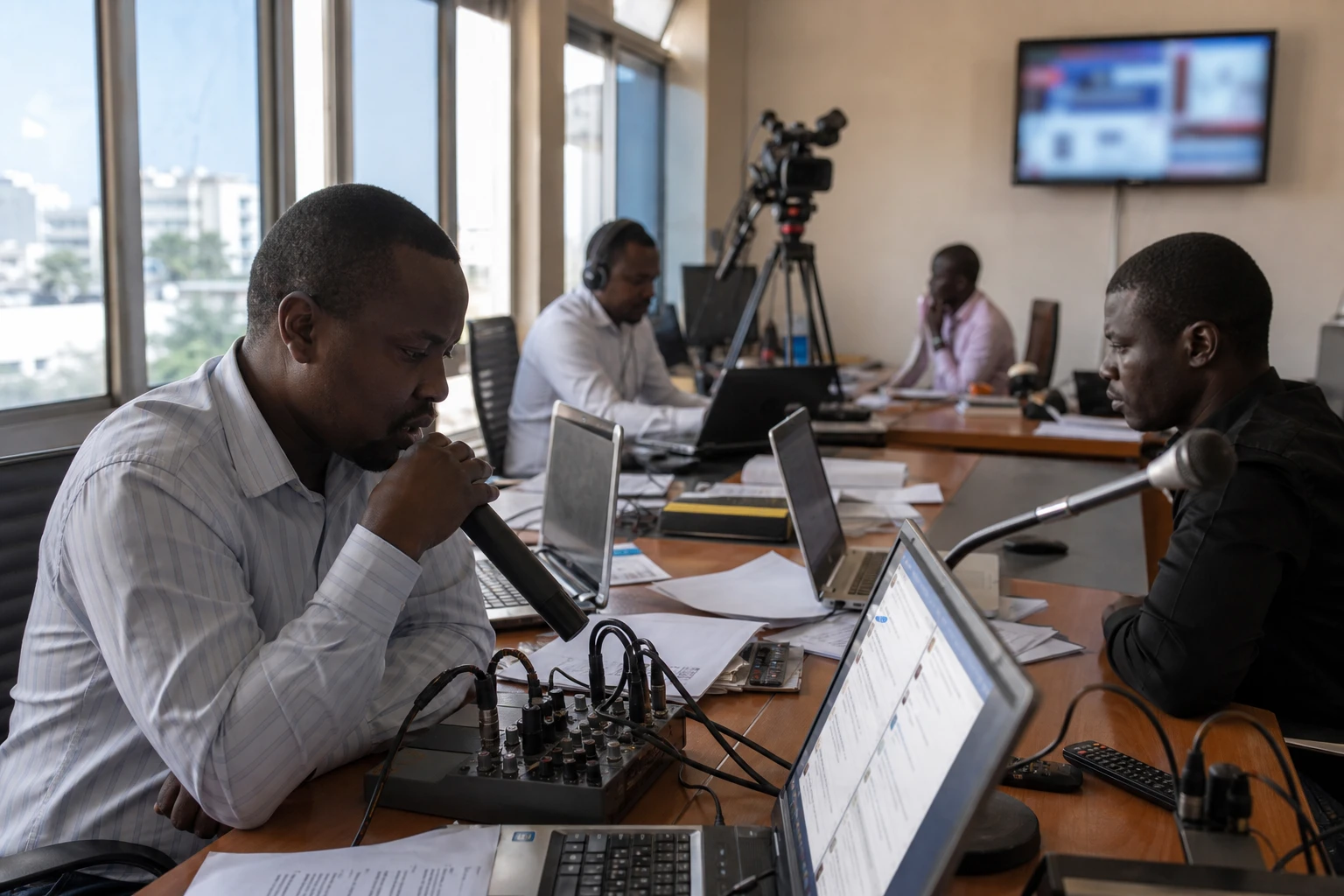
In N’Djamena, a presidential gesture that goes beyond Succès Masra’s case alone
In Chad, a presidential pardon does more than settle the fate of a detainee. It also tests the authorities’ ability to loosen their political grip without losing control. In a country where electoral competition remains fragile, every decision affecting the opposition is read as a signal, both in the centre and in the regions.
The move comes amid tensions in N’Djamena, the Chadian capital, and more broadly in a political landscape where opposition forces have been sharply curtailed since the transition that began after Idriss Déby Itno’s death in 2021. Chad remains a key Central African state, a member of CEMAC, and its internal balances affect the entire region, from the Lake Chad Basin to the Sahelian corridor.
What is known about the pardon granted to nine opposition figures
On Friday 15 August 2026, President Mahamat Idriss Déby Itno pardoned nine opposition figures, including Succès Masra, a former prime minister and leader of the Les Transformateurs party. According to corroborated information, Masra was serving a 20-year prison sentence handed down in August 2025 and upheld by the Supreme Court in May 2026.
The conviction followed the so-called Mandakao case. The authorities had accused him of spreading hate messages and being involved in deadly violence in the south of the country. Several media outlets and human rights organisations had highlighted the highly political nature of the case at the time, amid a crackdown on the opposition.
A presidential pardon should not be confused with an amnesty. The former cancels or reduces a sentence, without necessarily overturning the conviction. The latter extinguishes the offence itself. In Chad’s case, this distinction matters. It shows that the authorities may seek to ease tensions without fully reopening the court case.
A weakened opposition, but still at the heart of the balance of power
Succès Masra is no ordinary opposition figure. An economist and former senior official at the African Development Bank, he embodied an organised challenge for several years, capable of mobilising some of the urban youth. In the May 2024 presidential election, he won 18.53% of the vote, according to provisional results reported by Reuters, before acknowledging Mahamat Idriss Déby Itno’s victory and leaving the prime minister’s office a few days later.
His arrest on 16 May 2025 and subsequent conviction reinforced the perception that political space was shrinking. Human Rights Watch recalled that, during the same period, eight other political figures were tried and sentenced to eight years in prison in May 2026 for rebellion and insurrectionary movement. The pardon announced on Friday therefore concerns a wider group than Masra alone, but it does not erase the preceding period of repression.
The authorities’ calculation is clear. On the one hand, they are sending a signal of openness at home and abroad. On the other, they are retaining control of the political timetable. In Chad, where decision-making remains highly presidential, a pardon can serve as a safety valve. It can also help bring a crisis to a close without admitting any fundamental wrongdoing.
What this changes for Chadians, and what the region is watching
In cities, especially N’Djamena, the decision may ease tensions that have been visible for months. In the provinces, it will be judged against a more concrete criterion: whether the authorities can handle political conflicts without turning them into court cases. In the south, where intercommunal clashes have already formed the backdrop to the Masra case, the question of trust between communities remains unresolved.
Institutionally, Chad is moving through a period in which every action by the head of state carries more weight than ordinary procedures. The roles of parliament, political parties and checks and balances remain limited. Opposition groups, meanwhile, face a sharp imbalance in access to the media, public gatherings and resources. The pardon may ease the plight of a few individuals without automatically resolving the problem of political pluralism.
At the regional level, the signal is being closely watched by CEMAC and by the neighbours of the Lake Chad Basin, where Chad often plays a major security and diplomatic role. A Chadian government seen as more open could facilitate some regional discussions. But a purely tactical easing of tensions, without a lasting reopening of political space, would change perceptions of the issue only temporarily.
What happens next will therefore depend on two things. First, the exact scope of the pardon: a simple reduction of sentences or a first step towards broader normalisation. Second, the fate of other opposition figures and the restrictions that still weigh on Chadian political life. That is what will show Chadians the difference between a temporary easing of tensions and a genuine opening.