Algeria
 Egypt
 Libya
 Morocco
 Sudan
 Tunisia
 Benin
 Burkina Faso
 Cabo Verde
 Côte d'Ivoire
 Ghana
 Guinea
 Guinea-Bissau
 Liberia
 Mauritania
 Niger
 Nigeria
 Senegal
 Sierra Leone
 The Gambia
 Togo
 Cameroon
 Central African Republic
 Chad
 DR Congo
 Equatorial Guinea
 Gabon
 Republic of the Congo
 São Tomé and Príncipe
 Burundi
 Comoros
 Djibouti
 Eritrea
 Ethiopia
 Kenya
 Madagascar
 Malawi
 Mauritius
 Mozambique
 Rwanda
 Seychelles
 Somalia
 South Sudan
 Tanzania
 Uganda
 Angola
 Botswana
 Eswatini
 Lesotho
 Namibia
 South Africa
 Zambia
 Zimbabwe
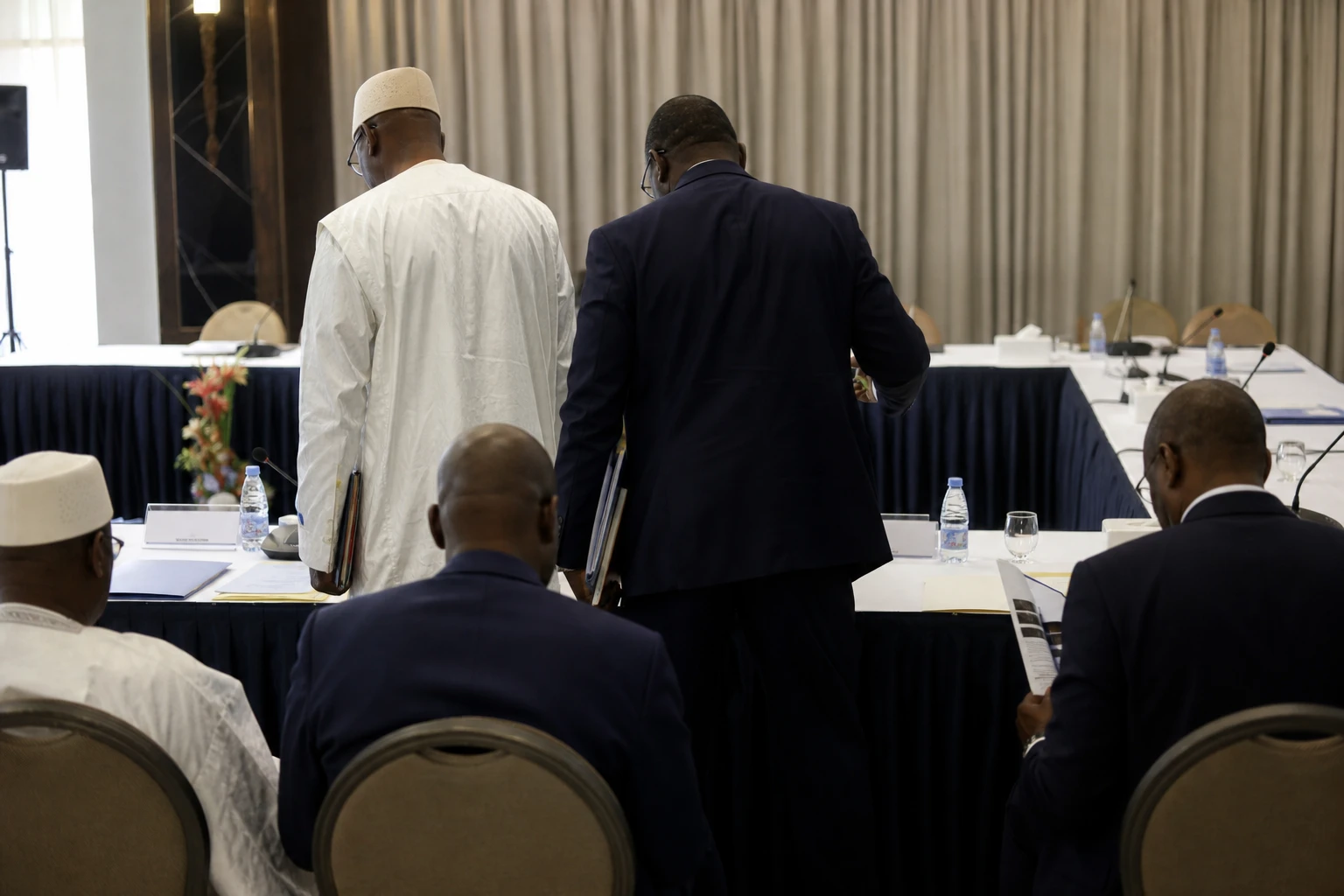
A release that says more than the fate of one man
In Bamako, the decision is not simply the end of a legal case. It also reveals the continuing importance of power dynamics between Mali, France and a handful of regional mediators in a Sahel where diplomacy often takes place through discreet channels.
On Thursday 13 August 2026, Mali’s transitional president, General Assimi Goïta, granted a pardon to Yann V., a French national sentenced in June to 20 years in prison for undermining state security. On 14 August, Paris welcomed an outcome long awaited.
A case born amid a breakdown in relations
Mali has been under military transition since the coups of 2020 and 2021. Relations with Paris have since grown more strained, while Bamako has tightened its alliances in the Sahel, notably with Burkina Faso and Niger within the Confederation of Sahel States, launched on 6 July 2026.
In this context, every sensitive case immediately takes on political significance. The right to grant pardons is enshrined in Mali’s constitution, which gives this power to the head of state. On paper, the decision therefore falls within the president’s prerogative. In practice, it always comes amid negotiations.
Yann V.’s name first appeared in public debate after his arrest in Bamako on 14 August 2025. The Malian authorities had presented him as one of the links in an attempted destabilisation that also involved Malian military personnel. The Associated Press confirmed the information at the time of the arrests.
What the Malian courts found
On 5 June 2026, the criminal chamber specialising in terrorism and cross-border crime sentenced him to 20 years in prison. The same ruling barred him from entering Mali for 20 years and imposed a fine. Paris rejected the accusations and described him as a duly accredited agent.
The presidential pardon does not overturn the judgment. According to details reported by the AP, the Malian government said that the act of clemency did not erase the court’s findings and was accompanied by an immediate departure from the country. This is an important point: the case is resolved through the executive, but without a formal repudiation of the court.
The same case had a tangible consequence in Paris. In May 2026, France had suspended its counter-terrorism co-operation with Mali and demanded the departure of two Malian agents posted in France, according to Reuters. This shows that the case went far beyond the judicial sphere.
Behind the scenes of a negotiated outcome
There has been little confirmation of the negotiations. Le Monde reported that Morocco had been credited with playing a decisive role in the exchanges, citing a Malian military source and noting that Rabat had previously acted as an intermediary in the release of four French agents detained in Burkina Faso in 2024. This aspect should therefore be read as attributed information, not as a fact established by the two capitals.
This possibility is not without context. In late July 2026, Rabat and Bamako made a visible show of diplomatic rapprochement, with a joint co-operation commission and a business forum, according to Moroccan and Malian statements. In a case this sensitive, this diplomatic neighbour could provide a bridge between positions that are no longer discussed directly.
Mali’s regime also has an interest in controlling the timing. By avoiding a prolonged standoff with Paris, it limits the exposure of a case that has become awkward. By upholding the conviction, however, it preserves the political message sent after the 2025 arrests: the Malian state says it remains in control of its security.
What the case changes for Bamako and the region
For Malians, the episode means neither a return to the former cycle of co-operation with France nor a total break with outside intermediaries. Rather, it confirms a practice that has become common in the Sahel: bilateral crises are often resolved through parallel mediation, while official relations remain strained.
For France, the release ends a case that had become symbolic, after months of tension over the French presence in the region. For Mali, it also avoids leaving a convicted foreign national at the heart of a dispute with no way out, as Bamako seeks to assert its sovereignty while keeping channels of discussion open with several partners.
The signal at continental level is clear. The Sahel remains a region where justice, security and diplomacy are intertwined. The Confederation of Sahel States, Morocco’s foothold in the south-west and the still-sensitive relationship with Paris form a triangle of influence to watch. The next step will be less judicial than political: whether this isolated resolution paves the way for broader de-escalation, or remains a one-off arrangement between capitals at odds.