
 Algeria
 Egypt
 Libya
 Sudan
 Tunisia
 Benin
 Burkina Faso
 Cabo Verde
 Côte d'Ivoire
 Ghana
 Guinea
 Guinea-Bissau
 Liberia
 Mali
 Mauritania
 Niger
 Nigeria
 Senegal
 Sierra Leone
 The Gambia
 Togo
 Cameroon
 Central African Republic
 Chad
 DR Congo
 Equatorial Guinea
 Gabon
 Republic of the Congo
 São Tomé and Príncipe
 Burundi
 Comoros
 Djibouti
 Eritrea
 Ethiopia
 Kenya
 Madagascar
 Malawi
 Mauritius
 Mozambique
 Rwanda
 Seychelles
 Somalia
 South Sudan
 Tanzania
 Uganda
 Angola
 Botswana
 Eswatini
 Lesotho
 Namibia
 South Africa
 Zambia
 Zimbabwe
When a rumour becomes a border alarm
In Fnideq, Castillejos and all around Bab Sebta, the same scenario returns in waves: a viral video, a specific date, then the idea that a mass crossing might be possible. For many young Moroccans, this is not just a border story. It is also a reflection of broader social expectations, in which the prospect of leaving can sometimes seem more tangible than employment or legal mobility. The large surges seen in late July 2026 showed how an online message can turn into a physical movement, with very real consequences on both sides of the border.
Morocco treats Ceuta and Melilla as two sensitive points on a long and politically charged frontier. Operation Marhaba 2026, launched in June by the Mohammed V Foundation for Solidarity, also serves as a reminder that these crossings are primarily used to manage regular flows, particularly those of Moroccans living abroad, and not to allow irregular mass crossings. The official operation is coordinated from Rabat and strengthened along transit routes, including at the Bab Sebta and Melilla crossings.
It was against this backdrop that, after the mass arrivals in late July 2026, a new rumour emerged around 15 August. It was shared on Instagram, Facebook and WhatsApp with the false claim that a crossing would be facilitated that day because it is a public holiday in Spain. In reality, the Spanish and Moroccan authorities had instead tightened security measures. On 14 August, AP reported that Morocco had reinforced security at the border and that its interior ministry had announced arrests linked to incitement activities.
What the facts say, and what the episode reveals
The established facts first point to a crisis on the ground. On 30 July 2026, several international media outlets described mass arrivals towards Ceuta from northern Morocco, with scenes of people swimming across, crossing breakwaters and attempting to get through in small groups. Reuters referred to thousands of young Moroccans heading towards the border, while other reports mentioned a new death at sea and extreme tension around the Spanish enclave. On 31 July, Reuters had already reported at least 18 deaths, according to Spain’s interior ministry, and nearly 50,000 crossings in 24 hours, before other tallies, cited by Moroccan NGOs, put the total death toll during the episode at 141. These figures should be read as crisis tolls that remain subject to updates from official and civil society sources.
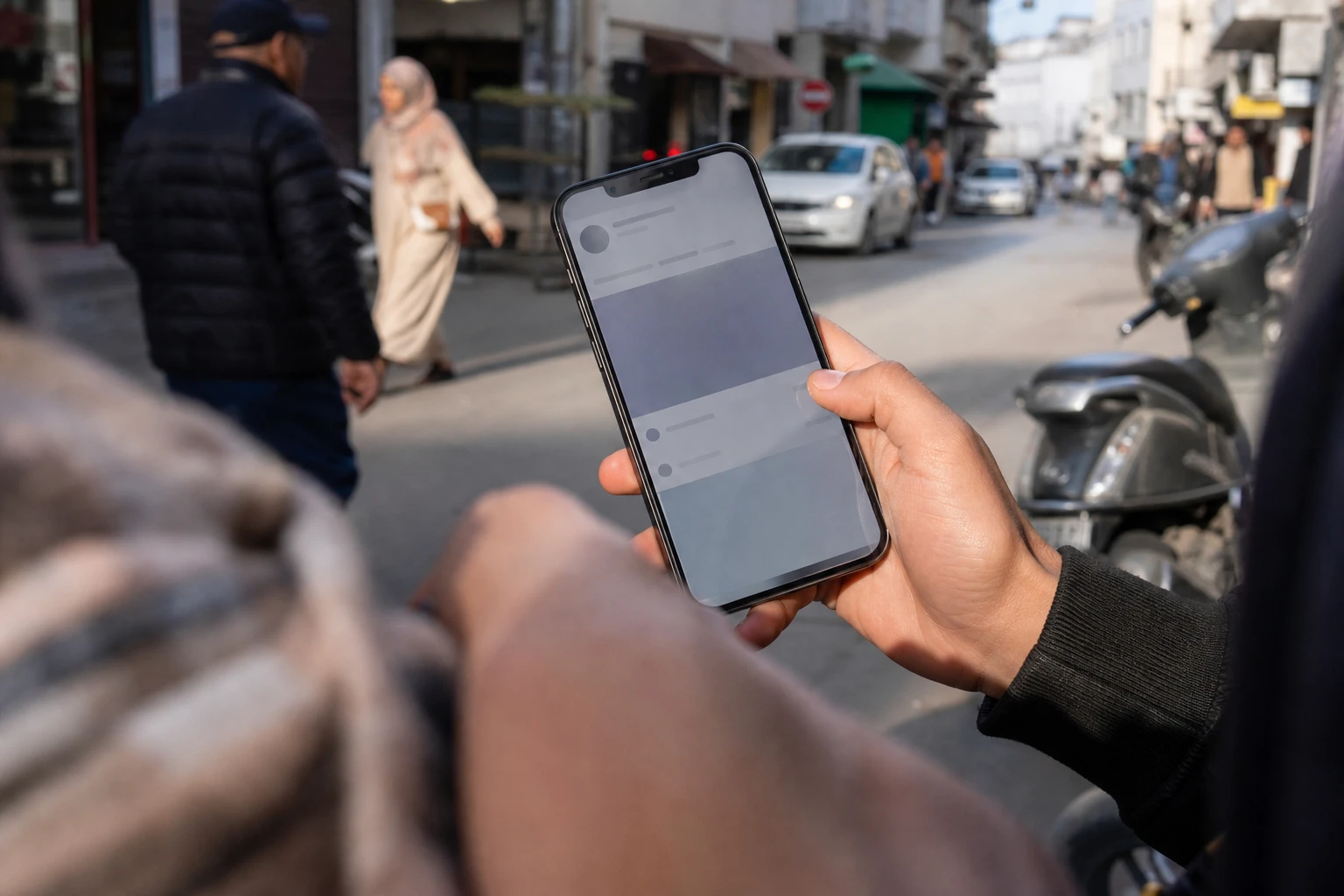
The second reality is digital. A report cited in Spanish news coverage on 11 August said Moroccan authorities had examined dozens of Facebook groups with more than one million members combined, while observing high levels of activity from pages and accounts sharing calls to cross. The investigation also identified recent, unconvincing profiles, often created to artificially amplify the rumour. The key term is astroturfing: the fabrication of a mobilisation that appears spontaneous but is in fact staged.
This mechanism did not come out of nowhere. In September 2024, Morocco had already arrested 152 people for inciting clandestine migration to Ceuta via social media, according to Reuters. The country is therefore familiar with the problem: the spread of a promise of passage can be enough to send thousands of people towards a known flashpoint. This is not entirely new, but a pattern made worse by the speed of platforms and the circulation of false signals of success.
The third level is social. Morocco’s High Commission for Planning says the country’s economic growth reached 4.9% in 2025, after 4.4% in 2024. But employment indicators show a more mixed picture, especially for young people and in urban areas. The HCP has also published data showing significant underutilisation of the workforce, particularly among those under 45. In other words, growth exists, but its effect on individual prospects remains uneven. This is where the border stops being merely geographical: for some young people, it becomes an imagined way out.
For Moroccans living far from the border areas, this episode also tells another story: the divide between the formal economy and the informal economy of getting by, between apparent stability and a sense of suffocation. The northern cities, meanwhile, bear the pressure at close quarters. Local authorities have to manage crowd movements, smuggling networks, accidents at sea and the impact on public services. On the Spanish side, Ceuta remains an enclave under constant pressure, with immediate European implications. On the Moroccan side, the response combines law enforcement, targeted checks and a clear political message: rumours will not open the border.
A Moroccan issue, but an African and Mediterranean test
The issue goes beyond the face-off between Rabat and Madrid. It raises questions about the ability of African and European states to address migration without resorting to panic, rumours and abrupt closures. Morocco, which for several years has presented itself as a country of transit, reception and control, finds itself here as a country of departure, a transit zone and a border enforcement actor all at once. This triple role explains the sensitivity of the issue. It also explains why the authorities are stressing the need to be alert to fake accounts and anonymous messages.
At regional level, the Ceuta-Melilla case is a reminder that African mobility cannot be understood solely through the major Sahelian routes or the central Mediterranean. Morocco’s northern coast has become a barometer of young people’s despair, but also a laboratory for disinformation. What is happening there could be repeated elsewhere whenever a combination of unemployment, perceived openness and digital amplification meets a porous border. The coming days will show whether the 15 August calls remain online noise or lead to new local incidents. In any event, the episode confirms one thing: social media does not create the desire to leave, but it can accelerate it, coordinate it and make it visible on a large scale.



