Algeria
 Egypt
 Libya
 Morocco
 Tunisia
 Benin
 Burkina Faso
 Cabo Verde
 Côte d'Ivoire
 Ghana
 Guinea
 Guinea-Bissau
 Liberia
 Mali
 Mauritania
 Niger
 Nigeria
 Senegal
 Sierra Leone
 The Gambia
 Togo
 Cameroon
 Central African Republic
 Chad
 DR Congo
 Equatorial Guinea
 Gabon
 Republic of the Congo
 São Tomé and Príncipe
 Burundi
 Comoros
 Djibouti
 Eritrea
 Ethiopia
 Kenya
 Madagascar
 Malawi
 Mauritius
 Mozambique
 Rwanda
 Seychelles
 Somalia
 South Sudan
 Tanzania
 Uganda
 Angola
 Botswana
 Eswatini
 Lesotho
 Namibia
 South Africa
 Zambia
 Zimbabwe
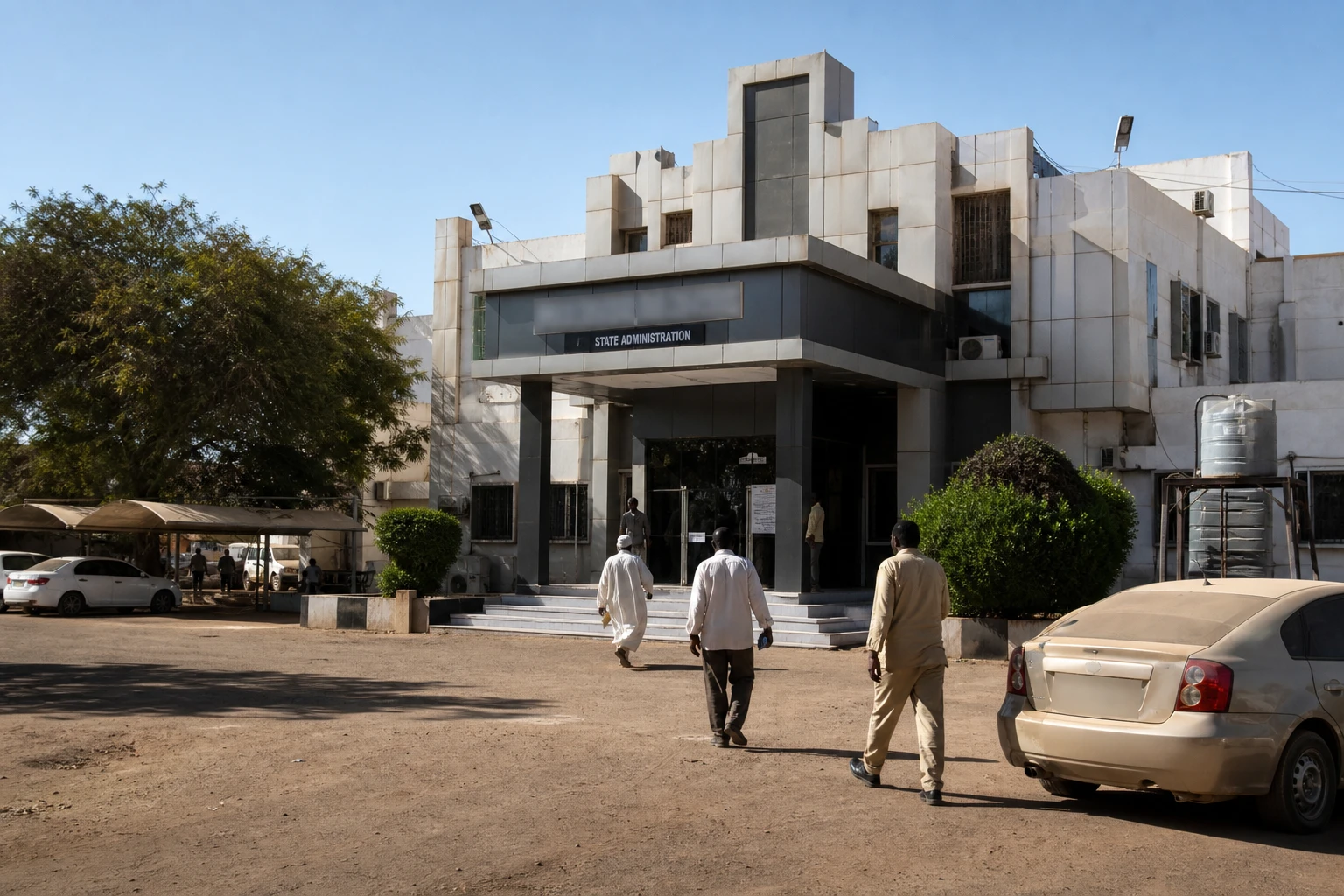
A crossroads city under pressure
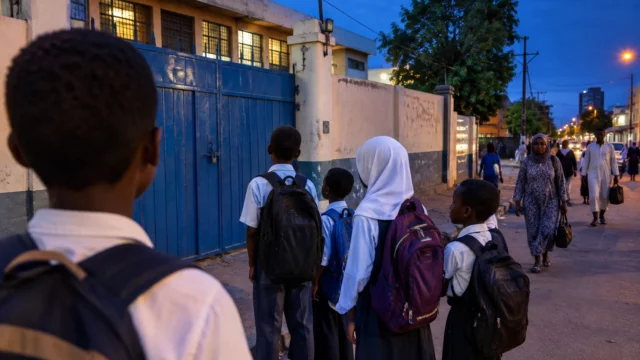
In El-Obeid, in North Kordofan, the war is not measured only by the sound of weapons. It is also visible in the queues outside closed petrol stations, in power cuts at the hospital and in the water people have to fetch from further away, sometimes from a private pump. In this Sudanese city, the military crisis has become a daily struggle for survival.
El-Obeid occupies a particular place in Sudan. A pivotal city between Khartoum, Kordofan and the routes to Darfur, it serves as an administrative centre, a logistics hub and a refuge for families displaced by other fronts. For several weeks, corroborating reports have described growing pressure around the city, with drones targeting vital infrastructure and supply routes.
What the facts on the ground show
The latest evidence points in the same direction. On 23 June 2026, the United Nations reported that drone strikes around El-Obeid had hit an electricity substation and a fuel station, forcing several medical facilities, including a dialysis centre, to close and also disrupting water stations. On 30 June, the UN’s humanitarian chief warned that El-Obeid must not become a new El Fasher, another Sudanese city caught in a devastating siege.
On 10 July 2026, humanitarian actors described tens of thousands of displaced people arriving in the capital of North Kordofan, despite a tightening blockade. The same report says the city is surrounded on three sides by the paramilitary Rapid Support Forces, or RSF, and that the drone campaign is targeting the last major road still usable to Kosti, in White Nile State. A black market has followed, with fuel prices reaching 100,000 Sudanese pounds a gallon, according to local and humanitarian sources.
The health crisis remains central. The WHO said in April 2026 that 34 million people in Sudan need assistance, 21 million lack access to health services and attacks on healthcare have multiplied since the conflict began. The organisation has also documented 217 attacks on healthcare, with 2,052 deaths and 810 injuries since April 2023. In Kordofan, strikes have already cut off services, damaged equipment and made it harder to treat the most vulnerable patients.
The problem extends far beyond the hospital walls. When generators stop for lack of diesel, operating theatres slow down, incubators become precarious and pregnant women are left with incomplete care. This is precisely the vicious circle described by sources on the ground: unstable electricity, disrupted water supplies, scarce fuel and medical services forced to operate at a bare minimum.
Why El-Obeid matters in the Sudanese war
El-Obeid is not a peripheral city. It is home to a large civilian population, people displaced from other parts of Kordofan and a strategic military presence. Its position on trade and humanitarian routes makes it a key chokepoint. Whoever holds El-Obeid controls part of the passage between the country’s centre and western Sudan. This also explains the RSF’s interest in the city and residents’ fear that the siege scenarios seen elsewhere in Sudan, with far higher death tolls, could be repeated there.
For civilians, the consequences are immediate. Families already displaced are living in camps or with relatives, as their supplies run low. Informal workers see their incomes collapse when transport is blocked. Businesses pay more for fuel and pass on the increases. Hospitals, meanwhile, must choose between operating at reduced capacity or closing some services. This divide between civilian needs and military priorities is now reflected in the price of water, transport and bread.
The national humanitarian picture confirms this deterioration. According to the UN refugee agency, UNHCR, 14 million people have been forced to flee since the war began in April 2023, including 9 million within Sudan and 4.4 million across its borders. The UN inter-agency displacement platform reported that, as of 3 August 2026, 11,344,665 people had been forcibly displaced in total, including 6,490,949 within the country. These figures vary according to counting methods, but they all describe the same reality: displacement has become structural.
Food remains another breaking point. The FAO warns that in 2026 more than 825,000 children are at risk of death from severe malnutrition and nearly 19.5 million people face acute food insecurity. In El-Obeid, this means fewer meals, lower incomes and greater dependence on aid that is struggling to get through. In a wartime economy, scarcity does not affect everyone equally: it weighs more heavily on displaced people, female-headed households, older people and those with chronic illnesses.
A local crisis, a regional warning
El-Obeid illustrates the shifting centre of gravity of the Sudanese war. After Khartoum, then Darfur, the front is spreading into Kordofan, a pivotal region between the east, centre and west of the country. This complicates mediation, increases the humanitarian cost and weakens aid corridors running through Port Sudan, Kosti and cross-border hubs in Chad. IGAD and the African Union remain concerned about a war affecting a strategic area of the Horn of Africa and the eastern Sahel, even as the diplomatic response remains fragmented.
The continental significance is clear: the more the war moves into intermediate cities such as El-Obeid, the greater the threat to trade routes, humanitarian flows and the stability of neighbouring countries. Sudan is no longer merely a theatre of internal war. It has become a source of regional displacement, with repercussions for Chad, South Sudan, Egypt, Libya and the Red Sea. What happens next will depend above all on two factors: the ability to protect civilians and the evolution of the front lines in Kordofan.
For Khartoum, this episode is a reminder that no military victory is enough if the country’s inland cities collapse one after another. For Sudanese people, it confirms that the war continues to be won or lost through the most ordinary infrastructure: a bridge, a petrol station, a water pump, a treatment room. El-Obeid’s future is now being decided there.