Algeria
 Egypt
 Libya
 Sudan
 Tunisia
 Benin
 Burkina Faso
 Cabo Verde
 Côte d'Ivoire
 Ghana
 Guinea
 Guinea-Bissau
 Liberia
 Mali
 Mauritania
 Niger
 Nigeria
 Senegal
 Sierra Leone
 The Gambia
 Togo
 Cameroon
 Central African Republic
 Chad
 DR Congo
 Equatorial Guinea
 Gabon
 Republic of the Congo
 São Tomé and Príncipe
 Burundi
 Comoros
 Djibouti
 Eritrea
 Ethiopia
 Kenya
 Madagascar
 Malawi
 Mauritius
 Mozambique
 Rwanda
 Seychelles
 Somalia
 South Sudan
 Tanzania
 Uganda
 Angola
 Botswana
 Eswatini
 Lesotho
 Namibia
 South Africa
 Zambia
 Zimbabwe
When heat weighs on a strategically important crop
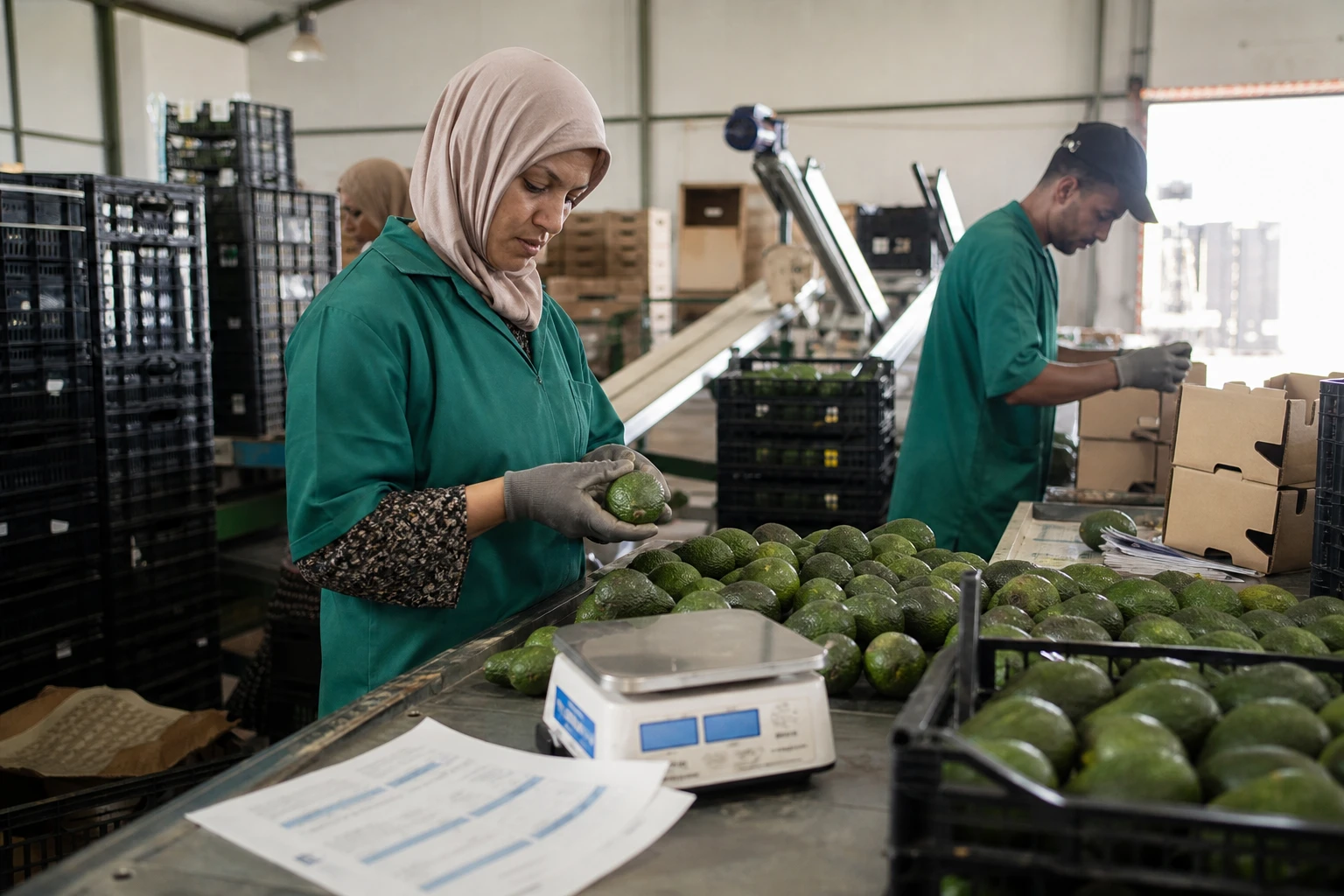
In Morocco, avocados are no longer just a seasonal fruit. They have become an export crop that contributes to agricultural revenues and shapes producers’ decisions, particularly in the Gharb plain, where most orchards are concentrated. But this rapid growth is now running up against a harsher reality: recurring heatwaves, the hot Chergui wind and episodes of heavy rain are disrupting production schedules and undermining farm profitability.
The issue goes beyond the sector alone. It touches on the Kingdom’s agricultural adaptation, water management and Morocco’s place in European markets, where Moroccan avocados have established themselves over just a few seasons. In a country already exposed to water stress, the question is no longer simply how to produce more. It is also how to produce more consistently, with the weather becoming less predictable.
A very difficult start to summer for Gharb orchards
According to industry representatives, the 2026/2027 season is shaping up to be a tense one after a 2025/2026 season already severely disrupted. In late June, a period of natural flower drop coincided with a prolonged heatwave. Morocco’s General Directorate of Meteorology confirmed a spell of extreme heat in the country from 22 June 2026, then reported in early July that temperatures were 5 to 12°C above seasonal norms, with more than nine cities recording temperatures above 40°C on 1 July.
Against this backdrop, Gharb producers say they fear a further loss of flowers, and therefore a reduction in potential yields. Abdelkrim Allaoui, president of the Gharb Avocado Producers’ Association, says some growers in Tiflet, Allal Bahraoui and Sidi Yahya El Gharb are even considering uprooting their avocado trees. This concern is consistent with the fruit’s vulnerability to heat and water stress, already documented in agronomic literature and in climate warnings issued for Morocco.
The Chergui, a hot, dry continental wind, compounds the problem. When it blows during flowering or early fruit development, it accelerates tissue dehydration and can reduce fruit retention. Producers therefore fear not so much a single isolated shock as a succession of them, turning a bad week into a lost season.
For now, the final outlook for the coming season has yet to be determined. But the first harvest projections, expected in September, will quickly show whether losses remain contained or the sector enters another year of decline.
Exports down, but the signal is broader for Moroccan agriculture
The 2025/2026 season ended earlier than usual, in March 2026, whereas marketing generally runs from September to May. Here too, the weather played a central role. According to the Moroccan Avocado Association, the season was marked by heatwaves early in the cycle, followed by floods and strong winds towards the end. The result was severe: about 58,000 tonnes exported, compared with 112,000 tonnes in the previous season.
The contrast is striking. In autumn 2025, industry professionals were still anticipating another surge. A few months later, they were talking about a drop of close to half in volumes. Industry estimates point to losses representing nearly 50% of the initial potential, mechanically reducing the quantities available for export and reigniting commercial tensions between producers and exporters.
This contraction affects more than export figures. It also has an impact on rural employment, farm cash flow, transport, packing and operators who depend on a tight sales timetable. When the harvest falls, margins narrow, choices become more difficult and smaller businesses absorb the shock faster than large estates. In an agricultural economy where family production, investment orchards and export trade coexist, the impact is uneven.
Morocco is not starting from scratch, however. In recent years, the country has consolidated its presence in the global avocado market. In the 2024/2025 season, exports reached 112,000 tonnes, with revenues exceeding $300 million for the first time, according to industry estimates reported by EastFruit. It is precisely this leap that makes climate-related setbacks more visible today: the sector has grown quickly, and its vulnerabilities are therefore emerging more quickly too.
Beyond avocados, the issue is the resilience of Moroccan agriculture. The Kingdom is expanding early-warning systems and discussions on climate adaptation, led by the General Directorate of Meteorology and the authorities responsible for water and natural hazards. The question now facing Rabat and agricultural regions alike is not only about climate. It is also economic: which crops should be retained, which areas irrigated, and at what cost?
What Morocco is watching, and what Africa is watching too
The coming season will show whether Morocco can maintain its position in an increasingly competitive export market, even as other African countries, from Kenya to South Africa, also expand their avocado supply. In a North African region already under water pressure, every spell of extreme heat is a reminder that agricultural competitiveness now depends as much on the climate as on commercial opportunities.
For Gharb producers, the issue is immediate: secure the next harvest without increasing pressure on water or abandoning a crop that has long driven the upgrading of Morocco’s fruit sector. For the state, this period is a test. It will show whether forecasting, technical support and risk-management mechanisms can keep pace with a more extreme climate. And for North Africa, it confirms a broader trend: agricultural adaptation is no longer a secondary issue, but a condition for economic stability.