Algeria
 Egypt
 Morocco
 Sudan
 Tunisia
 Benin
 Burkina Faso
 Cabo Verde
 Côte d'Ivoire
 Ghana
 Guinea
 Guinea-Bissau
 Liberia
 Mali
 Mauritania
 Niger
 Nigeria
 Senegal
 Sierra Leone
 The Gambia
 Togo
 Cameroon
 Central African Republic
 Chad
 DR Congo
 Equatorial Guinea
 Gabon
 Republic of the Congo
 São Tomé and Príncipe
 Burundi
 Comoros
 Djibouti
 Eritrea
 Ethiopia
 Kenya
 Madagascar
 Malawi
 Mauritius
 Mozambique
 Rwanda
 Seychelles
 Somalia
 South Sudan
 Tanzania
 Uganda
 Angola
 Botswana
 Eswatini
 Lesotho
 Namibia
 South Africa
 Zambia
 Zimbabwe
In Zawiya, Libya’s energy remains a security issue
When a petrol depot catches fire in western Libya, it is more than an industrial incident. It is a test of sovereignty, public safety and continuity of supply for Tripoli and its surroundings. In Libya, where oil remains the backbone of the state, every alert involving a refinery is a reminder that energy infrastructure can become a front line of vulnerability within minutes.
The Zawiya site concentrates some of these tensions. The city, west of Tripoli, is home to the country’s main operational refinery, with a nominal capacity of 120,000 barrels per day. The facility is linked to the national distribution chain through the National Oil Corporation, the state-owned company that oversees the sector and which notes that black gold remains Libya’s foremost strategic asset.
Fire, drones and a state of emergency
On 15 December 2024, Libyan authorities said a petrol storage tank in Zawiya had been hit amid clashes between armed groups. The Libyan News Agency reported that several tanks at the refinery had been severely damaged, sparking fires after small- and medium-calibre weapons were fired. The National Oil Corporation, for its part, declared force majeure and the highest level of emergency.
The damaged tank contained about 4.5 million litres of petrol, according to the National Oil Corporation. The civil protection agency said there had been no loss of life, while fire crews worked both to put out the blaze and to cool neighbouring facilities to prevent it spreading. This detail matters: at a site of this kind, the danger comes not only from the initial flames, but also from the possibility of the fire spreading to other fuel stocks.
Oil authorities also reported drone attacks on other parts of the Zawiya complex over the same weekend, targeting, in particular, a naphtha tank and a water desalination facility linked to the industrial site. The Associated Press reported the information, citing local sources and the National Oil Corporation, which referred to several successive strikes on facilities linked to the refinery.
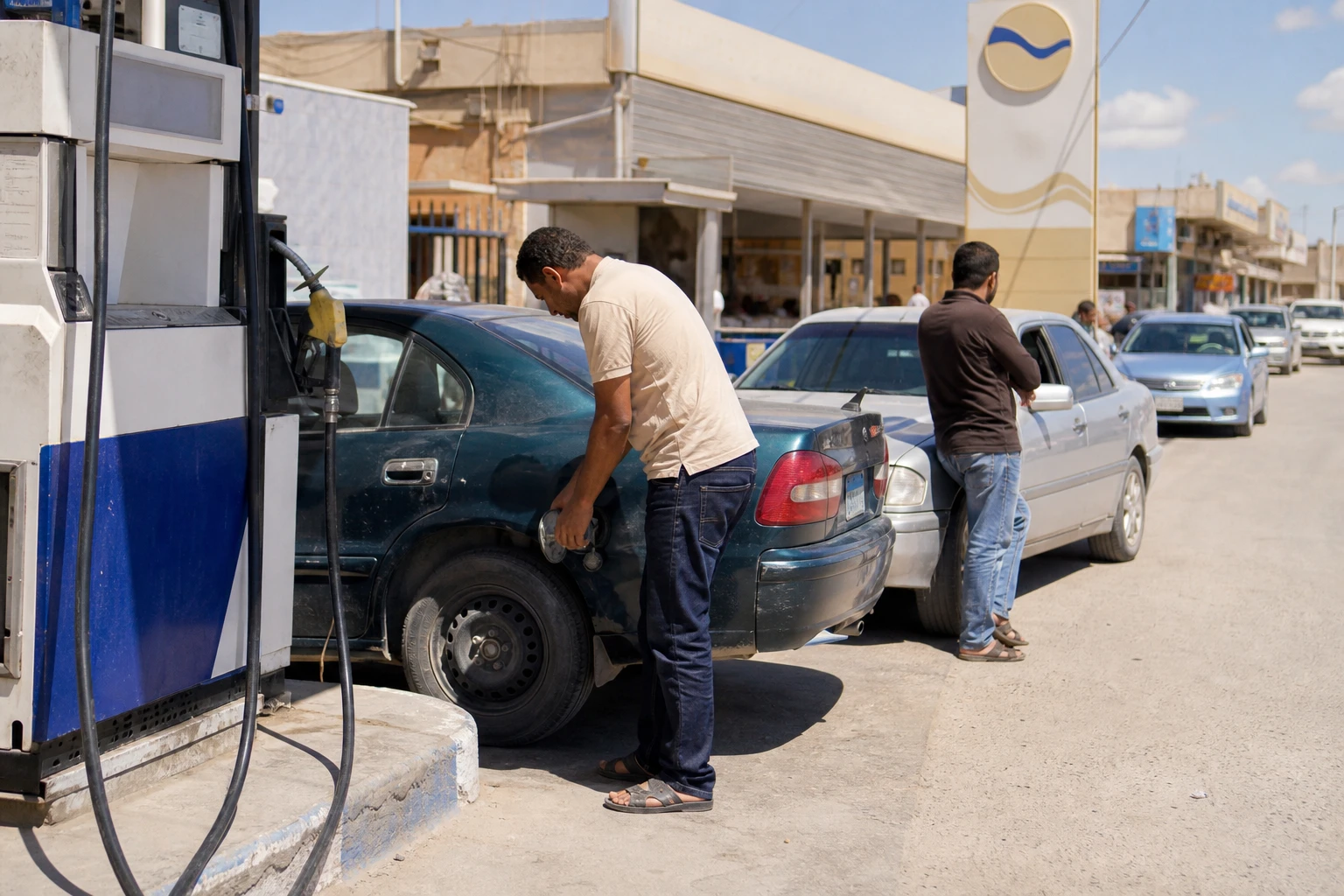
The industrial impact is serious. Zawiya is no ordinary refinery. It is a hub for storage, refining and redistribution. When this node falters, the fuel supply chain in western Libya is weakened, including supplies for power plants, transport and the informal distribution networks that serve part of the country. The National Oil Corporation said emergency teams remained on site to protect adjacent tanks and secure the perimeter.
Why Zawiya matters far beyond its outskirts
The issue extends beyond the coastal city itself. Libya remains divided between two rival political centres: the Government of National Unity, based in Tripoli, and a parallel authority based in the east, backed by the House of Representatives and the military camp of Marshal Khalifa Haftar. The United Nations continues to describe the country as fragmented, with competition over institutions affecting the management of resources.
This fragmentation has a very tangible consequence: oil infrastructure becomes a target for political, economic and security pressure. In every crisis, authorities invoke the protection of “vital facilities”, but the reality on the ground is that some industrial areas are exposed to local armed rivalries. The Associated Press has recalled that previous fighting had already caused serious damage to tanks at the Zawiya complex and disrupted traffic on a major coastal road linking the city to other centres in the west.
For the population, the stakes are immediate. When depots burn, the risk of shortages, higher logistics costs and disruption to public services rises. For the state, the risk is fiscal: Libya depends heavily on hydrocarbon revenues, and the National Oil Corporation itself stresses the sector’s central role in the national economy. The country holds Africa’s largest proven oil reserves, making every incident on the western coast significant far beyond the Tripoli region.
The regional dimension also matters. Libya’s North African coastline connects the country to the Mediterranean, European markets and the Maghreb’s energy routes. The stability of these flows also concerns Algeria, Tunisia and all partners monitoring the security of supplies. In this context, the African Nations Community has more than one Libya-related issue before it: it must also consider states’ ability to protect their strategic assets in a fragmented political environment.
What the episode says about Libya today
The Zawiya episode illustrates a constant in Libya: energy infrastructure is both a national asset and a point of vulnerability. The National Oil Corporation can declare emergency measures, mobilise its teams and speak of a return to operations after inspection. But as long as the security environment remains contested, depots, terminals and refineries will remain exposed to incidents with cascading effects on the economy, employment and public services.
It also shows why resolving Libya’s crisis requires more than institutional politics in Tripoli or Benghazi. It also depends on the gradual demilitarisation of industrial areas, control over local armed groups and a minimum of national coordination around oil revenues. Without that, every incident in Zawiya, Ras Lanuf or the Fezzan can reopen the same equation: a country rich in resources, yet exposed to the fragility of its own economic arteries.