Algeria
 Egypt
 Libya
 Sudan
 Tunisia
 Benin
 Burkina Faso
 Cabo Verde
 Côte d'Ivoire
 Ghana
 Guinea
 Guinea-Bissau
 Liberia
 Mali
 Mauritania
 Niger
 Nigeria
 Senegal
 Sierra Leone
 The Gambia
 Togo
 Cameroon
 Central African Republic
 Chad
 DR Congo
 Equatorial Guinea
 Gabon
 Republic of the Congo
 São Tomé and Príncipe
 Burundi
 Comoros
 Djibouti
 Eritrea
 Ethiopia
 Kenya
 Madagascar
 Malawi
 Mauritius
 Mozambique
 Rwanda
 Seychelles
 Somalia
 South Sudan
 Tanzania
 Uganda
 Angola
 Botswana
 Eswatini
 Lesotho
 Namibia
 South Africa
 Zambia
 Zimbabwe
A tense border, with children caught in the middle
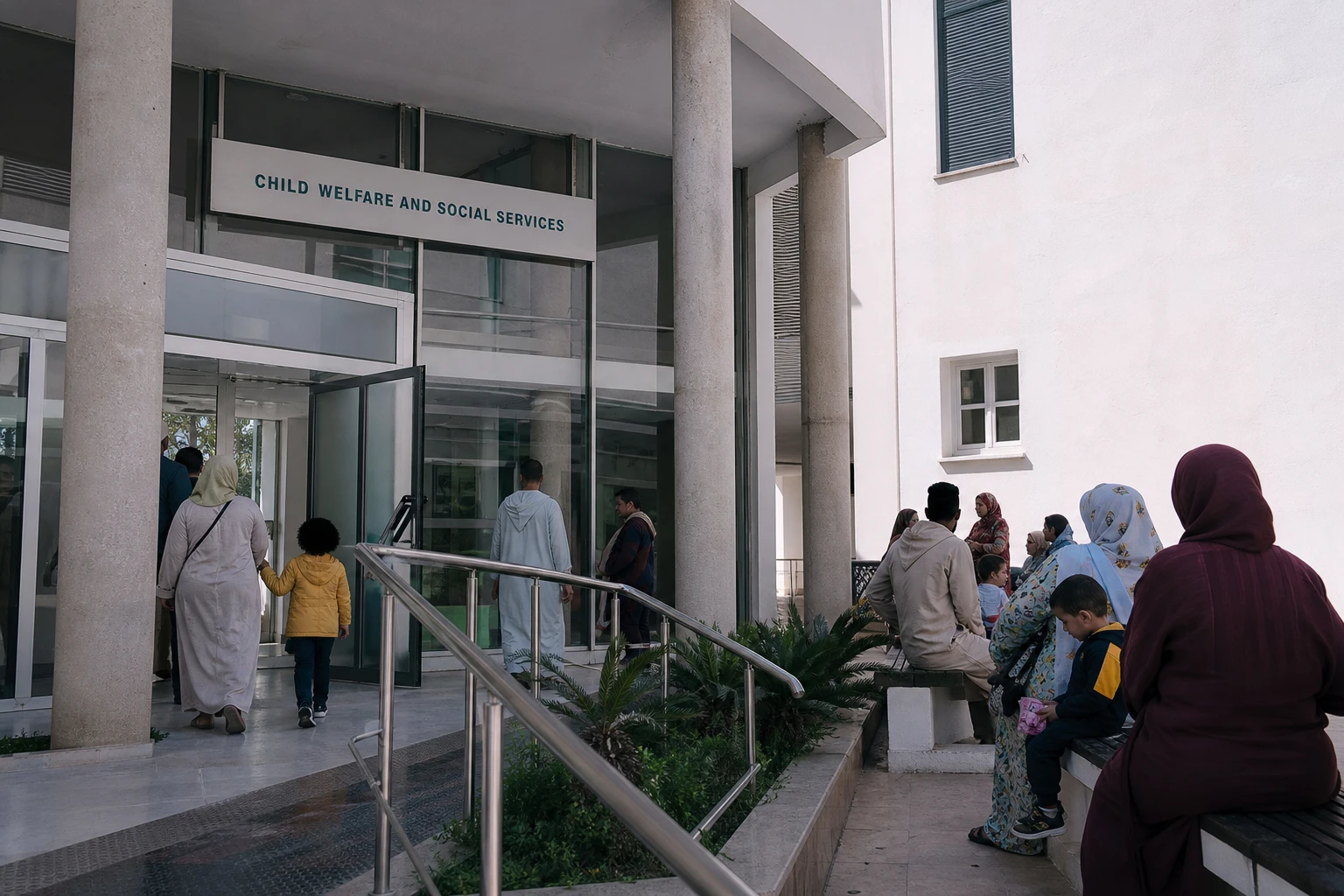
In Ceuta, the issue is not only border crossings. It is also the protection of minors, at a time when a mass arrival of people has overwhelmed reception services and left several teenage girls outside the system. In this kind of crisis, the humanitarian emergency does not end at the shore: it continues in hospitals, children’s centres and the city’s streets.
Morocco, whose capital is Rabat, is at the heart of these events because of geography, human movement and cooperation with Spain. Departures for the Spanish enclave of Ceuta, opposite the Moroccan coast, remain a recurring marker of migration dynamics between the two shores of the Strait. In 2026, pressure has risen another notch, with people swimming across, collective attempts and a high proportion of minors among those arriving.
Serious allegations, still subject to judicial verification
According to information corroborated by several media outlets, girls who arrived in Ceuta from Morocco have received medical care after alleged sexual assaults. The authorities have not made all the details of these cases public, and investigators are still working to establish the exact circumstances, the identity of any suspects and the precise number of victims. In this kind of situation, caution is essential: medical findings are not yet a criminal judgment, and testimonies must be treated as elements of an investigation.
The starting point of the case is known: after the influx on 30 July 2026, staff at Ceuta University Hospital received people reporting sexual violence. Health sources quoted by the press referred to several cases involving minors, some of them very young, and to more incidents than formal complaints filed. Spain’s National Police opened an investigation, while judicial and medical services continued their examinations.
Ceuta has also faced a logistical shock. Arrivals exceeded reception capacity, and some minors were left without stable accommodation. This breakdown in protection creates immediate danger. A teenage girl alone, without a responsible adult, is easier to exploit, move and threaten. This is precisely the gap that child protection organisations are denouncing.
When accommodation is scarce, vulnerability grows
The heart of the problem is not only a policing issue. It is also social and medical. Doctors at Ceuta Hospital have described an overcrowded emergency department, with hundreds of visits each day, patients with nowhere to be referred and minors sometimes left to fend for themselves after leaving hospital. In this context, identifying victims, conducting forensic examinations and providing safe accommodation must work as a chain. If one link fails, the risk of revictimisation increases.
Child protection organisations also point to another issue: migrant girls face a specific risk of trafficking, sexual exploitation and forced marriage, especially when they are isolated. An investigation conducted after the 2021 crisis had already found that teenage girls who arrived in Ceuta had suffered violence in their country of origin or during their journey, further complicating their care. The violence reported in Ceuta is therefore part of a continuing pattern of vulnerability, not a wholly isolated episode.
The situation also raises an institutional question. Ceuta is part of Spain, but its border stability depends in part on cooperation with Morocco, particularly on coastal controls, the referral of minors and the return of people identified as Moroccan. This cooperation, however, operates within a fragile framework, where each diplomatic tension can reignite flows and disrupt protection efforts. The events of May 2021 showed just how much the border can expose wider disagreements between Rabat and Madrid.
What this crisis says about Morocco, Spain and the Strait
For Morocco, the issue goes beyond its image abroad. It concerns the management of departure areas, control of the northern coast and the protection of young people exposed to smuggling networks, violence and improvised departures. Control operations in the north of the country show that the authorities are seeking to contain these movements, but pressure remains high around Tangier, Fnideq and the routes towards Sebta, the name often used in Morocco for Ceuta.
For Spain, the challenge is twofold. It must pursue criminal investigations while ensuring that minors do not disappear from the administrative radar. The priority given to girls and children under 13, flagged by police authorities, is a step in that direction. But it does not resolve the central issue: without enough places in reception facilities, protection remains incomplete, and children continue to expose their bodies and lives to further dangers.
At regional level, Ceuta acts as a barometer. When the border comes under pressure, it measures both the strength of Spanish-Moroccan cooperation and states’ ability to protect the youngest people in migratory movements. Recent figures show that pressure is not easing: between the start of 2026 and mid-July, irregular entries into Ceuta rose sharply, and the authorities once again spoke of an emergency. Ceuta thus highlights a simple reality: as long as child protection remains the variable adjusted in border crises, the same tragedies are likely to recur from one season to the next.