
 Algeria
 Egypt
 Libya
 Morocco
 Sudan
 Tunisia
 Benin
 Burkina Faso
 Cabo Verde
 Côte d'Ivoire
 Ghana
 Guinea
 Guinea-Bissau
 Liberia
 Mali
 Mauritania
 Niger
 Nigeria
 Senegal
 Sierra Leone
 The Gambia
 Togo
 Cameroon
 Central African Republic
 Chad
 Equatorial Guinea
 Gabon
 Republic of the Congo
 São Tomé and Príncipe
 Burundi
 Comoros
 Djibouti
 Eritrea
 Ethiopia
 Kenya
 Madagascar
 Malawi
 Mauritius
 Mozambique
 Rwanda
 Seychelles
 Somalia
 South Sudan
 Tanzania
 Uganda
 Angola
 Botswana
 Eswatini
 Lesotho
 Namibia
 South Africa
 Zambia
 Zimbabwe
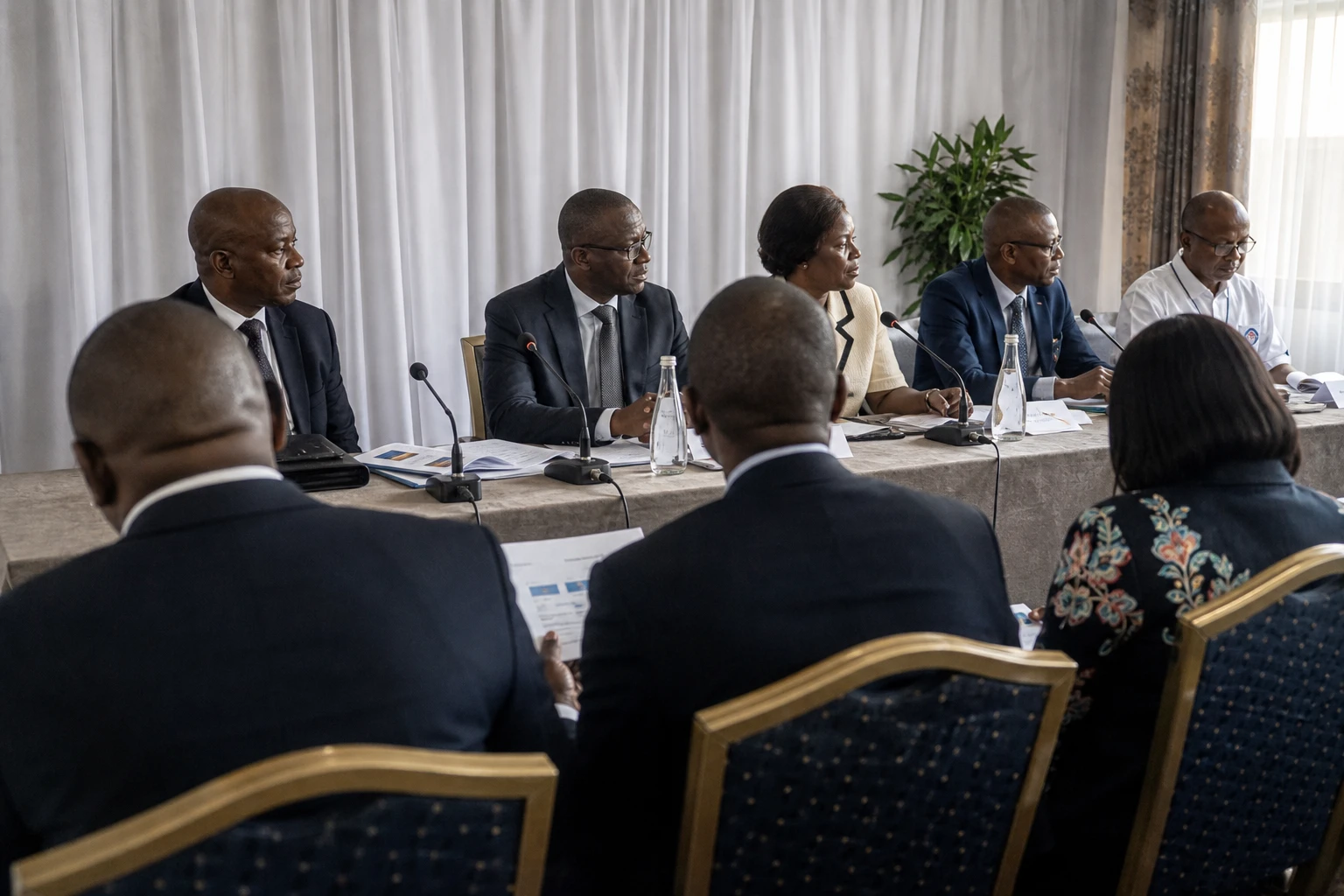
In eastern DR Congo, Ebola remains a frontline emergency
In the east of the Democratic Republic of the Congo, the response to Ebola is playing out well beyond treatment rooms. It also depends on blocked roads, forced displacement, mining markets and communities’ trust. This is where the disease advances, or retreats.
Since the alert was raised in Ituri in May 2026, the outbreak caused by the Bundibugyo virus has reached an unusual scale. On 6 August 2026, the DRC reported 4,053 confirmed cases and 1,850 deaths linked to the outbreak, with 53 health zones affected across five provinces: Ituri, North Kivu, South Kivu, Haut-Uele and Tshopo.
This figure tells a story that extends beyond Ituri province alone. It shows the disease circulating in an area of intense mobility, at the crossroads of the DRC, Uganda and other countries in the Great Lakes region.
An outbreak that began in Ituri, at the heart of a troubled region
On 15 May 2026, Congolese health authorities confirmed the country’s 17th Ebola outbreak since 1976. The first clusters were reported in Bunia, Mongbwalu and Rwampara, in Ituri. Tests carried out by the National Institute of Biomedical Research identified the Bundibugyo strain in eight of 13 positive samples collected.
Initially, the government reported 246 suspected cases and 80 deaths. The data were then consolidated as investigations, laboratory confirmations and contact tracing progressed. This is typical in a haemorrhagic fever outbreak, particularly when teams must work in remote and sometimes unstable areas.
The Bundibugyo virus is not the best-known Ebola virus, but it is among the most concerning. It was first identified in Uganda in 2007. In this outbreak, the authorities and the WHO say there is not yet a vaccine or treatment specifically approved for this strain, although diagnostic tests and clinical trials advanced in 2026.
Health response bolstered, but constrained by conditions on the ground
The World Health Organization quickly stepped up its support in Kinshasa. In mid-May, it announced that it was sending five tonnes of supplies to Bunia, including protective equipment, logistics, sample transport, tents and treatment equipment. The Congolese authorities activated emergency mechanisms and deployed rapid response teams.
On the ground, the strategy relies on several measures: surveillance, active case finding, contact tracing, infection prevention in health facilities, community outreach and safe burials. The WHO also stresses dialogue with communities, because a purely technical response can quickly fail when distrust takes hold.
As of 11 July 2026, the National Public Health Institute reported a cumulative total of 1,926 confirmed cases and 702 deaths. The figures continued to change afterwards, but already confirmed a severe, sustained outbreak. On 6 August, the official toll published by the DRC had risen further.
This trend has a tangible cost. In affected areas, treatment centres are under continuous pressure. Families live with the fear of symptoms, healthcare workers with the risk of exposure, and local authorities with the need to coordinate health, security and logistics.
A Congolese challenge, but also a regional one
The situation in the DRC extends beyond its national borders. Ituri shares borders and flows of movement with Uganda, and population movements are constant in this part of Central and East Africa. The WHO confirmed cases linked to the outbreak in Uganda, before the end of the outbreak in that country was announced on 28 July 2026.
This cross-border movement explains why surveillance cannot be confined to Kinshasa. It also involves regional health authorities, border posts and the alert systems of the East African Community, of which the DRC is now a member, as well as cooperation mechanisms with the African Union.
Local actors stress a point that is often underestimated: the outbreak spreads more easily where information circulates poorly. In displacement sites, mining districts and isolated rural areas, community voices become a public health tool as important as laboratory tests. This is a recurring lesson from outbreaks in the DRC, from Kasai to Ituri.
For Central Africa and the Great Lakes region, the challenge is twofold. Populations must be protected without interrupting vital exchanges between neighbouring territories. And a health crisis must not be seen merely as an international alert, when it also says something about African states’ capacity to detect quickly, treat quickly and work together.
What happens next will depend on the same equation that has applied since May: speed of detection, community trust, stability on the ground and coordination between the DRC, its neighbours and health partners. Until these four factors are aligned, Ebola will retain a dangerous lead.



