
 Algeria
 Egypt
 Libya
 Morocco
 Sudan
 Tunisia
 Benin
 Burkina Faso
 Cabo Verde
 Côte d'Ivoire
 Ghana
 Guinea
 Guinea-Bissau
 Liberia
 Mali
 Mauritania
 Niger
 Nigeria
 Senegal
 Sierra Leone
 The Gambia
 Togo
 Cameroon
 Central African Republic
 Chad
 DR Congo
 Equatorial Guinea
 Gabon
 Republic of the Congo
 São Tomé and Príncipe
 Burundi
 Comoros
 Djibouti
 Eritrea
 Ethiopia
 Kenya
 Madagascar
 Malawi
 Mauritius
 Mozambique
 Rwanda
 Seychelles
 Somalia
 South Sudan
 Tanzania
 Uganda
 Angola
 Botswana
 Eswatini
 Lesotho
 Namibia
 Zambia
 Zimbabwe
A club, a city, a dividing line
In Soweto, nightlife venues have often told stories that go far beyond music. They have spoken of the city, its prohibitions, its solidarities and the ways South Africans found each other despite the boundaries imposed by apartheid. Club Pelican belongs to that memory: a place where people came to hear jazz, funk and soul, but also to breathe a little in a society organised to keep them apart.
Soweto, in Johannesburg, remains one of the places most deeply marked by South Africa’s political history. The township grew under 20th-century urban segregation policies and later became a major centre of resistance to the apartheid regime. Its name still evokes both the memory of the struggle and a vibrant cultural scene, where history is found not only in museums but also in streets, performance venues and former sites of popular social life.
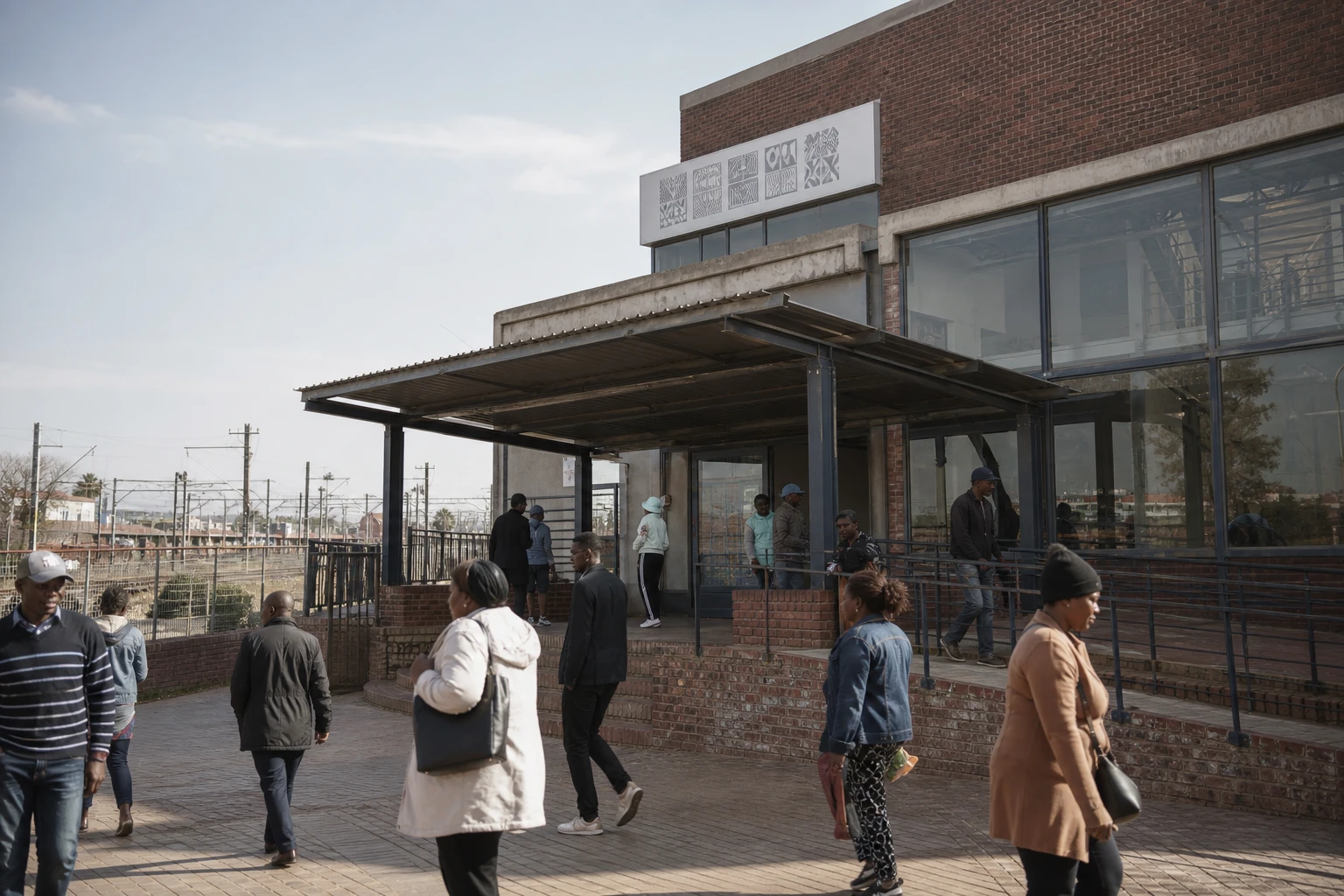
It was in this setting that Pelican operated, described by several sources as the township’s first nightclub. It stood near Orlando East, in an industrial area of Soweto, behind the railway lines and not far from Orlando Stadium. Its dilapidated façade now gives little hint of anything beyond a tired building, but for years the site was one of the few places where night offered a collective respite.
What Pelican really represented
Pelican was more than a fashionable club. It was a working stage for musicians who trained there, tested themselves against others and learnt the discipline of live performance. South African saxophonist Khaya Mahlangu made his debut there in the mid-1970s. Consistent accounts describe a cramped venue, where the rhythm section barely fitted on stage and the horns squeezed into a corner. That closeness was no drawback: it forged a sound, a presence, a school.
The club hosted jam sessions, visiting musicians and a rare exchange between generations. Several accounts describe a repertoire ranging from jazz to funk, with touches of soul and fusion. This diversity was no footnote. It shows how South Africa’s urban black music scenes drew on regional and transatlantic exchanges while retaining their own identity. In the townships, music was an art, an income, a network and a way of standing firm.
The brothers Lucky and Leo Michaels opened the venue. Here, too, several sources point to a central reality: Pelican was multiracial in a country where the law enforced the separation of audiences, neighbourhoods and rights. White patrons went there despite being barred from moving freely around Soweto. Alcohol was also sold outside the legal framework. This detail matters. Under apartheid, nightlife venues were often spaces for evading restrictions, where the informal economy, music and transgression came together to create a form of practical freedom.
Police raids were part of the scene. The penalties were administrative, the fines repeated, and then the cycle began again. This kind of control illustrated the logic of the time: to monitor bodies, movement and social life, while sometimes tolerating arrangements in practice. Pelican thus embodied a distinctly South African contradiction of the era: a prohibited space that endured, an illegality that was well known but socially useful.
A useful memory for understanding South Africa today
The club closed in the 1980s, as violence increased in Soweto and township nightlife became harder to sustain. Its closure speaks to the fragility of cultural venues when political and urban insecurity intensifies. But its disappearance was not a complete ending. A compilation devoted to Pelican brought its story back into circulation, showing how a venue can continue to shape musical memory long after its doors have closed.
This memory also matters to contemporary South Africa. In Johannesburg, former townships are no longer simply places of exclusion. They have become centres of culture, tourism and entrepreneurship, as well as spaces where history is reinterpreted. Soweto embodies this dual movement: a highly visible heritage of struggle, and an urban economy still seeking to turn that memory into sustainable activity. The divides between the city centre, popular neighbourhoods and heritage circuits remain stark. But former music venues remind us that the city was built not only through institutions; it also took shape in bars, clubs and improvised performance spaces.
For southern Africa, Pelican also speaks to a broader regional history. Johannesburg’s urban music scenes have long been in dialogue with those of Mozambique, Botswana, Zimbabwe and Zambia through the movement of artists, styles and audiences. From this perspective, the club is not merely a local memory. It belongs to a SADC musical geography, the Southern African Development Community, where border cities, labour migration and cultural exchange have shaped shared repertoires. This, too, is what Pelican tells us: night as a place of passage, learning and mixing, at the heart of a country only just emerging from a legal order founded on separation.
A broader lesson remains. Major political transitions often leave behind monuments, archives and dates. But they also leave modest, sometimes forgotten addresses where tangible forms of freedom took shape. Pelican is one of them. In Soweto, its story reminds us that a city can also be understood through its nights, and that a club can become a social document in its own right.



