
 Algeria
 Egypt
 Libya
 Sudan
 Tunisia
 Benin
 Burkina Faso
 Cabo Verde
 Côte d'Ivoire
 Ghana
 Guinea
 Guinea-Bissau
 Liberia
 Mali
 Mauritania
 Niger
 Nigeria
 Senegal
 Sierra Leone
 The Gambia
 Togo
 Cameroon
 Central African Republic
 Chad
 DR Congo
 Equatorial Guinea
 Gabon
 Republic of the Congo
 São Tomé and Príncipe
 Burundi
 Comoros
 Djibouti
 Eritrea
 Ethiopia
 Kenya
 Madagascar
 Malawi
 Mauritius
 Mozambique
 Rwanda
 Seychelles
 Somalia
 South Sudan
 Tanzania
 Uganda
 Angola
 Botswana
 Eswatini
 Lesotho
 Namibia
 South Africa
 Zambia
 Zimbabwe
Kampala’s military diplomacy takes an unexpected turn
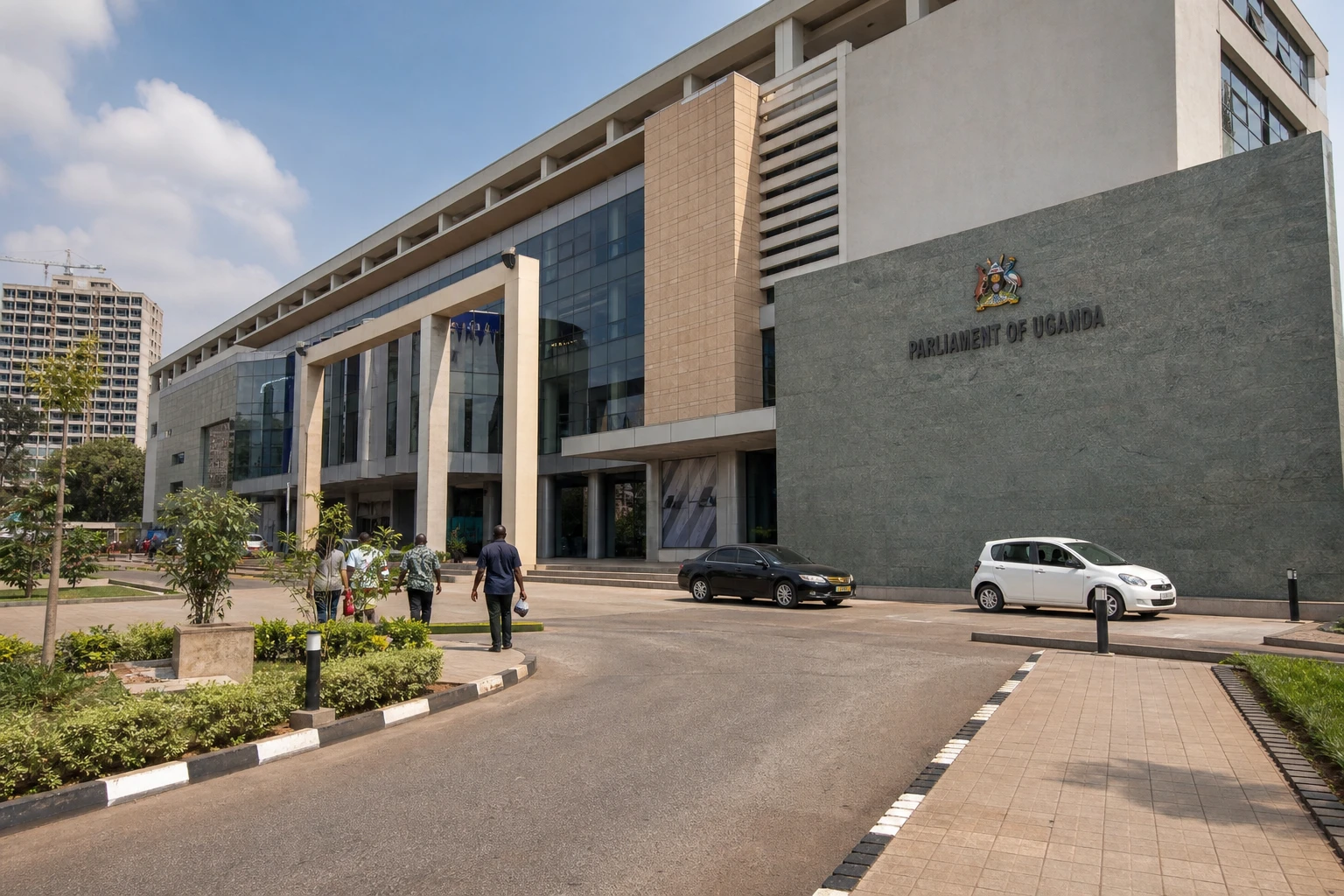
In Kampala, a parliamentary decision could have repercussions far beyond Uganda. By authorising, in principle, the deployment of soldiers to the future international stabilisation force for Gaza, Ugandans are opening a new chapter in a security diplomacy that is already highly active on the continent. The move is sensitive because it touches on the Middle East, Uganda’s external posture and its image across Africa.
The issue comes at a time when regional balances are fragile. East Africa, structured around the East African Community, comprises eight member states, including Uganda, and makes peace and security one of the pillars of its integration. Kampala is also at the heart of this architecture, while continuing to deploy forces on external missions, notably in Somalia.
What Kampala has approved
On Thursday 6 August 2026, Uganda’s parliament gave the green light in principle to military participation in the future International Stabilisation Force planned for Gaza. According to information made public, the motion was defended by Defence Minister Kiryowa Kiwanuka, who presented the potential mission as a contribution to the international framework designed to support the post-war period.
The force is part of the wider international plan linked to Gaza and the implementation of the Hamas disarmament agreement concluded at the end of July 2026. A United Nations report on Resolution 2803 (2025) recalls that a group of countries had already signed a declaration of intent on 19 February 2026 to contribute to the force, including Albania, Indonesia, Kazakhstan, Kosovo and Morocco. Recent reports indicate that Uganda is now among the countries approached.
At this stage, Kampala has not specified the exact size of the contingent it might commit. The authorities have only outlined the mission’s broad parameters: supporting the ceasefire, protecting civilians in a proposed humanitarian zone and assisting with the disarmament of Hamas. MPs have also questioned the government about the safety of Ugandan soldiers in an operational theatre where risks remain high.
An army already experienced in overseas operations
To justify the decision, the government has highlighted the Ugandan army’s experience in peace operations. This is not a new argument. Uganda has taken part in regional deployments for years, particularly in Somalia, where its troops serve under an African banner. The United Nations peacekeeping website still lists Uganda among active contributors. Ugandan forces are also involved in operations supported by the African Union and the East African Community.
This record explains why the issue is being closely followed in Kampala. In a country where the security apparatus occupies a central place in political life, every overseas mission is viewed through several lenses: military professionalism, budgetary cost, human risk and diplomatic returns. The government wants to show that it can have an influence on international issues. The opposition, however, is focusing above all on the actual mandate, rules of engagement and political justification for a deployment in such an explosive zone.
Morocco is the other name that keeps coming up in this matter. Rabat formalised its participation in the stabilisation force, becoming the first country to sign an agreement with the political body in charge of the framework, according to information published in July 2026. Morocco’s presence gives the mission an Arab, African and international character. It also serves as a reminder that African states joining it often seek to combine diplomatic weight with security credibility.
What this means for Uganda and the region
For Uganda, the stakes are primarily political. By agreeing to join this framework, Kampala is positioning itself as an actor able to respond to security requests beyond its immediate neighbourhood. It is a way to raise its profile on the international stage. It could also help strengthen its relationship with Washington, which officially requested Uganda’s participation, according to the parliamentary debate reported in Kampala.
But this opening carries risks. A mission in Gaza is unlike either a conventional peacekeeping patrol or a training operation in East Africa. The ground is politically charged, there are many actors and the announced mandate remains narrow. If the framework is limited to protecting a humanitarian zone and supporting disarmament, Ugandan soldiers could find themselves exposed without having any real scope for independent action. This is precisely what is worrying some MPs.
For the region, this issue says something important: African armies are no longer deployed only to manage African crises. They are now integrated into security frameworks that span continents. Uganda, a member of the East African Community, is thus projecting its image beyond the region, even as the EAC continues to make peace and security a pillar of its institutional consolidation. This dual presence, both local and distant, is a marker of Kampala’s power, but also a source of tension if the political consequences are not clearly acknowledged.
What happens next will depend on concrete decisions: the force’s final mandate, international approval, command structure and the number of soldiers actually deployed. For now, Uganda’s parliament has mainly endorsed a direction of travel. But that alone is enough to place Kampala among a small group of African states expected to play a visible role in the post-conflict period in Gaza.



