Algeria
 Egypt
 Libya
 Morocco
 Sudan
 Tunisia
 Benin
 Burkina Faso
 Cabo Verde
 Côte d'Ivoire
 Ghana
 Guinea
 Guinea-Bissau
 Liberia
 Mali
 Mauritania
 Niger
 Nigeria
 Senegal
 Sierra Leone
 The Gambia
 Togo
 Cameroon
 Central African Republic
 Chad
 DR Congo
 Equatorial Guinea
 Gabon
 Republic of the Congo
 São Tomé and Príncipe
 Burundi
 Comoros
 Djibouti
 Eritrea
 Ethiopia
 Kenya
 Madagascar
 Malawi
 Mauritius
 Mozambique
 Rwanda
 Seychelles
 Somalia
 South Sudan
 Tanzania
 Angola
 Botswana
 Eswatini
 Lesotho
 Namibia
 South Africa
 Zambia
 Zimbabwe
Kampala enters a distant but politically sensitive issue
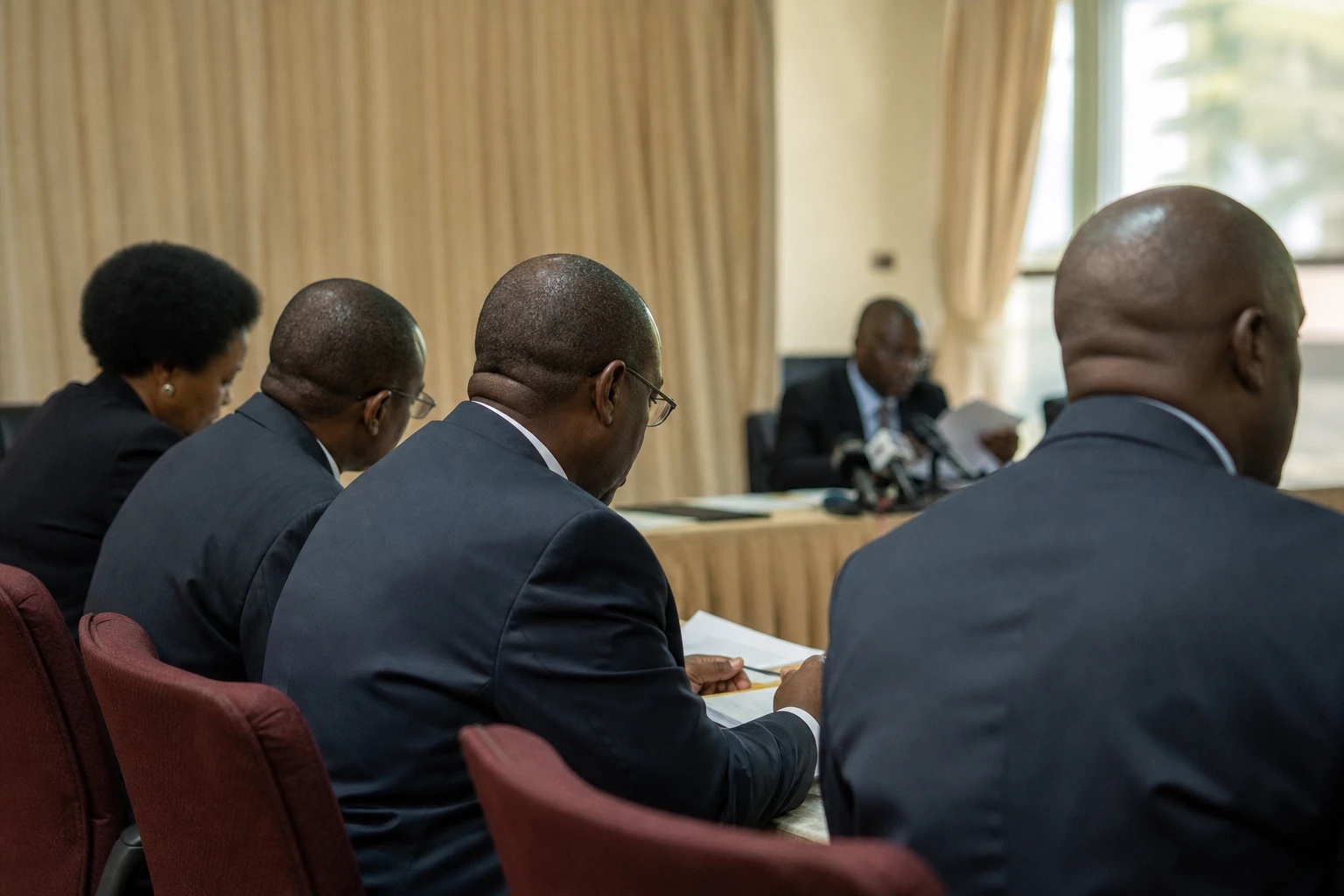
In Kampala, an external security decision can quickly become a test of domestic consistency. In Uganda, the possible deployment of soldiers to Gaza is not merely a diplomatic gesture. It also raises questions about how Yoweri Museveni’s government wants to exert influence beyond East Africa, while the Ugandan army is already involved in several regional balances.
The issue also touches on a weighty historical memory. Entebbe remains associated, in Israeli and Ugandan accounts, with the July 1976 raid and the death of Yonatan Netanyahu, brother of the Israeli prime minister. The recent unveiling of a statue in his name by Uganda’s army chief has revived this past, just as Kampala moves closer to a new military issue linked to Gaza.
What Kampala has approved, and under what framework
On Thursday 6 August 2026, Uganda’s parliament adopted a motion supporting President Museveni’s decision to deploy elements of the Uganda People’s Defence Forces to the Gaza Strip as part of the International Stabilisation Force, or ISF. The AP news agency reports that the vote is the first clear public indication of Uganda’s willingness to join the mission.
The force is part of the framework discussed after the agreement announced in late July on Hamas’s disarmament and Israel’s gradual withdrawal. Documents cited by the Associated Press describe a temporary ISF set to operate in Gaza under the authority of the Board of Peace, a body envisaged by Donald Trump to oversee the post-war period and reconstruction.
According to the same sequence of information corroborated by Reuters and other media, the ISF was initially expected to comprise a limited contingent of around 200 people from countries described as “friends”, including Uganda and Morocco. Other states have been mentioned in discussions, but without a firm timetable or a publicly finalised detailed mandate.
A decision that divides Kampala
Support in parliament was not unanimous. AP quotes MPs who asked why Uganda would accept such an exposed mission in a territory still hit by Israeli military operations. Karim Masaba in particular argued that such a deployment could not be taken lightly.
The official line, meanwhile, stresses the Ugandan army’s ability to contribute to stability. General Henry Matsiko defended the plan before lawmakers, presenting Ugandan troops as a regional and global pillar of stability. This position reflects a familiar tradition in Kampala: the army is not only an instrument of national defence, but also a diplomatic tool for exerting influence.
But the debate is not merely technical. Uganda is a member of the Organisation of Islamic Cooperation, as an MP quoted by AP pointed out in expressing his reservations. In a country where relations with Israel have already gone through periods of rapprochement, caution and symbolic gestures, this dimension may matter as much as military doctrine.
What this episode reveals about the balance of power
The issue first highlights Uganda’s distinctive position in its neighbourhood. The country belongs to the East African Community, whose headquarters are in Arusha, and hosts several regional institutions. For years, Kampala has sought to play a role in the region’s security operations, from South Sudan to Somalia, as well as in discussions on EAC economic integration.
This external projection comes at a cost, however. Ugandan troops are already associated with missions and regional controversies, including recent debates over payments owed to soldiers deployed under African mandates or in bilateral operations in East Africa. Against this backdrop, opening a new front for a presence, even under an international flag, raises a simple question: real capabilities or a political gamble?
For Uganda’s population, the stakes are tangible. An operation of this kind uses resources, commits the country’s reputation and exposes its military personnel to a theatre where the line between security, a ceasefire and a resumption of fighting remains fragile. For the government, by contrast, the interest is clear: become indispensable in a global issue, strengthen its profile as a useful partner and bring Kampala into a diplomatic architecture dominated by Washington.
Regional significance extending beyond Gaza
The issue’s significance for Africa lies less in Gaza itself than in the precedent it could set. If Uganda does join the ISF, other African capitals could be approached to take part in multinational missions outside the continent, on terms that remain unclear. This would raise a question of doctrine: under what conditions should an African army agree to deploy far beyond its regional sphere, and under what chain of command?
Timing also matters. The ISF remains an unstable political undertaking, dependent on the ceasefire agreement, guarantees on Israel’s withdrawal and Hamas’s disarmament. Until these parameters are clarified, Uganda’s contribution remains more a promise than an actual deployment. In Kampala, then, the real issue is not just the announcement. It is the still-open question of how much room for manoeuvre Uganda wants to give itself in the international security order.