Algeria
 Egypt
 Libya
 Sudan
 Tunisia
 Benin
 Burkina Faso
 Cabo Verde
 Côte d'Ivoire
 Ghana
 Guinea
 Guinea-Bissau
 Liberia
 Mali
 Mauritania
 Niger
 Nigeria
 Senegal
 Sierra Leone
 The Gambia
 Togo
 Cameroon
 Central African Republic
 Chad
 DR Congo
 Equatorial Guinea
 Gabon
 Republic of the Congo
 São Tomé and Príncipe
 Burundi
 Comoros
 Djibouti
 Eritrea
 Ethiopia
 Kenya
 Madagascar
 Malawi
 Mauritius
 Mozambique
 Rwanda
 Seychelles
 Somalia
 South Sudan
 Tanzania
 Uganda
 Angola
 Botswana
 Eswatini
 Lesotho
 Namibia
 South Africa
 Zambia
 Zimbabwe
A promise that goes beyond the pitch
In world football, the most sensitive decisions are not made only in stadiums. They are also forged in corridors, amid political balances, electoral support and power struggles between confederations. In Rabat, the debate over the 2030 World Cup is a reminder that hosting a major competition carries as much weight in the ballot box as in the stands.
Morocco is already at the heart of this process. FIFA awarded the 2030 World Cup to Morocco, Spain and Portugal in December 2024, with three centenary matches in South America and the final scheduled for 21 July 2030 in the tournament’s official calendar. The exact venue for the final has not yet been publicly decided.
Rabat, a diplomatic hub for African football
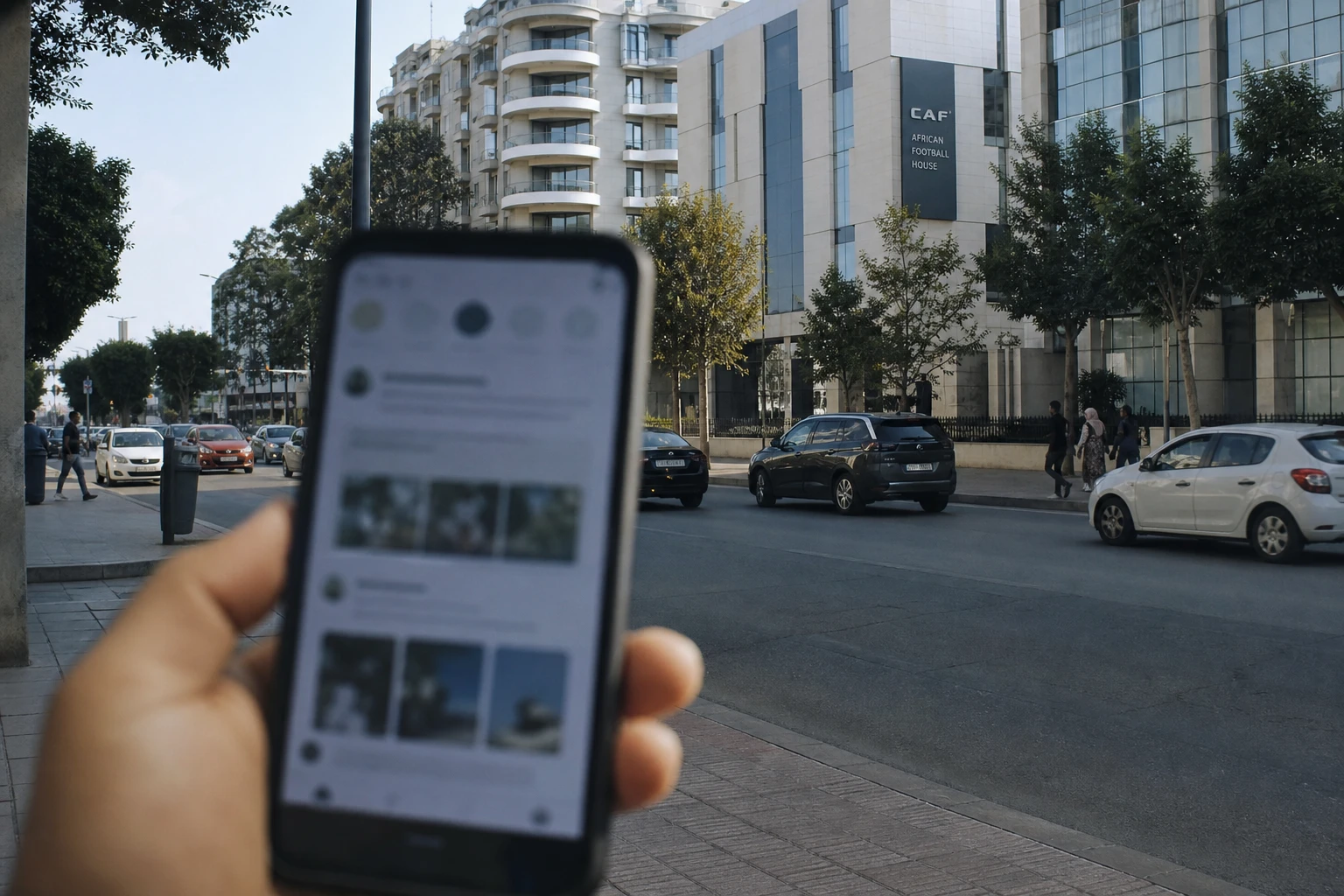
The choice of Rabat is no coincidence. FIFA has established its Africa office there, which the organisation describes as its main continental base. The Confederation of African Football also notes that Rabat serves as a base for several major competitions and events that are now shaping the governance of the game in Africa.
Institutionally, Morocco has placed itself at the centre of major events on FIFA’s calendar. The world governing body’s 77th elective congress is due to be held in Rabat on 18 March 2027. The event will matter for what comes next, as it will bring together all 211 member associations at a time when Gianni Infantino has confirmed he will seek another term.
This closeness between Rabat and FIFA is shaping an African reading of the issue. For Moroccans, the matter is not limited to the honour of hosting a final. It also concerns the country’s position as a continental hub, its investment in infrastructure and its ability to turn football into a lasting source of influence.
What the facts say, and what remains disputed
On Wednesday 5 August, a crisis meeting was held in Rabat between Gianni Infantino and senior FIFA officials. After the meeting, the organisation said secretary-general Mattias Grafström and the members of the management team who attended had reaffirmed their support for the president. FIFA also denied a report in the British press that Infantino had offered the Moroccan federation the 2030 World Cup final in exchange for political support.
In other words, the allegation has been made, but has not been confirmed by the organisation. Caution is warranted in this kind of situation. The issue is explosive enough that every detail must be attributed precisely. The only certainty is that FIFA is going through a period of turbulence, after withdrawing its proposal to open the organisation to private investors under pressure from a broad revolt across the football world.
The crisis has also brought internal divisions to light. Several prominent figures in football have distanced themselves. At the same time, some supporters remain, particularly among federations and contacts within FIFA’s African and Middle Eastern orbit. Morocco was among the countries to publicly back Infantino’s bid for re-election earlier this year.
The debate is therefore twofold. On the one hand, the ethical question: can electoral support be linked to a major sporting advantage? On the other, the political question: why is Morocco, already set to host FIFA’s 2027 elective congress and its Africa office, becoming an obligatory stop in a global power struggle?
A challenge for Morocco, but also for African football
For Rabat, the stakes are tangible. A World Cup final would bring worldwide exposure, economic benefits and immense pressure on infrastructure. But it would also invite close scrutiny of transparency, the distribution of benefits and the ability to deliver on hosting promises. In a country already preparing for events such as the 2025 Africa Cup of Nations, the appearance of being in control matters as much as sporting performance.
For Africa, the issue goes beyond Morocco’s borders. Rabat’s growing influence in global football networks illustrates a shift: decision-making centres are no longer only in Europe or North America. They now also move between Casablanca, Rabat, Cairo, Doha and Johannesburg, depending on the issue, the coalitions and the interests of the moment.
This shift in the balance of power could benefit the continent if investment follows in stadiums, training and governance. It could also fuel dependence if major announcements remain concentrated among a handful of capitals and leaders. That is where the real African reading of the issue lies: not in the excitement around a final, but in the place given to African federations in decisions that will shape the future of the game.
What to watch until 2027
The next steps will unfold on two fronts. First, on the sporting front, with the selection of the stadium that will host the 2030 World Cup final. Then on the institutional front, with FIFA’s elective congress scheduled to take place in Rabat on 18 March 2027. Between these two dates, every statement, every decision and every alignment of federations will count.
In the background, Morocco will remain a test case. The country wants to show that it can host, organise and wield influence. FIFA, for its part, must prove that its decisions are driven first and foremost by football, not calculations based on personal loyalty. It is on this knife-edge that the credibility of the next global cycle will be decided, far beyond a single final.