Algeria
 Egypt
 Libya
 Morocco
 Sudan
 Tunisia
 Benin
 Burkina Faso
 Cabo Verde
 Côte d'Ivoire
 Ghana
 Guinea
 Guinea-Bissau
 Liberia
 Mali
 Mauritania
 Niger
 Senegal
 Sierra Leone
 The Gambia
 Togo
 Cameroon
 Central African Republic
 Chad
 DR Congo
 Equatorial Guinea
 Gabon
 Republic of the Congo
 São Tomé and Príncipe
 Burundi
 Comoros
 Djibouti
 Eritrea
 Ethiopia
 Kenya
 Madagascar
 Malawi
 Mauritius
 Mozambique
 Rwanda
 Seychelles
 Somalia
 South Sudan
 Tanzania
 Uganda
 Angola
 Botswana
 Eswatini
 Lesotho
 Namibia
 South Africa
 Zambia
 Zimbabwe
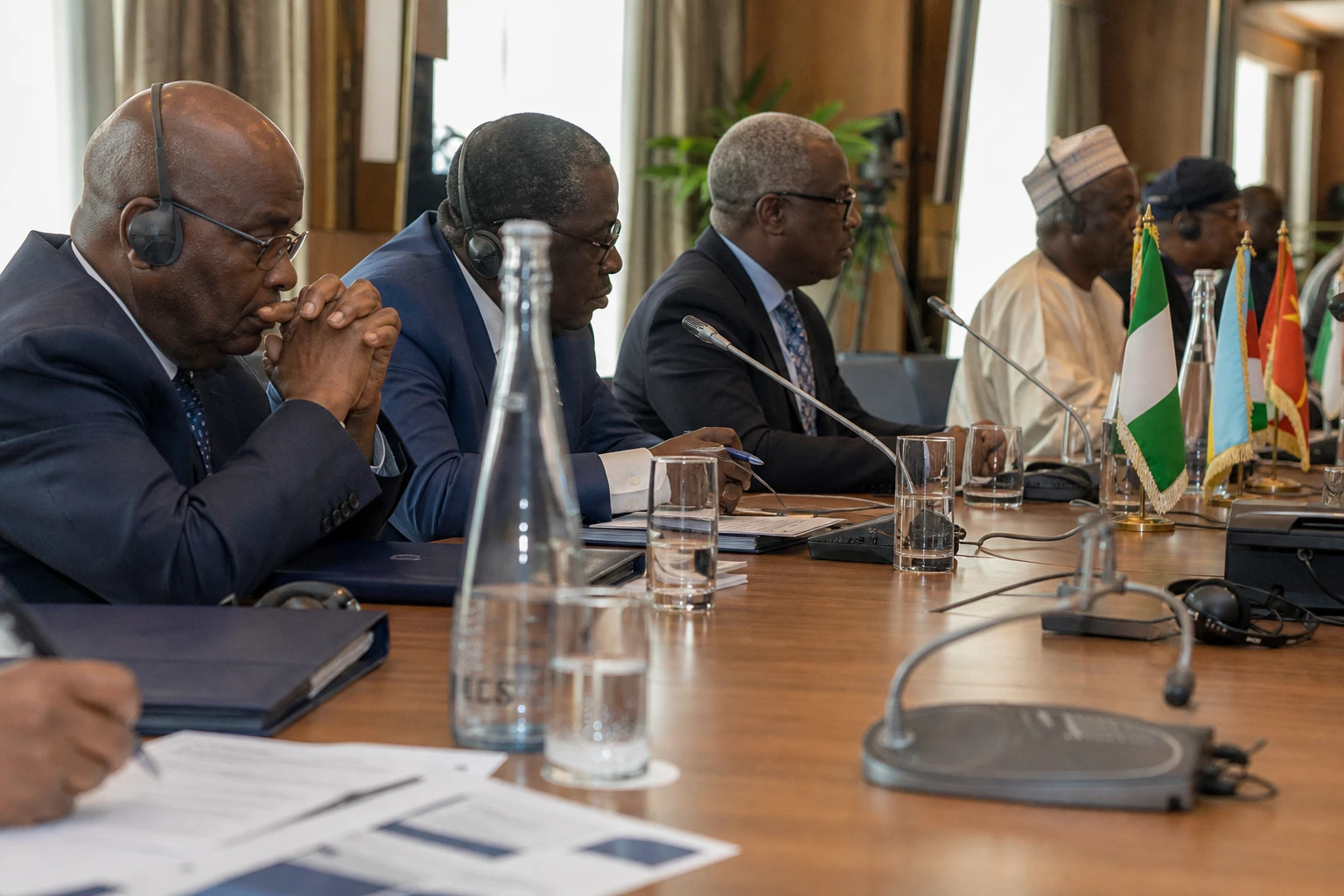
In the forests, the Nigerian state tries to regain control
In north-central Nigeria, the release of 308 kidnapped people is a reminder of a simple reality: roads, villages and forested areas remain fault lines in the country’s security. When the state moves in, it is not only to announce an operation. It is also seeking to reassure communities that have lived for months with the fear that a trip to the market, farm or mosque could go wrong.
The case involves two strategically important states, Niger and Kwara, both in the north-central region, between trade routes, hard-to-reach rural areas and forests where armed groups often retreat. Kainji Lake National Park, which spans Niger and Kwara states, gives an idea of this vast and poorly controlled terrain. This is precisely the kind of environment that makes pursuit operations difficult and provides refuge for armed gangs.
What is known about the release
On Tuesday 5 August 2026, the Nigerian presidency announced the release of 308 hostages. According to the official statement, 163 came from Woro, in Kwara State, and 145 from Niger State. The same statement said the victims were found in an area inside the forest of Kainji Lake National Park. The federal government described the operation as the largest carried out in a single day since the kidnapping crisis began in this part of the country.
The details of the circumstances remain sensitive, however. The Nigerian authorities gave the overall figure and the breakdown by state, but have not, at this stage, made public all the conditions of the operation or the fate of the kidnappers. At the same time, several recent incidents show that release operations in the region often rely on a combination of military pressure, intelligence and cooperation between federal forces, police, security services and local support groups.
The context in Woro also highlights the significance of the announcement. In February 2026, an attack on the village in Kwara State caused a national shock, with disputed casualty figures depending on the sources and accusations directed at armed groups active in the region. President Bola Ahmed Tinubu had ordered an army battalion to be deployed to Kaiama, in the same state, at the time, signalling a more visible federal response.
A longstanding problem, now entrenched in the country’s centre
Kidnappings for ransom are not an isolated incident in Nigeria. They form a durable criminal system, fuelled by the spread of armed groups, weak state control in some rural areas and the ease of movement through forests and internal borders. The European Union Agency for Asylum has noted that kidnappings remained particularly frequent in the north-central region, with a sharp rise in recorded cases in 2024 and attacks continuing in 2025.
This pressure does not affect all Nigerians in the same way. In regional capitals and administrative centres, the response revolves around statements, deployments and crisis meetings. In rural areas, the costs are more direct: abandoned farms, restricted movement, disrupted schools, less frequent markets and ransom payments sometimes forced by fear. The country’s centre, often seen as a transit area between north and south, is thus becoming a security front in its own right.
Kwara’s case is revealing. The state is close to the Benin border and remains a sensitive transit point, not only for legal trade but also for the movement of armed groups and smuggling. In this area, cooperation between federal authorities, police, the army and community actors has become essential. Recent operations in Nigeria also show that occasional successes are often achieved when intelligence, local knowledge and community networks work together.
What this operation changes, and what it does not resolve
For the federal government based in Abuja, the release of 308 people is a strong political signal. It demonstrates an ability to act at a time when security remains a major test of the executive’s credibility. But the headline impact should not obscure the central point: as long as forests, secondary routes and some rural communities remain places of refuge for armed groups, further kidnappings may follow. A lasting solution therefore depends as much on security presence as on territorial control and civilian protection.
For families, the release does not erase weeks of anguish or the physical and psychological after-effects. Nor does it reveal anything about the financial pressure often exerted around kidnappings, or the injuries left by the initial attacks. At local level, trust in the state is rebuilt slowly. A successful operation matters, but it is not enough on its own to restore transport, schooling, farming and public life.
At the West African level, the case is a reminder that criminal groups and armed networks exploit the same weaknesses: porous borders, wooded areas, arms flows and local economies under pressure. For ECOWAS, the issue is not only Nigerian. It affects the security of border corridors, the movement of populations and the stability of states in the wider Sahel and the Sudano-Sahelian belt. In Abuja, as in neighbouring capitals, the next steps to watch remain the same: hold the ground after the release, prevent reprisals and stop the forests of central Nigeria from becoming a permanent sanctuary.