Algeria
 Egypt
 Libya
 Sudan
 Tunisia
 Benin
 Burkina Faso
 Cabo Verde
 Côte d'Ivoire
 Ghana
 Guinea
 Guinea-Bissau
 Liberia
 Mali
 Mauritania
 Niger
 Nigeria
 Senegal
 Sierra Leone
 The Gambia
 Togo
 Cameroon
 Central African Republic
 Chad
 DR Congo
 Equatorial Guinea
 Gabon
 Republic of the Congo
 São Tomé and Príncipe
 Burundi
 Comoros
 Djibouti
 Eritrea
 Ethiopia
 Kenya
 Madagascar
 Malawi
 Mauritius
 Mozambique
 Rwanda
 Seychelles
 Somalia
 South Sudan
 Tanzania
 Uganda
 Angola
 Botswana
 Eswatini
 Lesotho
 Namibia
 South Africa
 Zambia
 Zimbabwe
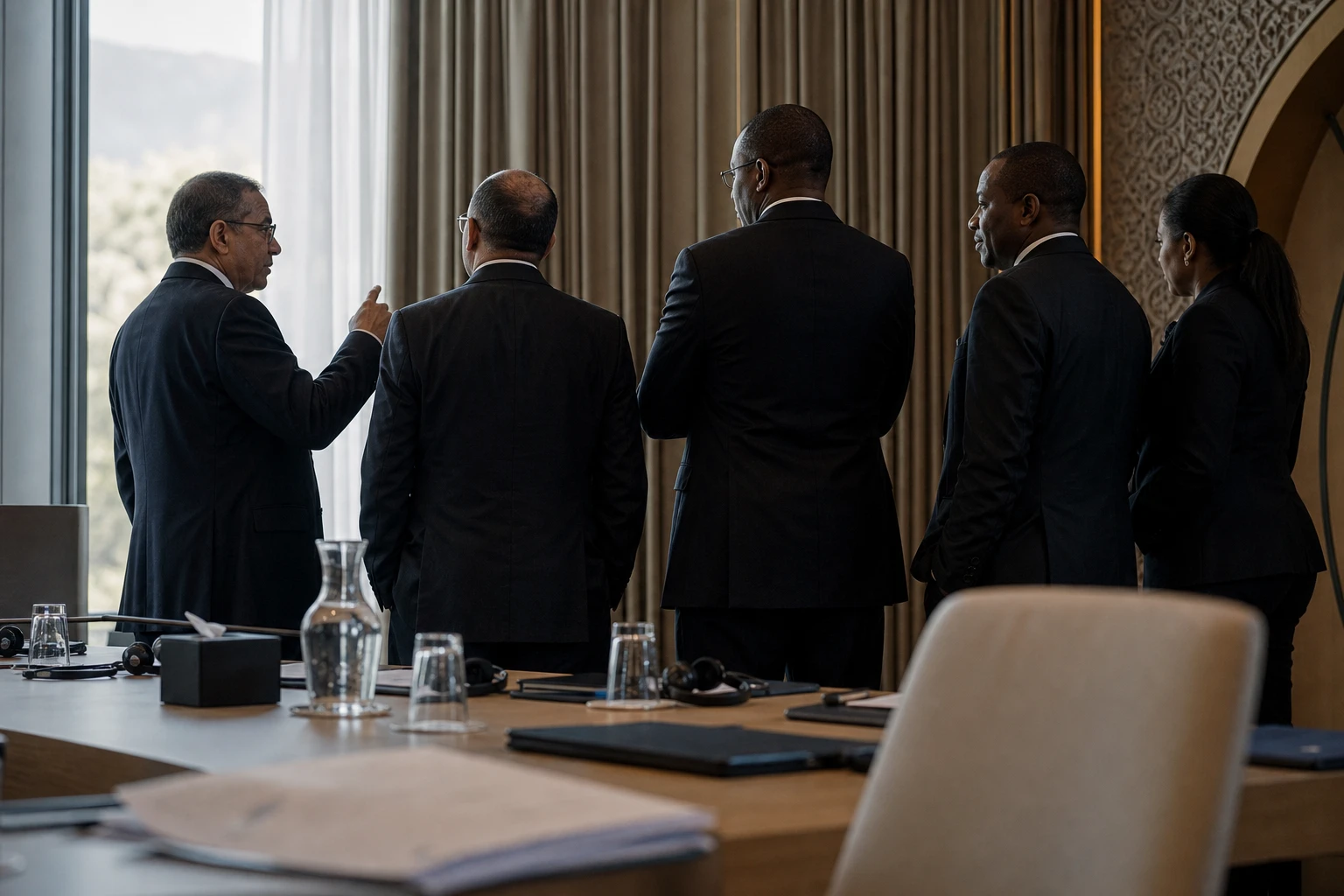
Rabat, an African showcase and the stage for a global crisis
Football diplomacy is now playing out far from the pitch in Rabat. The Moroccan capital is home to FIFA’s Africa office, hosts major institutional events and has served for months as a foothold for president Gianni Infantino’s strategy on the continent. Against this backdrop, the crisis over FIFA’s proposed commercial subsidiary has taken on particular significance: it is not just a governance battle, but also a question of how football’s global power is organised in North Africa.
Morocco has strengthened its position in this structure. FIFA’s Africa office has officially been based in Rabat since 2025, and the Royal Moroccan Football Federation has confirmed that FIFA’s elective congress is due to be held there in 2027. At the same time, the country is preparing to host the 2025 Africa Cup of Nations and is co-hosting the 2030 World Cup with Spain and Portugal. In other words, Rabat has become much more than a host city: it is a centre of gravity for football and politics.
What FIFA wanted to change, and why it triggered a rupture
On 28 July 2026, FIFA unveiled a reorganisation plan called FIFA Forward Enterprise, or FFE. The idea was to consolidate its commercial rights and event activities in a new structure, with an announced initial valuation of $20 billion and the possibility of raising up to $4.2 billion to fund more development programmes. The world governing body said it intended to retain full control over governance, competitions and the sporting calendar.
On paper, the plan was meant to expand the resources available to grassroots football. In practice, it opened up a political rift. UEFA was the first to respond, arguing that football and its governance were not assets to be handed over to private investors. The 55 European federations then suggested they might go as far as a boycott if the project were not dropped. CONCACAF, which brings together North America, Central America and the Caribbean, also challenged the approach, saying FIFA leaders had stopped putting football first.
Faced with this backlash, FIFA backed down. It later said that consultations remained open and that its priority was still to increase development funding. The retreat did not dispel the unease. On the contrary, it fuelled lasting doubts about Infantino’s ability to push through major reforms without a solid coalition.
An internal power struggle played out in public
The opposition is not coming from outside alone. The project also exposed fractures within FIFA itself. Figures close to the president, such as Arsène Wenger and secretary-general Mattias Grafström, distanced themselves from the proposal, while departures and internal criticism reinforced the impression of a weakened leadership. In an organisation where institutional discipline is usually tightly controlled, this kind of divergence matters as much as public statements.
At this point, the problem is no longer only financial. It concerns trust between confederations, the transparency of processes and the legitimacy of a president who has been in office since 2016. Infantino had built part of his authority on a promise to share global football revenues more widely through the FIFA Forward programme. But the FFE affair created the opposite impression: a decision prepared quickly, discussed late and defended too much in isolation.
For Morocco, the episode is delicate but revealing. Rabat now hosts part of the institutional machinery of world football. This gives the country high visibility in Africa. But it also places the Kingdom at the centre of sensitive balances between UEFA, CONCACAF, Africa and FIFA. In the current climate, every meeting held in Rabat is read as a political signal as much as a sporting one.
What this episode says about African football and the next election
The affair has a twofold significance for Africa. On the one hand, it confirms that the continent is becoming a strategic arena for major battles over sports governance. FIFA’s Africa office in Rabat, the mini-pitch programmes announced in Morocco and preparations for the 2027 elective congress all point to a visible institutional shift towards the country. On the other hand, it is a reminder that decisions taken at the global level have a direct impact on African federations, which often depend on FIFA funding mechanisms for infrastructure and training programmes.
The central question is therefore simple: who controls global football revenues, and on what terms? For the major confederations, the debate is about governance and ownership of commercial assets. For African federations, it is also about genuine access to funding, the stability of development programmes and the continent’s place in future decisions. In this context, the general assembly and election announced for Rabat in 2027 will be closely watched. They will show whether Infantino retains enough support to embark on another term, or whether the crisis over FFE has permanently damaged his authority.