Algeria
 Libya
 Morocco
 Sudan
 Tunisia
 Benin
 Burkina Faso
 Cabo Verde
 Côte d'Ivoire
 Ghana
 Guinea
 Guinea-Bissau
 Liberia
 Mali
 Mauritania
 Niger
 Nigeria
 Senegal
 Sierra Leone
 The Gambia
 Togo
 Cameroon
 Central African Republic
 Chad
 DR Congo
 Equatorial Guinea
 Gabon
 Republic of the Congo
 São Tomé and Príncipe
 Burundi
 Comoros
 Djibouti
 Eritrea
 Ethiopia
 Kenya
 Madagascar
 Malawi
 Mauritius
 Mozambique
 Rwanda
 Seychelles
 Somalia
 South Sudan
 Tanzania
 Uganda
 Angola
 Botswana
 Eswatini
 Lesotho
 Namibia
 South Africa
 Zambia
 Zimbabwe

An announcement reverberating far beyond Istanbul
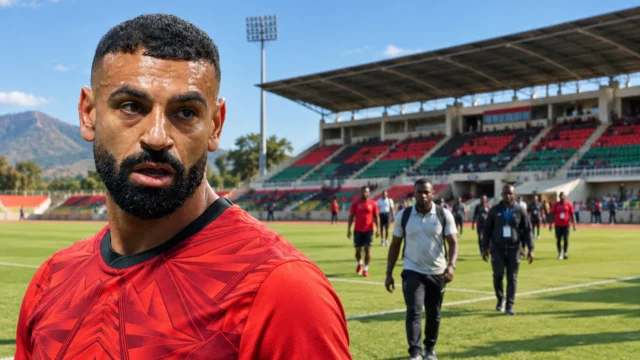
In Egypt’s sporting imagination, Mohamed Salah is more than a goalscorer. He has become a point of reference. When his name circulates in a European or Middle Eastern transfer window, the reverberations quickly reach beyond football. They touch on Egypt’s image, the commercial power of a leading African player and the dynamics of a market where a rumour can sometimes carry as much weight as a contract. Caution is warranted in this Turkish case: several media outlets have reported that he is joining Trabzonspor, but Turkish sources and official statements had previously denied an agreement, or said that only negotiations were under way.
On 24 March 2026, Liverpool confirmed that the Egypt international would leave the club at the end of the 2025-2026 season. His departure reopened speculation over his next destination. On 28 July, however, the prospect of a move to Beşiktaş was publicly played down by Turkish sources cited by Anadolu Agency, which said the deal had been put on hold for financial reasons.
The context: a sporting and economic deal
Trabzonspor is no ordinary club. Based on Turkey’s north-eastern Black Sea coast, it remains one of the few clubs outside Istanbul to have a lasting influence on the league. Its name often comes up when Turkish football seeks to break the dominance of Galatasaray, Fenerbahçe and Beşiktaş. The club is also focused on its image. In a highly visible market, a big name can attract sponsors, increase subscriptions and draw international attention. That is precisely what explains the excitement around Salah.
Turkey remains an active market for African players. Clubs recruit for experience, visibility and potential resale. In this context, an Egyptian footballer of Salah’s stature changes the scale of the deal. A possible signing would not be merely a sporting coup. It would also be an image-building exercise for a club seeking to remain visible in Europe, particularly in a season when continental qualification matters as much as the domestic standings.
The facts that can be verified at this stage
The firm point is this: Mohamed Salah did leave Liverpool at the end of the 2025-2026 season, after a long period during which he became a legend on the banks of the Mersey. The English club recalled his record: two Premier League titles, a Champions League, a Club World Cup, a UEFA Super Cup, an FA Cup and two League Cups. Liverpool also published a farewell message in spring 2026.
On Trabzonspor, however, accounts differ. On 27 July, Anadolu Agency reported that Beşiktaş had frozen its discussions with the Egyptian striker. Then, in early August, international sports media reported that the story had shifted towards Trabzonspor, announcing an arrival in Istanbul and a journey to Trabzon. The problem is simple: official sources and reliable news reports are not all in agreement. The story therefore lies somewhere between transfer news, club communications and a media frenzy.
This caution matters to an African readership, often inundated with rumours rapidly exported from Europe. Salah’s case shows how a star born in Egypt can become the subject of global speculation. Information travels fast, but cross-checking remains the only reliable compass. Until the signing is confirmed by the club concerned or by a solid independent source, it should be described as negotiations or talks, not as a completed transfer.
What this saga reveals about Egypt and North Africa
For Egypt, the story goes beyond a single player. Salah has become one of the country’s most powerful sporting figures. His career fuels national pride and rare continental visibility. When a European or Turkish club shows interest in him, Egypt is also in the shop window. Egyptian football, already built around major clubs, the national team and a strong popular following, benefits from this exposure. But it also faces particular pressure: every rumour about Salah is scrutinised as if it were a matter of state.
Across the Arab world and North Africa, the story points to a broader reality. Africa’s leading players are no longer merely symbolic ambassadors. They are sporting, media and commercial assets. Their careers influence clubs’ strategies, supporters’ expectations and the way football markets are viewed outside Europe’s five major leagues. A possible move by Salah to Turkey would therefore affect perceptions of African talent still available on the market.
It would also say something about Turkey itself. For several seasons, the Turkish league has sought to combine prestige, audience and competitiveness. Clubs there bet on names capable of filling stadiums and dominating media coverage. In that context, an Egyptian player of this calibre is more than a reinforcement. He is a marker of power. But that power is fragile, because it depends on financial credibility, sporting coherence and the ability to turn attention into results.
What to watch next
What happens next depends on three things. First, written confirmation from the Turkish club. Then, a possible medical and the publication of a contract. Finally, a response from Salah’s camp, whose communications have carried considerable weight in previous episodes concerning his sporting future. As things stand, the saga says one thing above all: in 2026, Mohamed Salah remains a player capable of reshaping the sporting agenda beyond Egypt, beyond Turkey and even beyond football.