Algeria
 Egypt
 Morocco
 Sudan
 Tunisia
 Benin
 Burkina Faso
 Cabo Verde
 Côte d'Ivoire
 Ghana
 Guinea
 Guinea-Bissau
 Liberia
 Mali
 Mauritania
 Niger
 Nigeria
 Senegal
 Sierra Leone
 The Gambia
 Togo
 Cameroon
 Central African Republic
 Chad
 DR Congo
 Equatorial Guinea
 Gabon
 Republic of the Congo
 São Tomé and Príncipe
 Burundi
 Comoros
 Djibouti
 Eritrea
 Ethiopia
 Kenya
 Madagascar
 Malawi
 Mauritius
 Mozambique
 Rwanda
 Seychelles
 Somalia
 South Sudan
 Tanzania
 Uganda
 Angola
 Botswana
 Eswatini
 Lesotho
 Namibia
 South Africa
 Zambia
 Zimbabwe
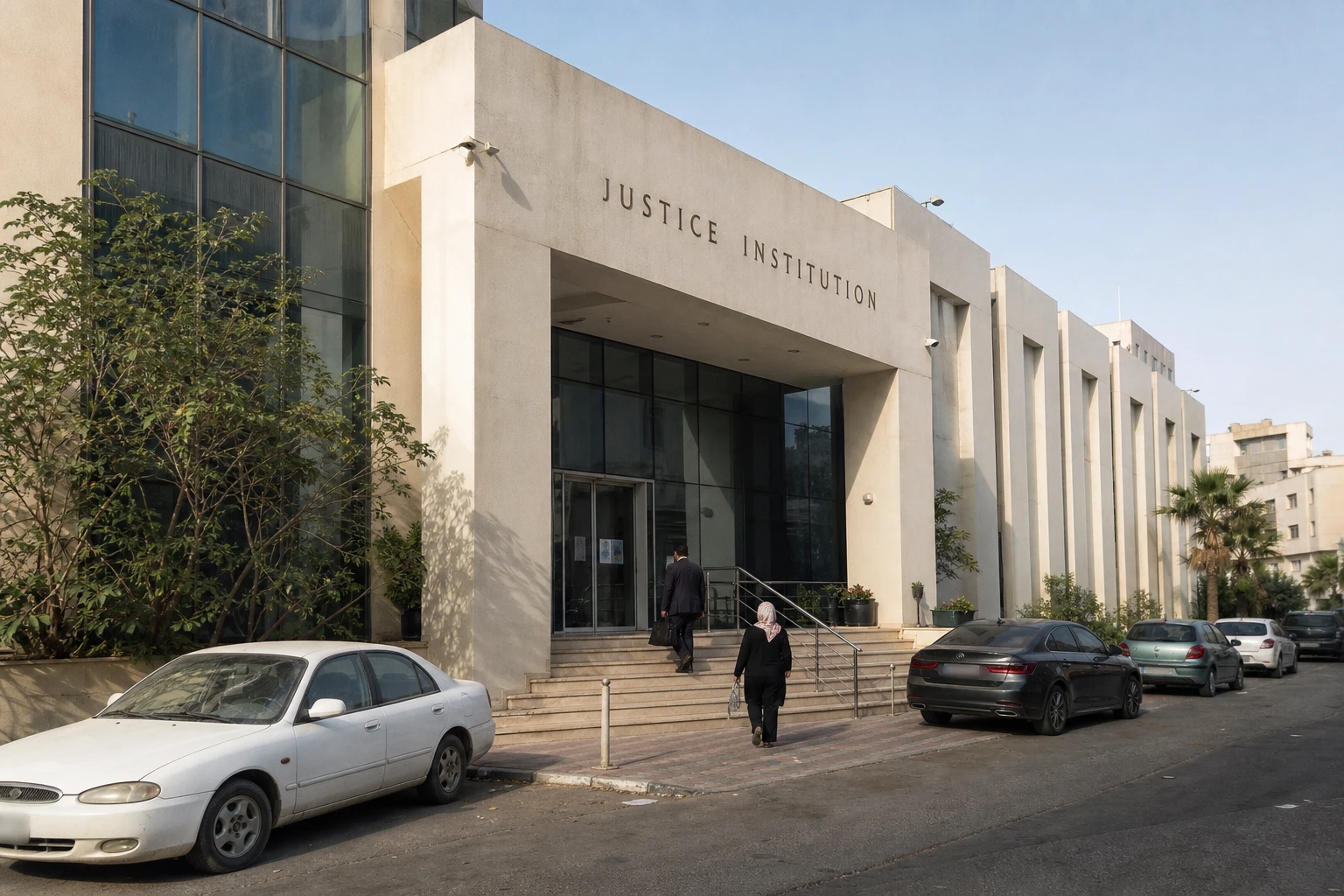
In southern Libya, justice is not decided only in the courts
In Sebha, in Fezzan, a video has served as a reminder that in Libya, the question of justice remains inseparable from that of territorial control. In a country where institutions are still divided between Tripoli and the East, a sentence carried out in public says as much about the state of the rule of law as it does about how authority makes itself visible.
The footage, filmed on 21 July 2026, shows a woman kneeling before a sentence of 100 lashes is carried out in Sebha. The scene circulated widely online and prompted immediate reactions, not least because the punishment was carried out in a public space, whereas Libyan law governing the zina penalty provides, according to several corroborated legal references, for it to be carried out at a police station, in the presence of a prosecutor and a doctor.
Sebha, a flashpoint for law, security and legitimacy
Sebha is not a peripheral city in political terms. It is a hub in southern Libya, at the heart of Fezzan, a strategic area for routes, trade flows, smuggling and tribal balances. In post-2011 Libya, a city of this kind quickly becomes a test of sovereignty. The Government of National Unity, based in Tripoli, remains recognised by the UN, but the East and part of the South fall under the de facto authority based in Benghazi around structures close to the Libyan National Army.
This fragmentation makes every judicial act more sensitive. A criminal ruling is not merely an act of justice; it also becomes a show of order. In the case of Sebha, it was precisely this public spectacle that shocked some members of the public. Human rights organisations and observers have for years pointed out that procedural safeguards remain uneven across the country, particularly in areas where judicial authority depends on local security units or parallel structures.
What Libyan law says, and what people saw in the street
The sentence captured on film relates to Law No. 70 of 1973, which criminalises zina, meaning sexual relations outside a legal marriage. The law provides for a sentence of 100 lashes for both men and women, with the possibility of an additional prison sentence of up to five years. Libyan legal databases and specialist analyses confirm this framework, which remains in force in the relevant body of criminal law.
But the controversy concerns not only the substance of the law. It also concerns the public nature of the punishment. The law and available legal commentary indicate that the sentence must be carried out in a police setting, under judicial and medical supervision. The video from Sebha shows the opposite: a sentence carried out in front of witnesses, in the middle of the street, and immediately published. This discrepancy is fuelling accusations of a breach of procedure.
After the footage was circulated, the judicial police linked to the eastern authorities announced an investigation and the temporary suspension of officials involved in filming and distributing the video. The statement issued on 23 July 2026 refers to an investigative committee tasked with submitting its findings within 72 hours.
Women are the first to face the social enforcement of the law
Beyond the individual case, the affair casts a spotlight on a broader reality: in Libya, accusations relating to morality are often used as a means of social control over women. UN research and human rights organisations have reported that women have faced restrictions on their movement, increased social scrutiny and, at times, pressure over wearing the veil or having a male companion when travelling. A UN document from 2023 had already reported that women and girls were prevented from travelling without a mahram, meaning a designated male relative.
These mechanisms are not confined to written law. They are part of a culture of arbitrariness repeatedly described by international bodies. A 2024 report by the Office of the High Commissioner for Human Rights highlights the deterioration of civic space and the persistent obstacles to the effective exercise of women’s rights. This echoes findings by NGOs such as Human Rights Watch and Amnesty International, which note that zina charges can also weigh on victims of sexual violence, exposing them to shame, blackmail or pressure to withdraw complaints.
In this context, the scene in Sebha is shocking not only because it is brutal. It is shocking because it points to a system in which social discipline can take precedence over legal protection. For men, the sentence may be an expression of a local balance of power. For women, it often becomes a deterrent that extends beyond criminal law, affecting divorce, child custody, access to administrative procedures and family reputation.
What the affair reveals about Libya and the region
Libya is not alone in this debate. Across North Africa and the Sahel, the relationship between religious norms, positive law and procedural safeguards is a recurring issue, particularly in contexts of unfinished political transition. At a continental level, the Libyan case is a reminder that a negotiated peace is not enough to create a state governed by the rule of law. Without unified institutions, a clear judicial chain of command and effective protection for those seeking justice, justice can become local, visible and sometimes theatrical.
For Tripoli and Benghazi alike, the issue goes beyond online outrage. It concerns the credibility of the judicial system, the discipline of security forces and the authorities’ ability to enforce a common procedure across the entire country. It is also a question of political timing. As long as the country remains divided between rival institutions, every sensitive case becomes a test of governance. And every failed test further erodes Libyans’ confidence in the very idea of national justice.