Algeria
 Egypt
 Libya
 Morocco
 Sudan
 Tunisia
 Benin
 Burkina Faso
 Cabo Verde
 Côte d'Ivoire
 Ghana
 Guinea
 Guinea-Bissau
 Liberia
 Mauritania
 Niger
 Nigeria
 Senegal
 Sierra Leone
 The Gambia
 Togo
 Cameroon
 Central African Republic
 Chad
 DR Congo
 Equatorial Guinea
 Gabon
 Republic of the Congo
 São Tomé and Príncipe
 Burundi
 Comoros
 Djibouti
 Eritrea
 Ethiopia
 Kenya
 Madagascar
 Malawi
 Mauritius
 Mozambique
 Rwanda
 Seychelles
 Somalia
 South Sudan
 Tanzania
 Uganda
 Angola
 Botswana
 Eswatini
 Lesotho
 Namibia
 South Africa
 Zambia
 Zimbabwe
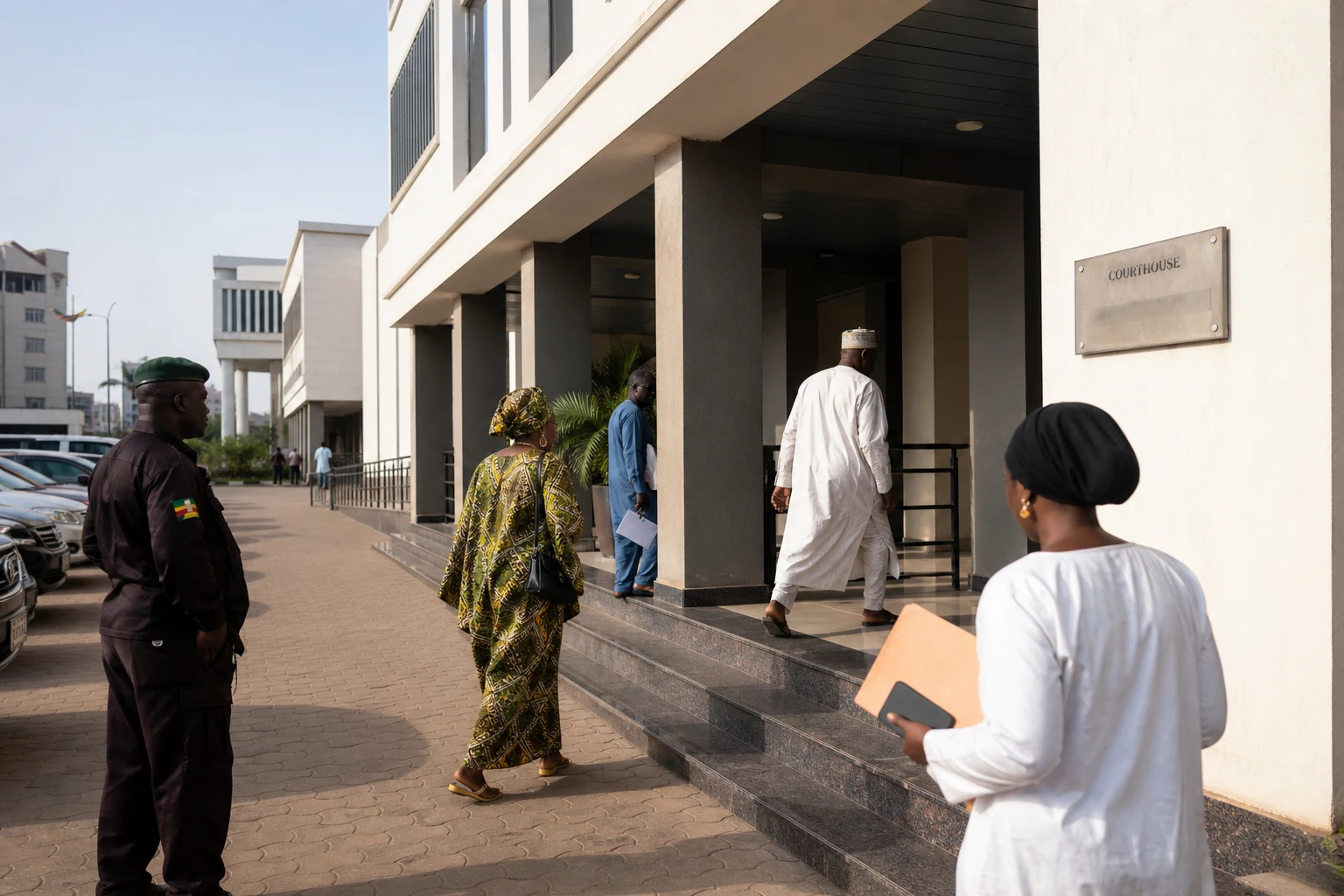
A detention that says more than a case file
In Bamako, prison holds more than just men. It also holds political signals. When an anti-corruption activist remains behind bars for months, the debate quickly moves beyond his personal case. It touches on the right to criticise those in power, the role of judges and the already fragile trust in Mali’s justice system.
Mali has been going through several years of military transition, institutional reshaping and security tensions. At the same time, the country has distanced itself from ECOWAS, the Economic Community of West African States, of which it has no longer been a member since 29 January 2025. This withdrawal has added another layer of complexity to regional balances, as the authorities in Bamako and their neighbours continue to seek a stable framework for political and economic cooperation.
What the Malian justice system decided
Mali’s Supreme Court rejected, on Tuesday 4 August, the appeal on points of law lodged by Clément Dembélé’s lawyers. In other words, the country’s highest court has not opened the door to his release at this stage. The academic and anti-corruption activist therefore remains in detention in Bamako, where he was placed in pre-trial detention on 20 November 2023, after being arrested a few days earlier.
The case rests on accusations of death threats against General Assimi Goïta, the head of the transitional state. But this account is disputed. Procedural issues have already fuelled legal debate, as the investigating judge had at one point issued a dismissal of the case before the public prosecutor appealed. Human rights organisations subsequently denounced the detention as unfounded.
The case has not remained within Mali’s borders. On 16 July 2025, independent United Nations experts sent a communication to the Malian authorities concerning the arrest and detention of Clément Mamadou Dembélé, citing possible violations of the rights to liberty and security of the person, freedom of opinion and expression, and the independence of judges and lawyers.
Fundamental rights, the political climate and a chilling effect
Cases of this kind weigh on more than a single activist. In practice, they send a message to civil society leaders, academics, journalists and opponents: publicly criticising those in power can be costly. In a country where political parties have seen their activities restricted or suspended by the transitional authorities, the boundary between civic action and legal risk is becoming less clear.
The rights at stake are clearly defined in international instruments ratified or cited by the United Nations: no one should be arbitrarily detained, and anyone deprived of their liberty must be able to challenge the legality of their detention promptly before a court. The logic of these standards is simple. An accusation must be examined. But it must not, in itself, be used to silence a critical voice.
Within Mali, the case also resonates against a backdrop of broader tensions. The detention of political figures, the suspension of party politics and pressure on checks and balances are fuelling the sense of a shrinking public sphere. For Bamako residents, the issue is institutional. For the regions, it is also tangible: when debate is shut down in the capital, political tensions often shift to social media, trade unions, associations and local mediation efforts.
A Malian case, a Sahelian signal
Mali is not alone in this situation. Across the Sahel, political transition, security pressures and shrinking spaces for dissent intersect in several capitals. Withdrawal from ECOWAS has further changed the landscape. Bamako must now build other regional bridges, particularly with the Alliance of Sahel States, while managing the practical effects on movement, trade and diplomatic mediation.
In this context, Clément Dembélé’s situation goes beyond the question of his individual liberty. It has become a test. A test for Mali’s justice system, which must demonstrate that it acts according to the law and not the political climate. A test for the transitional authorities, which are seeking to show they can maintain public order without reducing civic space. And finally, a test for African and UN partners, who are watching to see whether human rights protection mechanisms retain real influence on the ground.
The next steps will therefore play out in the courts, but also in the way Mali continues to balance sovereignty, security and civil liberties. That is where the case’s continental significance is ultimately measured: in a Sahel where transitions are hardening, every court decision becomes a reference point for other countries in the region.