Algeria
 Egypt
 Libya
 Morocco
 Sudan
 Tunisia
 Benin
 Burkina Faso
 Cabo Verde
 Côte d'Ivoire
 Ghana
 Guinea
 Guinea-Bissau
 Liberia
 Mali
 Mauritania
 Niger
 Nigeria
 Senegal
 Sierra Leone
 The Gambia
 Togo
 Cameroon
 Chad
 DR Congo
 Equatorial Guinea
 Gabon
 Republic of the Congo
 São Tomé and Príncipe
 Burundi
 Comoros
 Djibouti
 Eritrea
 Ethiopia
 Kenya
 Madagascar
 Malawi
 Mauritius
 Mozambique
 Rwanda
 Seychelles
 Somalia
 South Sudan
 Tanzania
 Uganda
 Angola
 Botswana
 Eswatini
 Lesotho
 Namibia
 South Africa
 Zambia
 Zimbabwe
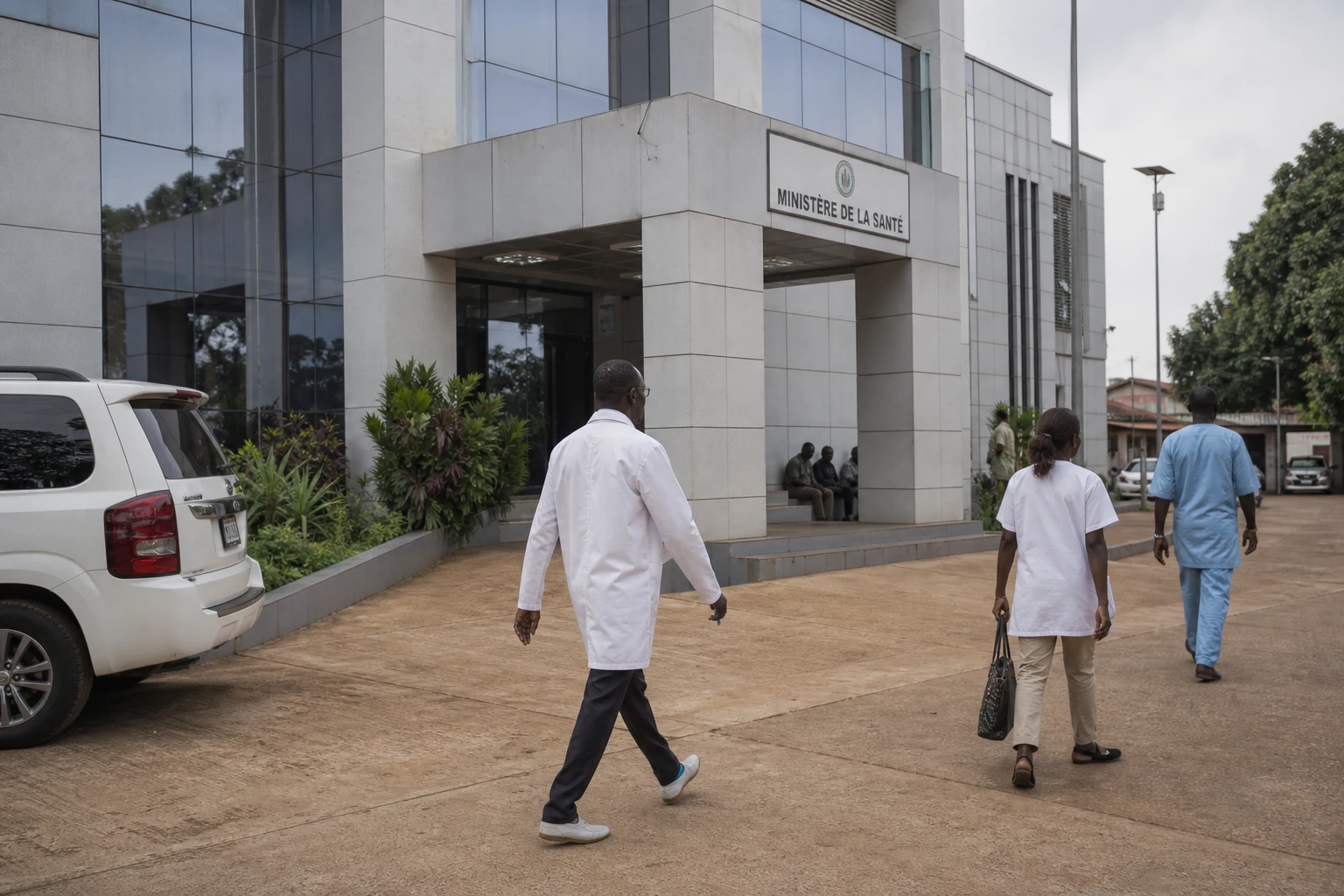
A health alert spreading beyond Bangui
In Bangui, cholera is more than a waterborne disease. Above all, it exposes the fragility of everyday life, where access to safe water, sanitation and prompt healthcare remains unequal. In the Central African Republic, an outbreak can escalate into a public health crisis when it spreads quickly along the Oubangui River, through densely populated neighbourhoods and riverside areas, and across communities where people are constantly on the move.
The issue is all the more sensitive because the CAR is emerging from a period marked by other health alerts and persistent pressure on the health system. The WHO says the country remains exposed to preventable diseases, while humanitarian partners point to significant needs for water, hygiene and continuity of basic services. In this context, cholera is not an isolated episode. It is a test for the state, local authorities and aid networks.
What the figures show and where transmission is concentrated
The outbreak was officially declared on 26 June 2026. Since then, Central African health authorities have reported more than 700 cases and several dozen deaths. Information gathered by UNICEF, the WHO and news agencies points to the same overall trend: the health districts of Bangui 2, Bimbo and Mbaïki are among the worst affected, and transmission is spreading along the Oubangui, a natural border and transport route between the CAR and the Democratic Republic of the Congo.
The most frequently cited toll in the sources consulted is 720 cases and 46 deaths, with a significant proportion of deaths occurring in the community before patients reached hospital. This matters. It shows that the epidemic is not simply a question of hospitals’ capacity. It also depends on transport times, the information families receive and their trust in healthcare facilities. Children are estimated to account for nearly half of recorded cases, increasing the urgency of targeted action in schools, families and riverside neighbourhoods.
The authorities have announced free treatment for patients. They are also preparing an oral vaccination campaign, with a stated stock of 600,000 doses. This strategy follows a trend seen elsewhere on the continent: the WHO and Gavi resumed some preventive campaigns in 2026 after global vaccine supplies improved, but often prioritised a single dose in response to outbreaks in order to protect more people more quickly.
Why the CAR remains vulnerable
Cholera spreads where drinking water is scarce, sanitation is poor and population movements make prevention more difficult. In the CAR, these conditions coincide in several urban outskirts and along the banks of the Oubangui. UNICEF says transmission continues to follow the river, while the UN Office for the Coordination of Humanitarian Affairs has described conditions worsened by the rainy season, low levels of population immunity, limited access to safe water and population movements.
Bangui 2 district accounts for part of the alert, but the issue extends beyond the capital. Bimbo, on the outskirts of Bangui, and Mbaïki, further to the south-west, show how quickly the disease can spread between urban areas, semi-rural zones and river corridors. In this type of crisis, families living far from health centres often pay the heaviest price: longer journeys, delayed consultations and slower rehydration. Field data also point to a simple fact: a sick child who reaches hospital too late is less likely to survive.
The Central African health system, meanwhile, is operating with limited resources. For several years, the WHO has described a network of healthcare services facing logistical disruptions, isolated areas and difficulties in ensuring resources are available. In this context, every epidemic lays bare the same equation: without safe water, latrines, community surveillance and readily available supplies of rehydration solutions, medical treatment often comes after infection has already occurred.
A warning for all of Central Africa
The regional implications are clear. The Oubangui River basin links several Central African countries, including the CAR and the Democratic Republic of the Congo. When an outbreak takes hold along a river route, it can cross borders through markets, local river traffic and family movements. That is why the response can never be purely national. It also concerns CEMAC, which brings together six Central African states, and regional public health and epidemiological surveillance mechanisms.
The region’s past experience with cholera also shows how quickly the disease can take hold. The CAR faced an outbreak as far back as 2016, against a backdrop of humanitarian crisis. In 2026, the continent is still dealing with multiple outbreaks, from the Democratic Republic of the Congo to the Republic of the Congo. The WHO has recently noted that cholera cases and deaths remain high in Africa, underscoring the disease’s links to infrastructure, mobility and unequal access to essential services.
For Bangui, the immediate challenge is therefore twofold: to halt transmission in affected neighbourhoods and communities, while preventing the outbreak from becoming entrenched. For Central Africa, the episode is a reminder that a credible health response depends as much on water, hygiene and surveillance networks as on vaccines. Cholera never advances alone. It spreads where public services are most fragile.