Algeria
 Egypt
 Libya
 Morocco
 Sudan
 Tunisia
 Benin
 Burkina Faso
 Cabo Verde
 Côte d'Ivoire
 Ghana
 Guinea
 Guinea-Bissau
 Liberia
 Mali
 Mauritania
 Niger
 Nigeria
 Senegal
 Sierra Leone
 The Gambia
 Togo
 Cameroon
 Central African Republic
 Chad
 Equatorial Guinea
 Gabon
 Republic of the Congo
 São Tomé and Príncipe
 Burundi
 Comoros
 Djibouti
 Eritrea
 Ethiopia
 Kenya
 Madagascar
 Malawi
 Mauritius
 Mozambique
 Rwanda
 Seychelles
 Somalia
 South Sudan
 Tanzania
 Uganda
 Angola
 Botswana
 Eswatini
 Lesotho
 Namibia
 South Africa
 Zambia
 Zimbabwe
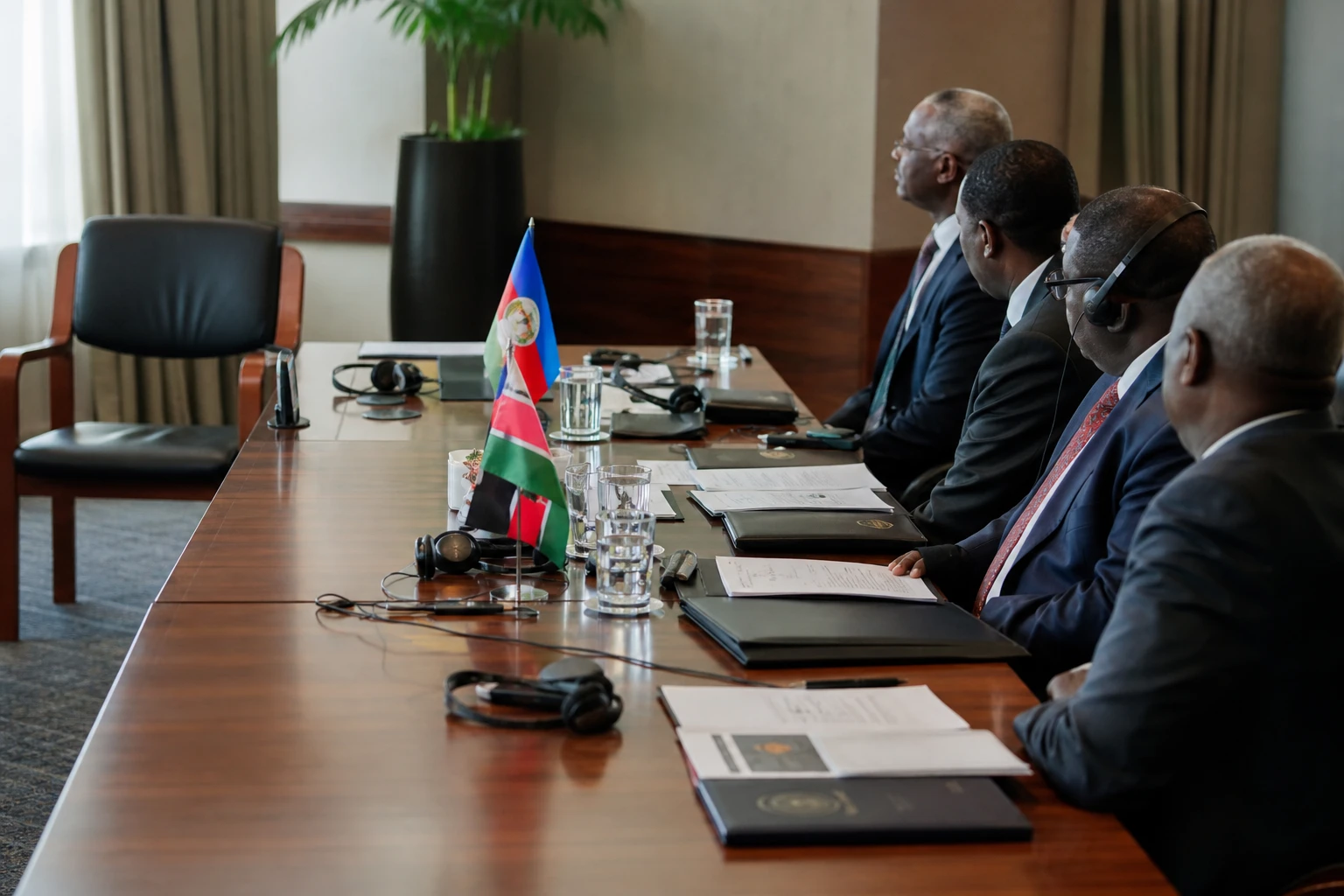
In Goma, mistrust still weighs more heavily than uniforms
In the east of the Democratic Republic of the Congo, a monitoring mechanism is worthless unless both sides accept it first. In Goma, the presence of FARDC officers alongside the AFC/M23 was supposed to ease that mistrust. Instead, it has highlighted the fragility of a ceasefire still hanging on procedural details, names and mandates.
The issue is part of a broader diplomatic sequence, with talks held in Montreux in April 2026, followed by the creation of the Expanded Joint Verification Mechanism, or MCVE+, to monitor commitments made between Kinshasa and the AFC/M23. In the Congolese conflict, such a tool is meant to link events on the ground to political commitments. Without a minimum level of trust, it quickly becomes an instrument of obstruction.
What happened: a deployment, then an expulsion
In mid-July 2026, three Congolese officers were deployed to Goma to represent the FARDC in the mechanism tasked with monitoring the ceasefire. Radio Okapi confirmed their arrival aboard a MONUSCO helicopter, with two lieutenant-colonels and a major. Two weeks later, the mechanism remained stalled after one of them was expelled from areas controlled by the AFC/M23.
According to the Congolese authorities, as reported by several media outlets, the officer was removed without what Kinshasa considered a valid reason, in what it sees as a move intended to delay the mechanism’s start. Sources close to the matter in Kinshasa, for their part, point to a technical error in the transmission of diplomatic notes: one identity was initially submitted, then corrected.
The AFC/M23 gives a different account. The movement says the identity of the officer who arrived in Goma did not match the one officially communicated. It also describes him as a former Congolese military intelligence officer who had previously been based in Goma, and says it suspected an infiltration mission rather than participation in the monitoring mechanism. This account could not be independently verified in the material reviewed and therefore remains attributed.
Why this administrative detail took on political significance
The impasse is far from insignificant. The MCVE+ was specifically intended to act as a safety valve in an environment where each side continues to accuse the other of ceasefire violations. Yet nearly four months after its official creation in Montreux, the mechanism had still not begun work when reports were published in late July. In the east of the DRC, delays to a monitoring mechanism are never merely technical: they prolong uncertainty on the ground.
For Kinshasa, the episode reinforces a familiar reading of the crisis: the AFC/M23 is seeking to control the pace of the process without giving up its advantage on the ground. For the AFC/M23, the alleged presence of an officer whose identity was wrongly reported would instead confirm an attempt at manipulation or covert intelligence-gathering. In both cases, the central question is the same: who controls the information, and who guarantees the safety of representatives sent by each side?
The security context does not help. On 16 July, the United Nations Security Council added Corneille Nangaa and other officials linked to armed groups to its sanctions list, according to the UN. In the days before and weeks after, reported incidents in North Kivu, arrests in Goma and mutual accusations of ceasefire violations sustained an atmosphere of suspicion. The MCVE+ was meant to reduce this opacity; for now, it has been caught up in it.
A test for Kinshasa, and for the Great Lakes region
Beyond the case of one officer, the stakes are regional. The conflict in eastern Congo now goes beyond a simple stand-off between Kinshasa and an armed movement. It involves overlapping mediation efforts, with the African Union, Togo as African facilitator, Switzerland as host of the Montreux process, and MONUSCO providing logistical and political support on the ground. This array of actors shows that no resolution can be lasting without a credible chain of verification.
For the people of Goma, Bukavu and neighbouring rural areas, the issue is tangible: fewer gunshots, less displacement, and less arbitrariness on roads, in markets and along farming routes. For the Congolese state, it concerns the restoration of public authority. For the AFC/M23, it concerns its place in a future political and security framework. The monitoring mechanism is therefore not simply an oversight office. It is a test of mutual recognition in a war where each side wants to be seen without losing control.
What happens next will depend on the two sides’ ability to dispel the suspicion that derailed the mechanism’s launch. If the MCVE+ eventually begins work, it will at least be able to document incidents and assign responsibility. If it remains paralysed, it will become yet another symbol of a peace process that advances on paper but struggles to take hold in the east of the DRC. At the African level, the issue is also a reminder that a ceasefire does not hold on the strength of a signature alone: it requires concrete, verifiable mechanisms accepted by all.