Algeria
 Egypt
 Libya
 Morocco
 Sudan
 Tunisia
 Benin
 Cabo Verde
 Côte d'Ivoire
 Ghana
 Guinea
 Guinea-Bissau
 Liberia
 Mali
 Mauritania
 Niger
 Nigeria
 Senegal
 Sierra Leone
 The Gambia
 Togo
 Cameroon
 Central African Republic
 Chad
 DR Congo
 Equatorial Guinea
 Gabon
 Republic of the Congo
 São Tomé and Príncipe
 Burundi
 Comoros
 Djibouti
 Eritrea
 Ethiopia
 Kenya
 Madagascar
 Malawi
 Mauritius
 Mozambique
 Rwanda
 Seychelles
 Somalia
 South Sudan
 Tanzania
 Uganda
 Angola
 Botswana
 Eswatini
 Lesotho
 Namibia
 South Africa
 Zambia
 Zimbabwe
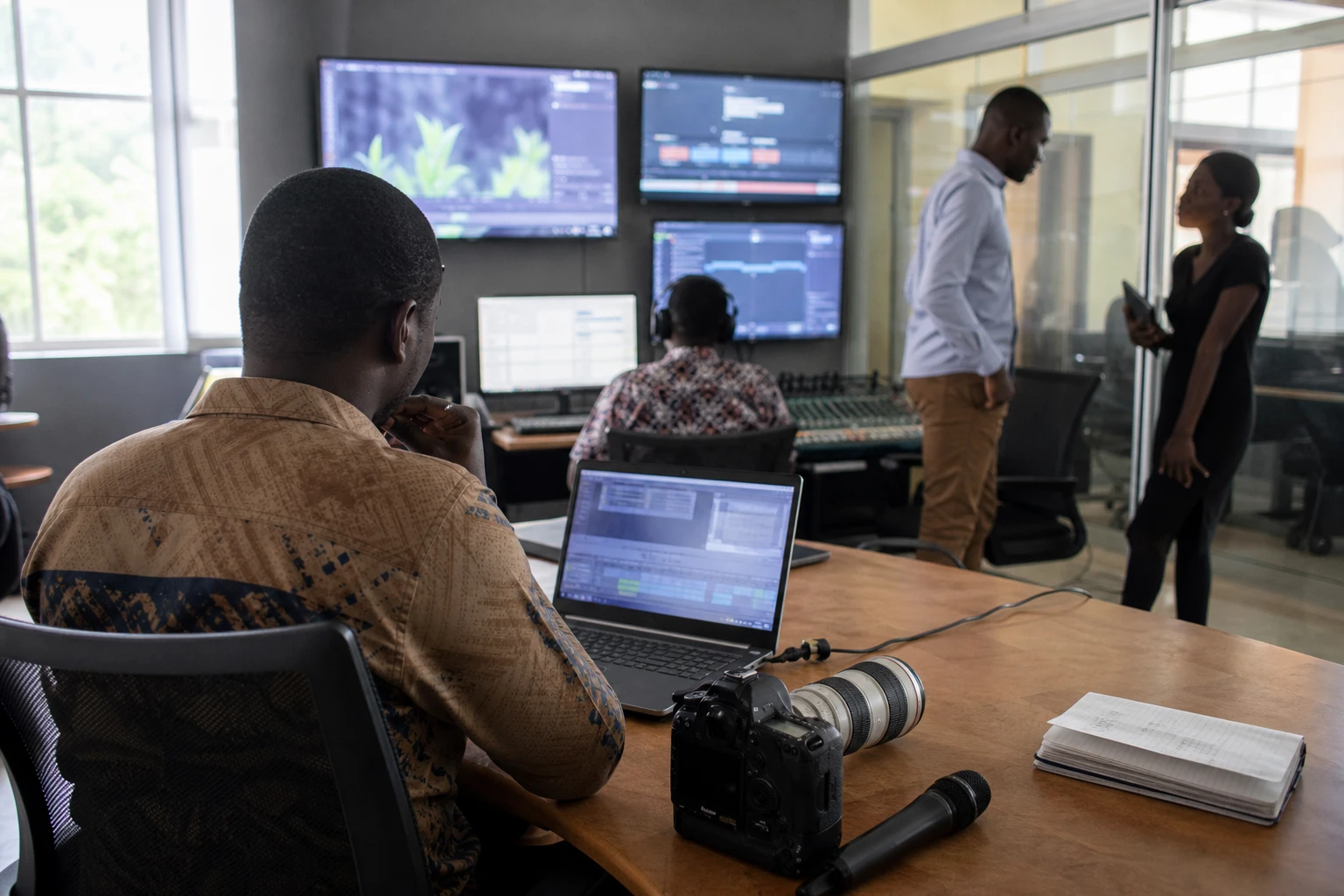
An appointment that says much about Burkina Faso’s current moment
In Burkina Faso, agriculture is not simply an economic sector. It is a social frontline. It affects household incomes, rural employment and the balance of cities such as Ouagadougou, where the effects of poor seasons, food prices and internal displacement are felt. In this context, the arrival of a new representative of IFAD, the International Fund for Agricultural Development, matters beyond protocol. It affects the country’s ability to finance its farming seasons, support small-scale producers and deliver on its promise of food sovereignty.
The timing is also political. Burkina Faso remains engaged in a reshaping of its relations with ECOWAS, the Economic Community of West African States, following its effective withdrawal, alongside Mali and Niger, on 29 January 2025. At the same time, Ouagadougou is narrowing its priorities around the state, security and rural areas. In this environment, donors working on agriculture must contend with more assertive national demands and a regional framework that is less stable than before.
IFAD, a long-standing partner
IFAD strengthened its presence in Ouagadougou by opening a country office in July 2024, in the Ouaga 2000 district. The institution says it has been financing agricultural projects in Burkina Faso since 1981. It also says it has supported 18 programmes and projects, with $461.67 million invested and 623,200 rural households benefiting. These figures, cited in a recent Fund statement, give a sense of a long-standing partnership that is now more visible locally.
The latest known agreement between Burkina Faso and IFAD, signed recently, is worth $59 million and aims to strengthen agricultural resilience to climate change. The project targets agri-food value chains and climate adaptation in particular. The message is clear: in a country where agriculture employs nearly 80% of the active population, rural financing is not an adjunct to development, but a strategic cornerstone of public policy.
Across the sub-region, this approach also resonates with debates on green finance in the Sahel. During a discussion in Ouagadougou in March 2025, IFAD cited additional financing of 121 billion CFA francs, or about $197.2 million, directed towards climate risk management and green finance. This envelope is more than just a figure. It shows that Burkina Faso’s partners now view agriculture through the lenses of food security, water, climate and social stability.
Who is Noël Koutéra Bataka, and why does his appointment matter?
Noël Koutéra Bataka arrives in Ouagadougou with a background as an agronomist and public policy specialist. IFAD documents describe him as a country director for several portfolios in Central Africa, with responsibilities for the Central African Republic and Equatorial Guinea. Other Fund records have already referred to him as a country director in its West and Central Africa Division. In other words, he knows the institution’s workings and the constraints facing fragile or transitional countries.
His appointment comes after a period of institutional uncertainty. In March 2025, an IFAD regional director had already discussed the appointment of a country director “as soon as possible” with Burkina Faso’s foreign minister, Karamoko Jean Marie Traoré, according to the Burkinabè ministry. The episode shows that the appointment of a representative was not merely an administrative move, but an expected part of the cooperation framework.
On the same day, the new United Nations resident coordinator, Njoya Tikum, also took up his post in Burkina Faso on 18 July 2026, following his appointment by the UN secretary-general. The coincidence of the two arrivals is not insignificant. It points to a period of adjustment for the UN system in Ouagadougou, against a backdrop of strained relations between the Burkinabè authorities and the UN, including the declarations of persona non grata targeting Barbara Manzi in December 2022 and Carol Flore-Smereczniak in August 2025.
What this means for Burkina Faso’s farming seasons
The practical impact of an appointment such as Noël Koutéra Bataka’s is measured at farm level, not just in offices. For cereal producers, livestock farmers, rural women and young people seeking an income outside the capital, the question is simple: will programmes be rolled out faster, better target vulnerable areas and mobilise more credit and infrastructure? IFAD says it is working in Burkina Faso on inclusive institutions, diversified livelihoods and equitable access to resources.
In a country where pockets of fragility remain significant, the challenge is not limited to production. It also involves roads, storage, marketing and climate risk management. When these links fail, the effects are concentrated among rural households, but also reach urban markets, where food prices can rise quickly. IFAD project documents also note that climate vulnerability and insecurity continue to weigh heavily on programme implementation.
For the Burkinabè authorities, this cooperation clearly has political value. Captain Ibrahim Traoré’s government has made an agricultural offensive and food sovereignty central pillars of its economic policy. In March 2025, the foreign ministry welcomed IFAD’s commitment to support this direction. The appointment of a fully accredited representative therefore enables more direct dialogue on national priorities, without the message being diluted among several interlocutors.
A regional impact beyond Ouagadougou
The Burkina Faso issue also matters to West Africa as a whole. The country’s withdrawal from ECOWAS has weakened the sub-region’s institutional framework, even as climate and security crises demand coordinated responses. In this landscape, specialised donors such as IFAD become actors of continuity. They can help keep agricultural projects going even as regional political structures shift.
For the African Union and the continent’s development institutions, the signal is broader still: rural financing remains one of the few tools capable of linking food security, youth employment, women’s autonomy and territorial stability. Burkina Faso is putting this to the test on a large scale. What follows will depend on project implementation, the speed of disbursements and the ability to make results felt in the most exposed provinces. That is where the real value of this new phase of cooperation will be measured.