Algeria
 Egypt
 Libya
 Sudan
 Tunisia
 Benin
 Burkina Faso
 Cabo Verde
 Côte d'Ivoire
 Ghana
 Guinea
 Guinea-Bissau
 Liberia
 Mali
 Mauritania
 Niger
 Nigeria
 Senegal
 Sierra Leone
 The Gambia
 Togo
 Cameroon
 Central African Republic
 Chad
 DR Congo
 Equatorial Guinea
 Gabon
 Republic of the Congo
 São Tomé and Príncipe
 Burundi
 Comoros
 Djibouti
 Eritrea
 Ethiopia
 Kenya
 Madagascar
 Malawi
 Mauritius
 Mozambique
 Rwanda
 Seychelles
 Somalia
 South Sudan
 Tanzania
 Uganda
 Angola
 Botswana
 Eswatini
 Lesotho
 Namibia
 South Africa
 Zambia
 Zimbabwe
Private wealth sheds light on Morocco’s power structures
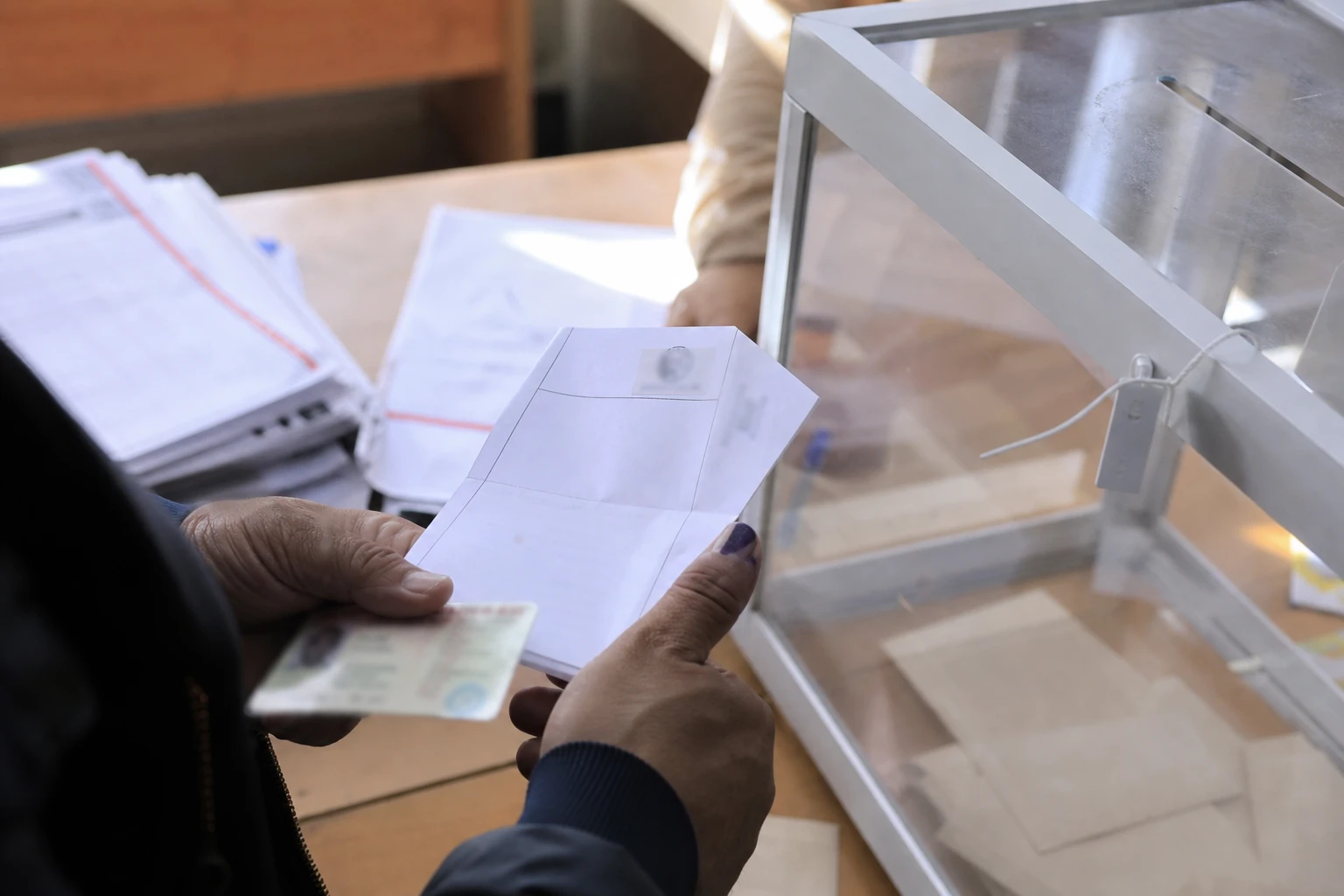
In Morocco, wealth is never just a matter of assets. It also says something about the influence of major groups in the economy, the overlap between business and power, and Rabat’s role in public decision-making. With parliamentary elections scheduled for 23 September 2026, this mix is attracting particular attention as social debate remains heated around public services, employment and regional inequalities.
The country is part of a region where the rise of private champions is often presented as a lever for economic sovereignty. In North Africa, Morocco is pursuing a highly structured industrial and financial strategy, but wealth is also heavily concentrated in a handful of major conglomerates, often with little transparency beyond their listed companies.
The visible billionaire trio, and other fortunes that are harder to measure
The global ranking published in 2026 lists three Moroccan billionaires: Othman Benjelloun and his family, Aziz Akhannouch and his family, then Anas Sefrioui and his family. Their fortunes are valued at $1.7 billion, $1.6 billion and $1.3 billion respectively. Morocco thus has three representatives on Africa’s billionaire list, placing it behind South Africa, Egypt and Nigeria, but in a tightly packed group of continental leaders.
Beyond this trio, calculations become less certain. Alami Lazraq and Moulay Hafid Elalamy appear in a bracket of wealth estimated at hundreds of millions of dollars, but unlisted holding companies, private transactions and asset restructurings make the exercise much less reliable. This is precisely where Morocco stands out: a significant share of wealth is reflected in stakes, asset sales or control structures that escape the radar of conventional rankings.
The sovereign’s wealth, meanwhile, remains in a category of its own. Available estimates vary widely between media outlets and from year to year, confirming the lack of a reliable, sustained public measure. This uncertainty stems from the structure of royal assets: indirect stakes, private holding companies, agricultural assets and unlisted companies. Les Domaines Agricoles, for example, remains a major player in Moroccan agribusiness, while Siger retains a central role in the ecosystem controlling assets linked to the kingdom.
Bank of Africa, Akwa, Addoha: fortunes built on key sectors
Othman Benjelloun, now the country’s richest private individual outside the royal family, built most of his wealth around Bank of Africa, a banking group operating in several African countries, and a collection of assets brought together under O Capital Group. At 93, he remains a major figure in Moroccan finance and the expansion of banking across the continent.
Aziz Akhannouch, meanwhile, represents a more sensitive case. The Moroccan head of government, appointed in September 2021, is also the main shareholder in Akwa Group, a conglomerate active in fuel, gas, chemicals and property. Forbes puts his family fortune at $1.6 billion in 2026. His decision not to stand in the 23 September 2026 parliamentary elections or seek another term as head of the RNI was announced in January, without changing the foundation of his assets.
This dual status remains politically charged. Protests by young Moroccans in 2025 targeted economic and social governance, with direct criticism of the overlap between executive power and private wealth. They served as a reminder that the issue is not merely moral. It also affects trust in public decision-making, particularly while the cost of living, healthcare and education remain at the heart of public frustration.
Anas Sefrioui completes the trio. His Addoha group first established itself in affordable housing before expanding into cement and some West African markets. His fortune depends heavily on the Casablanca Stock Exchange, and therefore on share-price movements and property market conditions. His ranking can change quickly, which explains his repeated appearances in and departures from the global list.
What Lazraq and Elalamy tell us about the Moroccan economy
Alami Lazraq illustrates another form of wealth: land, property and tourism projects. His Alliances group remains anchored by a majority stake in a listed developer, making its valuation highly dependent on the market and the cost of financing. The partnership announced with Rixos for projects in Marrakech and Larache shows that Moroccan property continues to look beyond housing, towards hotels and tourism value chains.
Moulay Hafid Elalamy, a former industry minister, first made his fortune in insurance before selling Saham Finances to South Africa’s Sanlam group. Since then, he has redeployed his capital. The acquisition of Société Générale’s Moroccan operations and La Marocaine Vie led to the creation of Saham Bank, while his group strengthened its presence in insurance and services. His wealth is harder to track than that of the leading trio because it is based on recent transactions and stakes that are less readily visible in public databases.
This configuration says a great deal about contemporary Morocco. Its major fortunes are often linked to the most strategic sectors: banking, energy, property, insurance, retail and agriculture. They benefit from a relatively stable business environment, a solid urban domestic market and an avowedly pan-African outlook. But they also operate in a country where the concentration of capital is fuelling a deeper debate about redistribution, competition and the social responsibility of business elites.
A useful ranking for understanding the coming campaign
At the continental level, Morocco’s case is valuable above all as a revealing example. Few African countries combine, as Morocco does, a powerful monarchy, structured private groups, long-established family fortunes and political leaders drawn from the business world. This distinctive feature gives the national debate greater depth, but also demands that North Africa be viewed through more than macroeconomic indicators alone.
The next milestone is clear: the parliamentary elections on 23 September 2026. Their outcome will not mechanically change the wealth of major groups, but it will say much about how Moroccans once again weigh economic performance against perceptions of injustice and demands for stronger public services. In a country where political power and financial clout often intersect, the vote will also serve as a test of how clearly the Moroccan economy can be understood.