Algeria
 Egypt
 Libya
 Morocco
 Sudan
 Tunisia
 Benin
 Burkina Faso
 Cabo Verde
 Côte d'Ivoire
 Ghana
 Guinea-Bissau
 Liberia
 Mali
 Mauritania
 Niger
 Nigeria
 Senegal
 Sierra Leone
 The Gambia
 Togo
 Cameroon
 Central African Republic
 Chad
 DR Congo
 Equatorial Guinea
 Gabon
 Republic of the Congo
 São Tomé and Príncipe
 Burundi
 Comoros
 Djibouti
 Eritrea
 Ethiopia
 Kenya
 Madagascar
 Malawi
 Mauritius
 Mozambique
 Rwanda
 Seychelles
 Somalia
 South Sudan
 Tanzania
 Uganda
 Angola
 Botswana
 Eswatini
 Lesotho
 Namibia
 South Africa
 Zambia
 Zimbabwe
A monetary choice that goes beyond symbolism
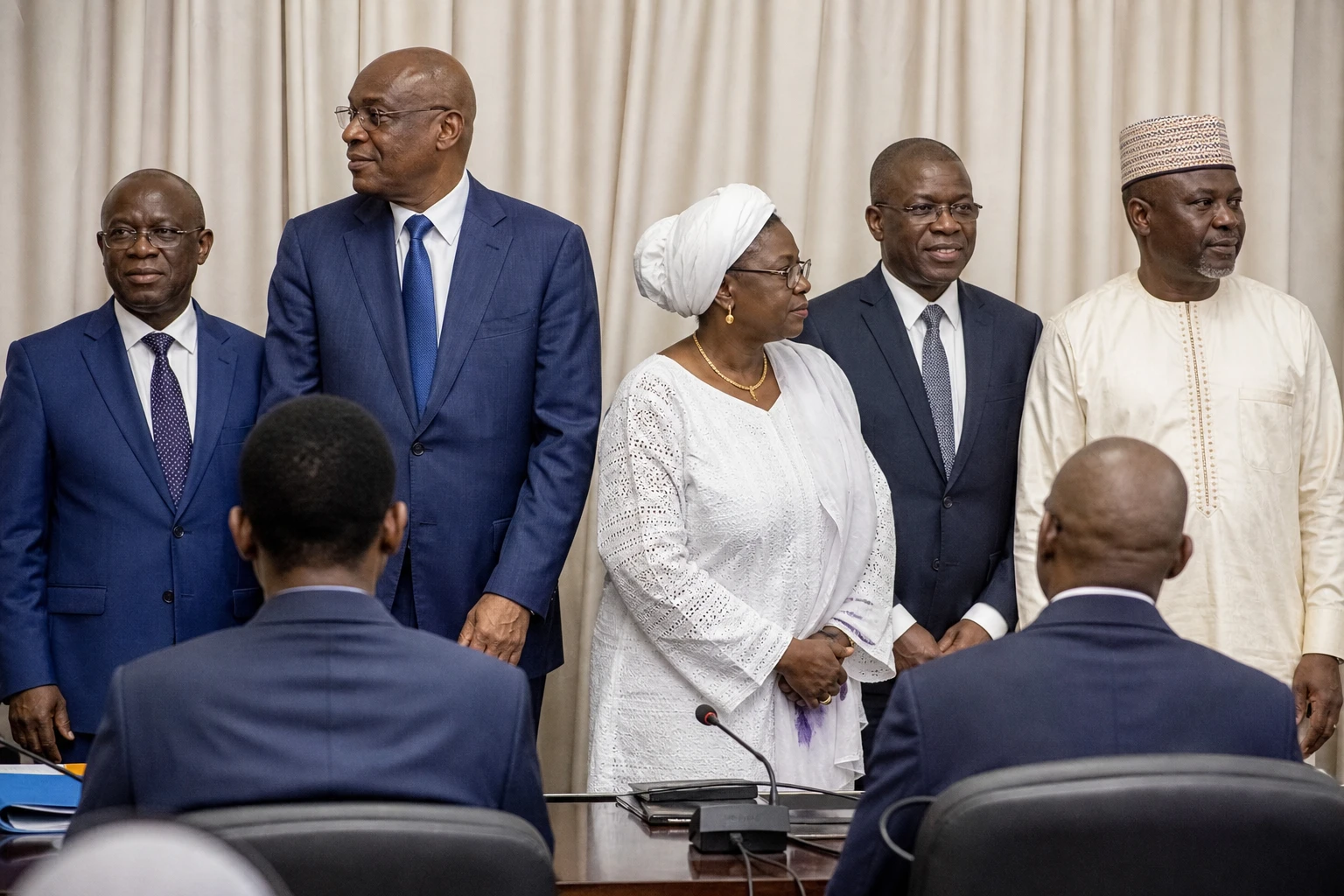
In Conakry, the debate over the eco is not just a question of timing. It touches on a fundamental issue: who sets the value of the currency, and in the service of what economic project? In Guinea, the discussion carries particular weight because the country has long regarded the Guinean franc as a marker of sovereignty.
The choice also reflects a very practical reading of the Guinean economy. The authorities say they want to protect the interests of the population in a country where growth is still driven by mining, infrastructure and major processing projects, but which remains heavily dependent on imports. The Guinean presidency also stresses a strategy of economic sovereignty and reducing external dependence.
ECOWAS moves forward, but the monetary path remains narrow
The West African single currency remains a work in progress. In March 2025, ECOWAS again reviewed the progress of the eco roadmap in Abuja. The final communiqué of the December 2024 summit confirmed that the Conference of Heads of State and Government had yet to set an effective launch date, while calling for reforms to be accelerated and the necessary institutions to be prepared.
In other words, the future regional currency has not entered circulation. It remains a political and technical objective, driven by West African integration but contingent on macroeconomic convergence, institutional arrangements and guarantees on the exchange-rate regime. In 2025, ECOWAS also reaffirmed that the launch of the eco remained on the agenda for its monetary coordination.
In this context, Guinea’s stance is no anomaly. It is a cautious wait-and-see position. Conakry wants clarity before joining a system that would tie its monetary policy more closely to that of its ECOWAS neighbours.
Why Conakry is holding back
The first reason is political. In Guinea, the national currency is not merely a means of payment. It is linked to the history of independence and the idea of controlling the country’s economic destiny. The presidency regularly invokes this dimension of sovereignty, which has featured prominently in public discourse in Guinea since the transition.
The second reason is trade. Figures widely cited in the Guinean debate show that the country’s trade with its West African neighbours remains modest compared with its ties to Asia, especially China. The figure of 16% for regional trade, against 80% with Asia, circulates in public discussions as an argument for caution. I cite it here as an estimate put forward by experts, not as a consolidated official statistic, since available sources differ on the precise breakdown of flows. IMF research and accessible trade data, however, confirm China’s important place in Guinea’s trade, as well as the relative weakness of intra-African trade.
This reality carries considerable weight. A country that imports many manufactured goods and exports mainly mineral resources does not approach a common currency in the same way as a country already closely integrated with its trading neighbours. For Guinea, the issue is therefore not only monetary. It affects import channels, foreign currency reserves, domestic prices and the state’s ability to cushion shocks.
What this means for Guineans
For households, the debate has immediate implications. A common currency does not automatically promise lower prices or more stable purchasing power. Everything would depend on exchange-rate rules, the budgetary discipline of member states and the strength of regional compensation mechanisms. That is precisely why Conakry is seeking assurances before committing.
For businesses, especially those that import, export or operate in several ECOWAS countries, the eco could eventually reduce some conversion costs and simplify payments. But that benefit would require genuine trade integration. Guinea still trades little with parts of its regional neighbourhood, according to World Bank analyses and international trade data.
For the Guinean state, finally, the stakes are strategic. Entering an ill-prepared monetary union too soon would expose the country to significant constraints. Waiting too long, by contrast, could leave it on the sidelines of an integration tool that ECOWAS continues to regard as central. Guinea’s approach is therefore to buy time without breaking with the regional project.
A Guinean decision with regional implications
Guinea’s case is of interest to all of West Africa because it reveals a recurring tension between regional integration and monetary sovereignty. ECOWAS wants a single currency. But each state weighs the project against its own trade structure, macroeconomic stability and political room for manoeuvre.
The discussion also extends beyond West Africa. At continental level, it reflects the challenge posed by the AfCFTA, the African Continental Free Trade Area, which seeks to facilitate trade between African countries without erasing national realities. Guinea, rich in resources and strongly oriented towards partners outside the region, illustrates the gap that still exists between the ambition of integration and the actual structure of trade.
The next stage to watch will unfold within ECOWAS institutions. Monetary discussions, the establishment of the planned institutions and the ability of states to converge on technical criteria will determine whether the eco remains a political promise or becomes a credible instrument for West Africa. Guinea, for its part, clearly wants to enter the debate with its own safeguards, rather than as a mere spectator.