Algeria
 Egypt
 Libya
 Morocco
 Sudan
 Tunisia
 Benin
 Burkina Faso
 Cabo Verde
 Ghana
 Guinea
 Guinea-Bissau
 Liberia
 Mali
 Mauritania
 Niger
 Nigeria
 Senegal
 Sierra Leone
 The Gambia
 Togo
 Cameroon
 Central African Republic
 Chad
 DR Congo
 Equatorial Guinea
 Gabon
 Republic of the Congo
 São Tomé and Príncipe
 Burundi
 Comoros
 Djibouti
 Eritrea
 Ethiopia
 Kenya
 Madagascar
 Malawi
 Mauritius
 Mozambique
 Rwanda
 Seychelles
 Somalia
 South Sudan
 Tanzania
 Uganda
 Angola
 Botswana
 Eswatini
 Lesotho
 Namibia
 South Africa
 Zambia
 Zimbabwe
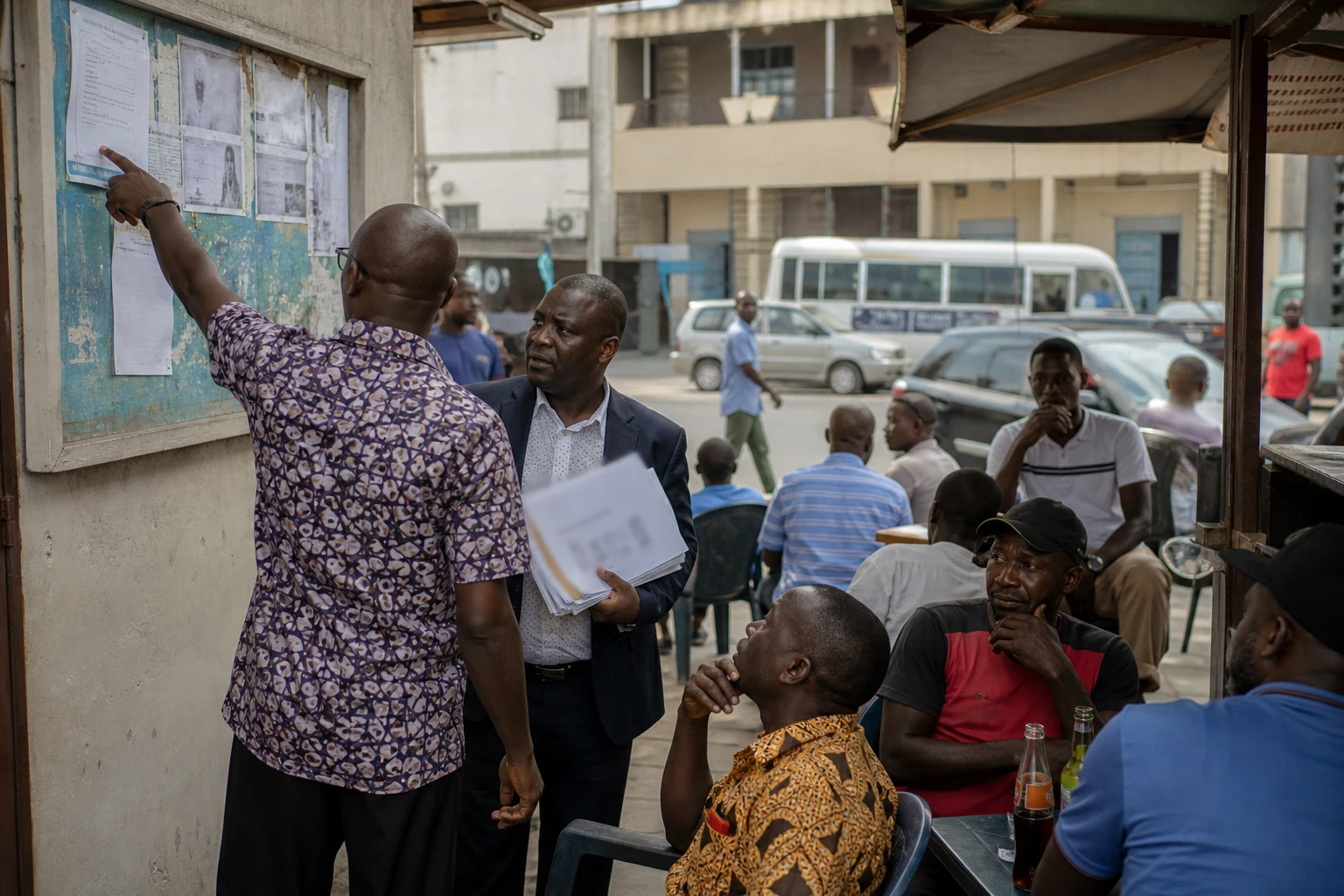
A succession that says something about Ivorian football
In Côte d’Ivoire, the Elephants’ coaching job is never just about names. It is also a question of approach, continuity and the place given to African figures in the continent’s most high-profile projects. The Ivorian national team recently reaffirmed its regional standing by winning the 2023 Africa Cup of Nations, before remaining in the spotlight during the 2026 World Cup, with Emerse Faé still in charge of the Ivorian side.
The issue takes on another dimension because the next major tournament is already on the horizon. The 2027 Africa Cup of Nations will be held in Kenya, Tanzania and Uganda, while the qualifiers have placed Côte d’Ivoire in a tough group with Ghana, Gambia and Somalia. The top two teams in each group will qualify for the finals.
In this context, any debate over the head coach concerns more than the technical staff. It also touches on continuity for a group of African champions, the management of public expectations and the Ivorian Football Federation’s ability to turn continental success into a lasting trajectory.
Faé, Renard, Touré, Deschamps: what the options say
Among the most firmly established facts, Emerse Faé took charge of Côte d’Ivoire in January 2024, in the middle of the Africa Cup of Nations hosted at home, before leading the Elephants to the continental title. The Confederation of African Football notes that he subsequently continued his work with the national team, including in the run-up to the 2025 Africa Cup of Nations and the 2026 World Cup.
In other words, the Ivorian coach is no temporary appointment. He represents a generation of local talent capable of taking charge of a national team at short notice and leading it to victory. That is precisely what makes any hypothetical succession sensitive. When a coaching staff is coming off a winning cycle, the question is not simply how to find a replacement. The federation must also decide whether it wants a break, consolidation or merely a change of image. That question is all the more pressing as the 2027 Africa Cup of Nations qualifiers are already shaping the country’s sporting calendar.
Among the names in circulation, Hervé Renard appears to be the most immediately understandable option. The French coach knows the Ivorian national team, which he led to victory at the 2015 Africa Cup of Nations, and is still regarded as a specialist in African football. But several factors make a return uncertain: his recent commitments, his standing in the national-team coaching market and competition for other African or Asian jobs. On this point, media reports suggesting a return remain speculative.
The other frequently cited option, Kolo Touré, represents a different approach. Born in Bouaké, the former defender has 200 caps for Côte d’Ivoire and represents a more local, identity-driven route, but one that carries greater risks in terms of his experience as a head coach. His spells in professional dugouts have been short, and the available data show limited experience at the highest level. However, his knowledge of the Ivorian dressing room, English football and the discipline required at the very top could appeal to a federation seeking to extend the current core without losing its connection with the public.
The possibility of Didier Deschamps, meanwhile, is more a market scenario than a concrete prospect. His record is formidable. A 2018 World Cup winner and 2022 finalist, he has spent more than a decade building a pragmatic and stable France team. But nothing in the sources consulted suggests that an agreement with Côte d’Ivoire would be realistic. Financial constraints, the coach’s lack of direct experience in Africa and the gap between his remuneration and the usual standards of a federation on the continent make this possibility highly unlikely.
Why the decision matters beyond Côte d’Ivoire
The real issue goes beyond the name in the dugout. In West Africa, Côte d’Ivoire’s sporting success matters well beyond the pitch. It affects the country’s image, the appeal of its domestic football and the symbolic balance of power within ECOWAS, where major sporting nations also serve as regional showcases. A coaching appointment always says something about a federation’s project: whether it values local expertise, international openness or a change in leadership.
For the FIF, the challenge is concrete. The team must enter the 2027 Africa Cup of Nations qualifiers with a stable squad, a clear tactical approach and a credible working environment. The qualifying groups already impose a tight schedule, with West African opponents capable of challenging the defending champions. In these campaigns, inconsistency is costly. A poor start forces a team to chase points, puts the coach under pressure and strains relations with supporters.
For the players, the stakes are different. A change of coach can reshuffle roles, revive the prospects of some established players and sideline others. It can also open a window for younger players. Côte d’Ivoire has plenty of talent to develop, from players already established in Europe to those emerging in domestic leagues. At such a time, the coach’s role is not just to win a match. It is to set standards, establish a hierarchy and define how the team will approach the next Africa Cup of Nations.
At continental level, this issue also highlights a wider trend in African football: the search for a balance between international prestige and local legitimacy. Côte d’Ivoire has shown that a staff from the country can win. It must now decide whether to consolidate that path or return to a more high-profile name. The answer will matter far beyond Abidjan, as national-team programmes across Africa face the same trade-offs: experience, cost, identity and the ability to deliver results quickly.
The next steps will therefore depend less on rumours than on a coherent timetable. Before the 2027 Africa Cup of Nations qualifiers, Côte d’Ivoire will have to make a decision quickly, without losing the psychological advantage built since its continental triumph. A federation’s maturity is often measured at this point: by its ability to turn a moment of glory into a lasting sports policy.