Algeria
 Egypt
 Libya
 Sudan
 Tunisia
 Benin
 Burkina Faso
 Cabo Verde
 Côte d'Ivoire
 Ghana
 Guinea
 Guinea-Bissau
 Liberia
 Mali
 Mauritania
 Niger
 Nigeria
 Senegal
 Sierra Leone
 The Gambia
 Togo
 Cameroon
 Central African Republic
 Chad
 DR Congo
 Equatorial Guinea
 Gabon
 Republic of the Congo
 São Tomé and Príncipe
 Burundi
 Comoros
 Djibouti
 Eritrea
 Ethiopia
 Kenya
 Madagascar
 Malawi
 Mauritius
 Mozambique
 Rwanda
 Seychelles
 Somalia
 South Sudan
 Tanzania
 Uganda
 Angola
 Botswana
 Eswatini
 Lesotho
 Namibia
 South Africa
 Zambia
 Zimbabwe
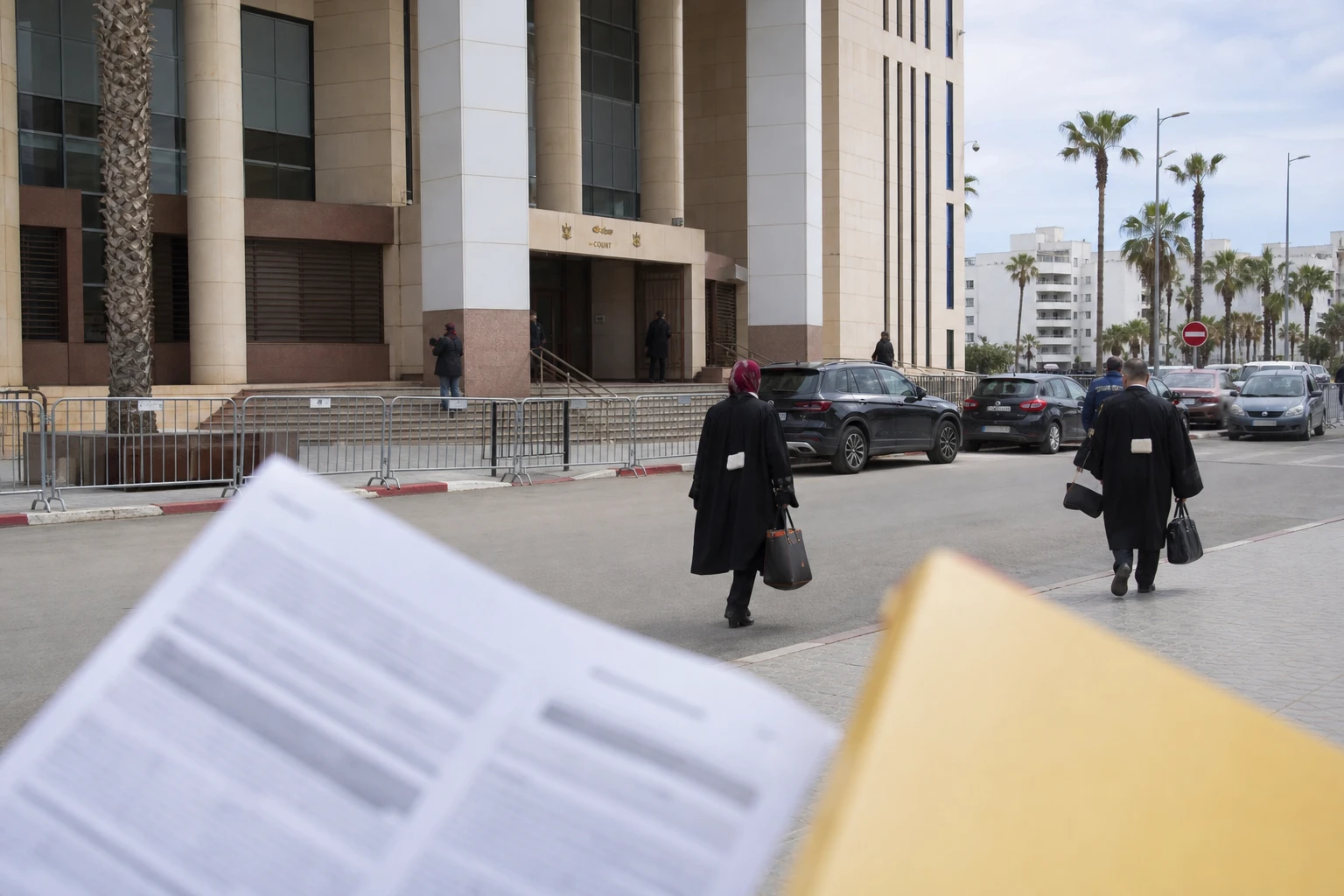
A case that goes beyond one rapper’s story
In Morocco, provisional release never says something only about a criminal case. It also reveals the state of a broader relationship between justice, public expression and the political climate. In the case of Mehdi Black Wind, an artist whose legal name is El Mahdi Lyoubi, this fault line is clear: a musician based in France, who returned home for a short visit and was then caught up in proceedings that quickly took on national significance.
The case comes at a time when young people, social media and artistic expression are playing an increasingly prominent role in public debate in Morocco. It also unfolds at a moment of tension for the justice system and the legal profession, following several work stoppages by Moroccan bar associations in 2026 over a draft law governing the profession. In other words, the case cannot be read only in a Casablanca courtroom; it must also be seen against the broader balance of power surrounding civil liberties in the Kingdom, whose capital is Rabat.
From the airport stop to release from Oukacha
According to information corroborated by several Moroccan and international media outlets, Mehdi El Youbi, known as Mehdi Black Wind, was detained on 10 July 2026 at Rabat-Salé airport as he was preparing to return to France, where he has lived for several years, including in Marseille. He was then held in police custody on 13 July by the National Judicial Police Brigade in Casablanca, before being taken to Oukacha prison on 15 July.
The Aïn Sebaâ Court of First Instance in Casablanca initially rejected his application for provisional release on 22 July, then postponed the hearing until 31 July to allow the defence to prepare and in light of the lawyers’ strike. The case concerned a prosecution for “insulting a constitutional institution”, sometimes described by some media outlets as an attack on institutions, amid criticism in his songs. The trial was ultimately set for 2 October 2026.
On Friday, in the middle of the afternoon, the rapper left Oukacha prison after the court granted his provisional release. One major restriction remains, however: a ban on leaving the country, which could prevent him from returning to France immediately. For now, the change concerns his detention, not the outcome of the legal case.
What the case says about Morocco today
The Black Wind case highlights a reality familiar to observers of Morocco: public discourse has shifted to digital platforms, but institutions continue to respond to critical speech using the traditional tools of criminal law. Supporters present the artist as a politically engaged rapper, concerned with social inequality, corruption and fundamental freedoms. Le Monde also noted that, in several readings of the case, he was linked to the climate of youth mobilisation that emerged with GenZ 212 in autumn 2025.
This episode has a direct impact on artists, cultural journalists and young creators. It is a reminder that fame does not always offer protection, and that lyrics, words and public statements remain open to strict judicial scrutiny. For the family, friends and supporters, the cost is immediate: days of uncertainty, an inability to prepare the defence with peace of mind, and the sudden spotlight on a case extending beyond the artistic sphere. For the state, the risk is different: every decision fuels debate about whether the criminal response to public criticism is proportionate.
The broader social context also matters. In summer 2026, Morocco is facing increased migration pressure in Ceuta, the Spanish enclave on the African continent, with thousands of people departing from the north of the country. Rising tensions around this border are a reminder of how economic frustration, youth unemployment and the desire to leave shape daily life for part of Morocco’s young population. Against this backdrop, a case involving an artist can quickly become a political marker, because it brings together a generation’s expression and the authorities’ concerns.
Regional significance beyond Casablanca
Morocco does not operate in an institutional vacuum. Its North African neighbours, its dialogue with Spain and its position in the Euro-Mediterranean space give this kind of case a significance extending beyond that of a local trial. Casablanca, Salé and Rabat are the anchor points in a broader story: that of a country where people, ideas and works now move across borders. A Moroccan rapper based in France, prosecuted in Morocco and followed by supporters on both sides of the Mediterranean, embodies this fluidity.
The next step is now judicial. The hearing on 2 October will show whether the court upholds the firm line seen at the start of the case or takes a more measured view. For now, the episode mainly shows that the Moroccan authorities are seeking to contain the political impact of a cultural case that has resonated far more widely than expected. Across the continent, it is a reminder of a frequently overlooked truth: in several African countries, music remains a space for dissent, but also a testing ground where states probe the limits of freedom of expression.