Algeria
 Egypt
 Libya
 Morocco
 Sudan
 Tunisia
 Benin
 Burkina Faso
 Cabo Verde
 Côte d'Ivoire
 Guinea
 Guinea-Bissau
 Liberia
 Mali
 Mauritania
 Niger
 Nigeria
 Senegal
 Sierra Leone
 The Gambia
 Togo
 Cameroon
 Central African Republic
 Chad
 DR Congo
 Equatorial Guinea
 Gabon
 Republic of the Congo
 São Tomé and Príncipe
 Burundi
 Comoros
 Djibouti
 Eritrea
 Ethiopia
 Kenya
 Madagascar
 Malawi
 Mauritius
 Mozambique
 Rwanda
 Seychelles
 Somalia
 South Sudan
 Tanzania
 Uganda
 Angola
 Botswana
 Eswatini
 Lesotho
 Namibia
 South Africa
 Zambia
 Zimbabwe
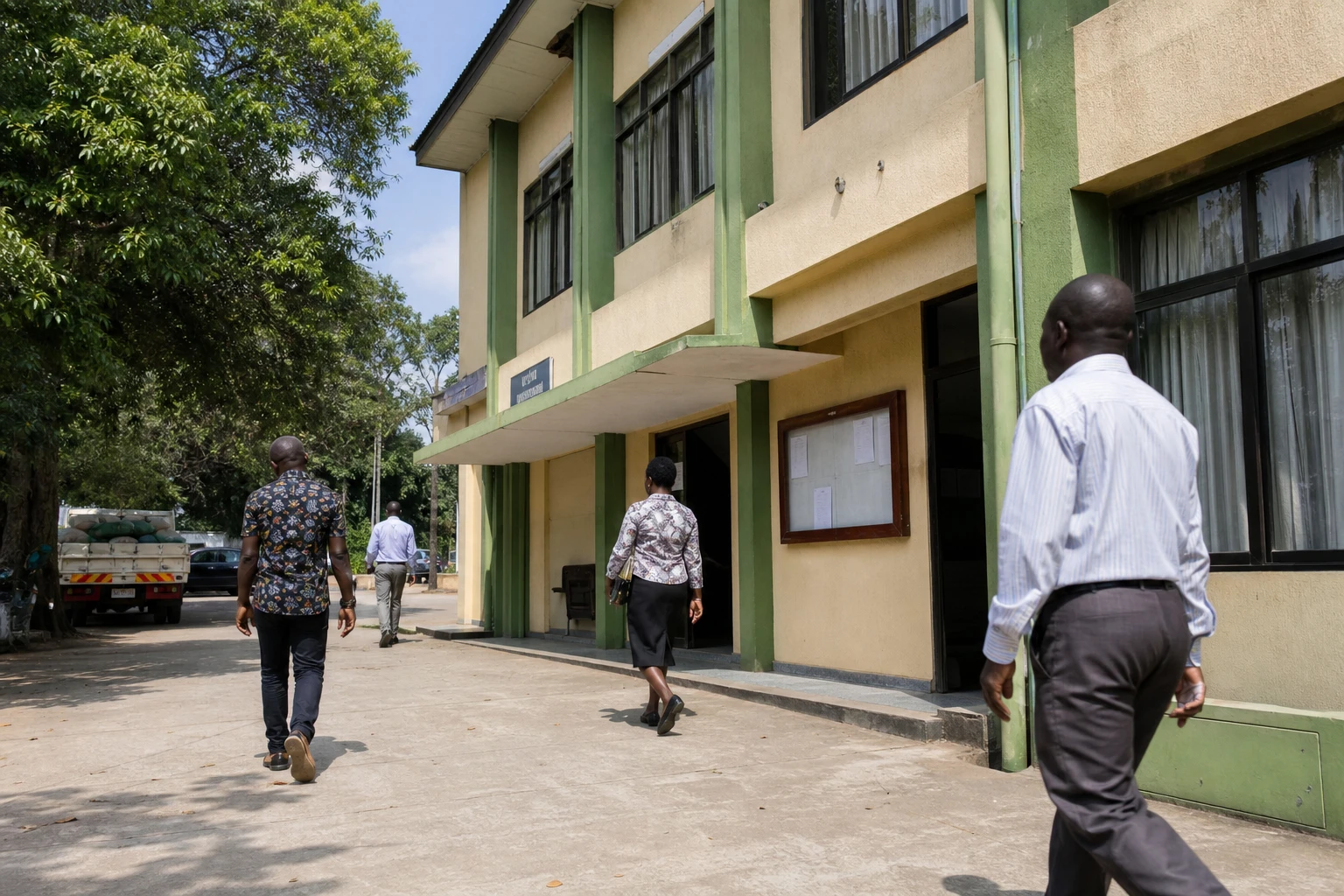
When farm inputs become a question of sovereignty
In Ghana’s rural areas, the cost of farm inputs weighs as heavily on an agricultural season as the weather. When imported fertilisers become more expensive, producers’ margins shrink, and the country’s dependence on foreign markets becomes a genuine food security concern.
In Accra, the government is therefore seeking to shift the balance: less exposure to imported chemical fertilisers, more local processing, and more value retained in the country. This approach forms part of the national agricultural strategy set out under the Feed Ghana programme, which is linked to the 2026 economic transformation agenda, and of agricultural investment projects promoted with support from the FAO.
Memorandum of understanding followed by a planned plant
On 28 July 2026, Ghana’s Ministry of Food and Agriculture signed a memorandum of understanding with Omanbapa AgriTech to launch a project to build an organic fertiliser plant. The agreement was presented as a step towards strategic co-operation on local agricultural solutions.
The project is valued at $10 million. It will begin with a blending unit before scaling up to a full processing plant. The exact site has not yet been decided, but two regions are under consideration: Ashanti and Ahafo. The stated ambition is clear: to produce for the Ghanaian market, then eventually target regional markets.
Initial capacity is projected at between 20,000 and 30,000 tonnes a year, with a target of 60,000 tonnes annually once the project is fully established. Raw materials are to come from agricultural residues, including maize cobs and other crop waste. This approach places the project at the intersection of two issues: soil fertilisation and the reuse of waste that has so far remained largely untapped.
Heavy imports, a market already under pressure
The international context also explains the appeal of this kind of investment. In April 2026, the World Bank said global fertiliser prices were expected to rise by more than 30% in 2026, with urea prices set to increase by nearly 60%, as maritime trade was disrupted by tensions in the Middle East and around the Strait of Hormuz. The institution also noted that the energy and logistics shock was driving up the cost of nitrogen- and phosphate-based fertilisers.
For Ghana, this is no abstract issue. The country does not produce mineral fertilisers domestically, and fertilisers arrive in bulk before being blended and distributed. The IFDC’s 2024 report on fertiliser statistics in Ghana also states that imports fell by 40% in 2023 and fertiliser consumption dropped by 30% between 2022 and 2023. This contraction reflects the fragility of the supply model, as well as the sensitivity of volumes to public budget decisions.
The same report notes that there are few organic fertiliser producers in the country. In other words, the local industry remains in its infancy, while imported mineral fertilisers and agro-distribution networks already dominate the market.
What the plant could change — and what it cannot solve alone
If the project goes ahead, its value will extend beyond producing bags of fertiliser. It could create a value chain around agricultural waste, open up opportunities for collectors and transporters, and establish an industrial approach to an activity often treated as a simple purchase of farm inputs. For producers, particularly medium-sized farms and co-operatives, locally made fertiliser could also shorten supply times and cushion some of the impact of international price shocks.
But the equation remains demanding. Organic fertiliser does not automatically have the same characteristics as mineral fertiliser. Adoption will depend on consistent volumes, reliable quality, the final price and technical support for farmers. In a country where mineral fertilisers still dominate, success will depend as much on trust as on industrial capacity.
The government sees the project as a way to reduce the import bill and support its agricultural modernisation policy. This view is consistent with the current direction: the Ghanaian state wants to secure supplies, develop local industries and attract private capital into agribusiness. The launch of the Feed Ghana programme, the mobilisation of new agricultural investment with the FAO and the emphasis on local processing all point in the same direction.
Impact beyond Ghana
The issue also resonates across West Africa. Ghana is a member of ECOWAS, where the movement of agricultural products, resilient supply chains and market integration remain constant priorities. A plant producing organic fertiliser in Ashanti or Ahafo could therefore eventually supply a more stable regional market, at a time when several countries are seeking to limit their dependence on imported farm inputs.
At continental level, the project illustrates a broader trend: the rise of local production solutions, the circular economy and inputs suited to African soils. It aligns with the agricultural transformation goals of the African Union’s Agenda 2063, while recalling a point that is often overlooked: food sovereignty is not secured only in the fields, but also in factories, warehouses, logistics and public policy.
The real question now is execution. Between the signing of the memorandum and the production of the first tonnes, the project will need to secure land, financing, permits, a raw material supply chain and acceptance among farmers. Only then can the announcement in Accra become a practical tool for productive sovereignty.