
 Algeria
 Egypt
 Libya
 Sudan
 Tunisia
 Benin
 Burkina Faso
 Cabo Verde
 Côte d'Ivoire
 Ghana
 Guinea
 Guinea-Bissau
 Liberia
 Mali
 Mauritania
 Niger
 Nigeria
 Senegal
 Sierra Leone
 The Gambia
 Togo
 Cameroon
 Central African Republic
 Chad
 DR Congo
 Equatorial Guinea
 Gabon
 Republic of the Congo
 São Tomé and Príncipe
 Burundi
 Comoros
 Djibouti
 Eritrea
 Ethiopia
 Kenya
 Madagascar
 Malawi
 Mauritius
 Mozambique
 Rwanda
 Seychelles
 Somalia
 South Sudan
 Tanzania
 Uganda
 Angola
 Botswana
 Eswatini
 Lesotho
 Namibia
 South Africa
 Zambia
 Zimbabwe
A tiny border with huge political repercussions
At Ceuta, just a few hundred metres of sea are enough to unsettle an entire bilateral relationship. When the crossing between Morocco and the Spanish enclave is blocked or opened up, it is not only migration flows that shift. Diplomatic balances, families and the credibility of controls at Europe’s gateways are also at stake.
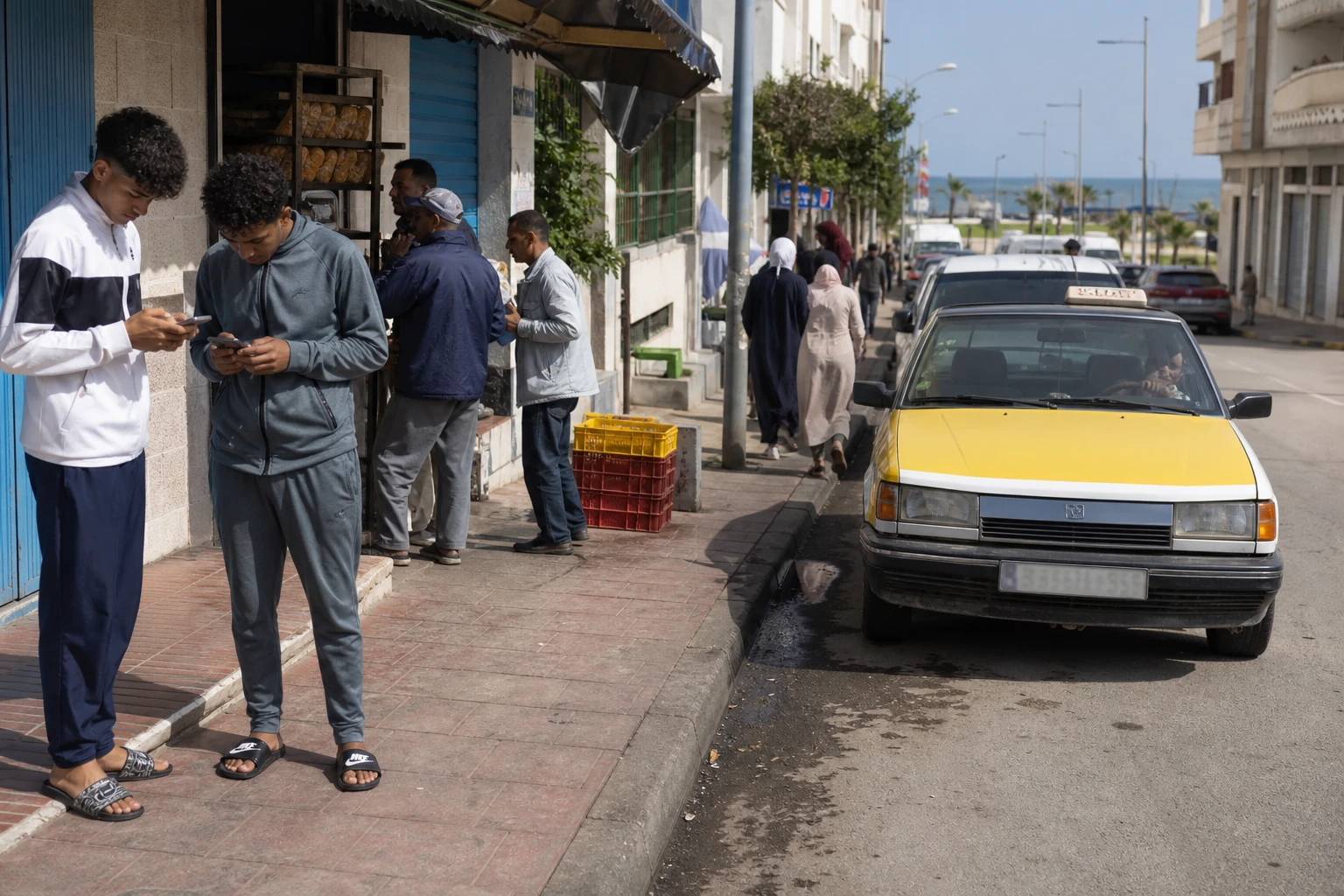
The issue extends far beyond the city of Ceuta. It concerns Rabat, Madrid and Brussels, as well as northern Morocco, where the informal economy, youth unemployment and the closure of legal routes have fuelled recurring migration pressure for years. In this area, Fnideq and Tetouan often feature in local accounts as points of departure, particularly when rumours or gaps in border controls circulate.
What happened in Ceuta in May 2021
The crisis dates back to 17 and 18 May 2021. Over two days, around 8,000 to 9,000 people reached Ceuta from Morocco by sea or by swimming, following a relaxation of controls on the Moroccan side, according to Spanish authorities and several European institutions. The Spanish government immediately described the episode as a serious crisis.
Madrid then announced swift returns to Morocco, relying on bilateral readmission agreements. A few days later, Spain’s interior minister said that more than 6,500 people had already returned to Morocco, out of nearly 8,000 arrivals recorded in Ceuta. Subsequent European estimates put the total number of arrivals over the short period at between 7,000 and 9,500.
For their part, the Moroccan authorities rejected the idea of a simple “opening of the floodgates”. Rabat said the episode was part of broader political tensions with Spain, linked in particular to Madrid’s decision to host Brahim Ghali, the leader of the Polisario Front, for medical treatment. Morocco later reiterated its instruction to address the situation of unaccompanied Moroccan minors living irregularly abroad.
One legal issue quickly came to the fore: the situation of minors. In June 2021, the European Parliament condemned the use of minors by the Moroccan authorities in the Ceuta migration crisis, while human rights organisations reported that young people had been returned to Morocco without sufficient safeguards. This opened a sensitive debate about the best interests of the child, a core principle of international law.
Migration pressure, Schengen law and the balance of power
The crisis also exposed the limits of Europe’s rhetoric on borders. Some officials called for sanctions or a tougher stance towards Spain, but there is no procedure for expelling a state from the Schengen area. The Schengen Borders Code does, however, allow temporary reintroduction of internal border controls in the event of a serious threat to public policy or internal security.
In other words, the real scope for action is not the “expulsion” of a country from Schengen, but the reintroduction of controls at internal borders. Several member states have already used this measure in response to terrorism, migration crises or major summits. In this case, the political pressure mainly served to show that Ceuta is not merely a local issue. It is a gateway to Europe, and therefore a test of the Union’s cohesion.
Morocco faces a twofold challenge. On the one hand, Rabat wants to avoid appearing to instrumentalise borders. On the other, it seeks to underline that migration co-operation with Europe cannot be separated from sensitive political issues, particularly Western Sahara. This link between migration, diplomacy and regional security has long shaped relations between Morocco and the EU.
What this episode still tells us today
The Ceuta crisis left a lasting lesson for North Africa and southern Europe: when regular channels for movement close, borders become zones of social and political tension. In northern Morocco, young people were the first to be exposed to this spiral. In Madrid, the government had to balance control, its international image and the treatment of people who had arrived in an emergency. In Brussels, the episode served as a reminder that the EU’s southern border remains dependent on fragile neighbourhood agreements.
The 2021 precedent therefore continues to matter. It is cited whenever arrivals in Ceuta accelerate, relations between Rabat and Madrid become strained, or the issue of unaccompanied Moroccan minors returns to public debate. For Morocco and Spain alike, Ceuta remains a short border. But it is a border that concentrates, on its own, questions of neighbourly relations, sovereignty and movement across the Mediterranean basin.



