Algeria
 Egypt
 Libya
 Morocco
 Sudan
 Tunisia
 Benin
 Burkina Faso
 Cabo Verde
 Côte d'Ivoire
 Ghana
 Guinea
 Guinea-Bissau
 Liberia
 Mali
 Mauritania
 Niger
 Nigeria
 Senegal
 Sierra Leone
 The Gambia
 Togo
 Cameroon
 Central African Republic
 Chad
 DR Congo
 Equatorial Guinea
 Gabon
 Republic of the Congo
 São Tomé and Príncipe
 Burundi
 Comoros
 Djibouti
 Eritrea
 Ethiopia
 Kenya
 Madagascar
 Malawi
 Mauritius
 Mozambique
 Rwanda
 Seychelles
 Somalia
 South Sudan
 Tanzania
 Angola
 Botswana
 Eswatini
 Lesotho
 Namibia
 South Africa
 Zambia
 Zimbabwe
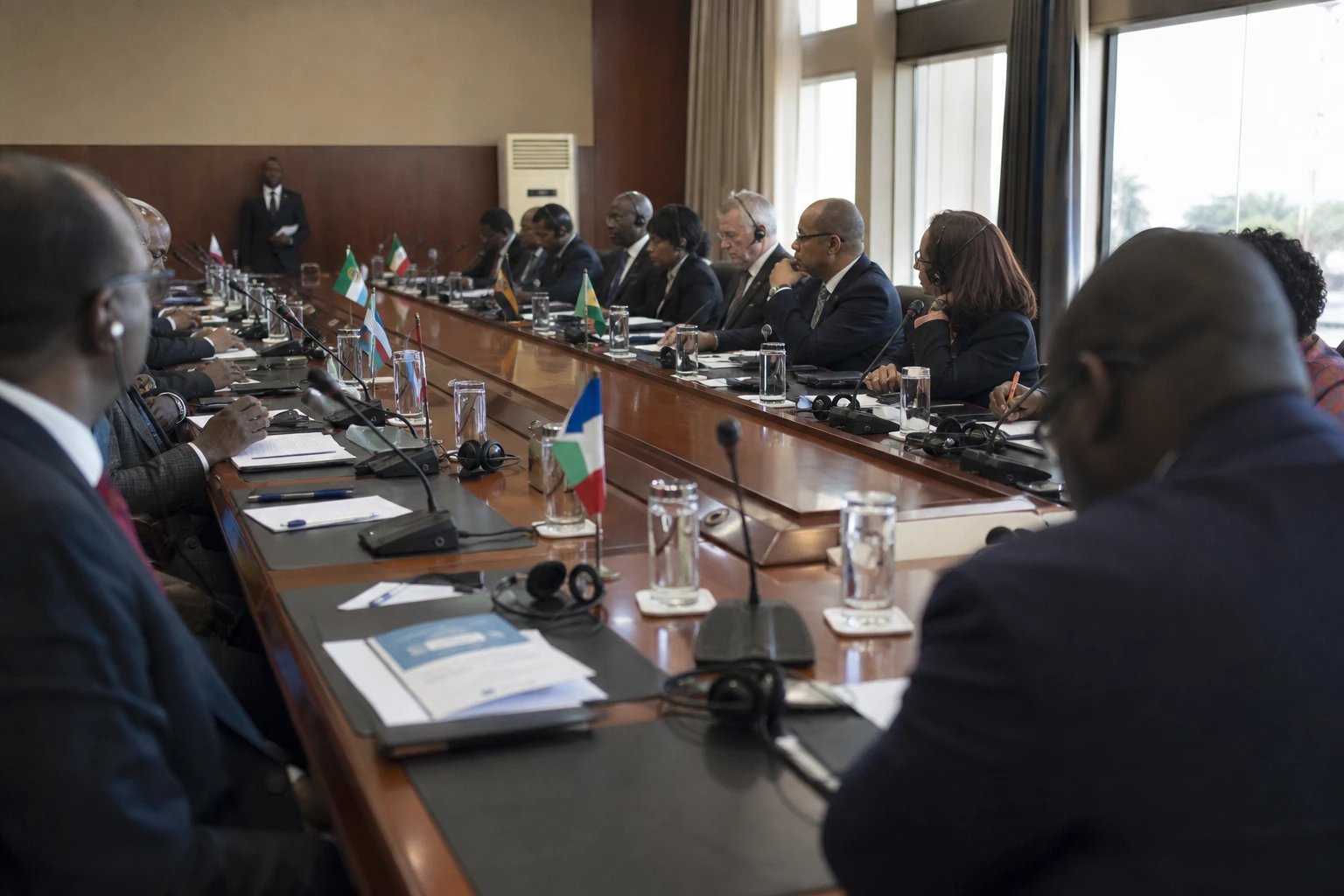
Pressure mounts on civic space in Kampala
Months before a vote that was expected to confirm Uganda’s democratic vitality, the debate has shifted elsewhere: to whether citizens can speak, organise and observe without fear. In a country where the Constitution guarantees freedom of expression, assembly and association, the question is no longer merely legal. It has become political, tangible and visible on the streets, in the courts and even in the work of journalists.
The warning issued by UN mechanisms comes amid an already tense climate. Ugandan authorities have stayed on course for the general election on 15 January 2026, a timetable confirmed by the Electoral Commission. At the same time, local organisations have reported administrative suspensions, arrests and obstacles to media coverage. In Kampala, as in several provincial cities, the campaign has therefore unfolded under surveillance rather than being defined solely by policy clashes.
What the international warning says
The Office of the United Nations High Commissioner for Human Rights said it had received reports of violations targeting opposition figures, human rights defenders and journalists. The figures cited by the UN are stark: at least 50 opposition leaders and supporters, five human rights defenders and five journalists are said to have been affected since the start of the electoral period. UN experts speak more broadly of a climate of fear fuelled by alleged enforced disappearances, excessive use of force and the shrinking of civic space.
In the same case, UN special rapporteurs described an environment in which restrictions had accumulated ahead of the vote. Their official communication refers to arrests of members of the main opposition party, the National Unity Platform, suspensions of civil society organisations and a nationwide internet shutdown two days before the election. It also mentions the case of activist Sarah Bireete, who was held at Luzira Upper Prison after her arrest in late December 2025.
The UN also notes that these concerns are not isolated. More than 550 NUP members and supporters are said to have been arrested in 2025, according to the UN communication, while reports of abductions, incommunicado detention and pressure on the press have multiplied. Under international law, the warning is therefore less about a single incident than a trend: the gradual narrowing of public freedoms at the very moment they should be most protected.
A clear constitutional framework, strained in practice
Uganda’s legal framework is unambiguous. Article 29 of the Constitution protects freedom of expression, freedom of the press, freedom of association and the right to assemble peacefully. Article 38 also recognises every citizen’s right to participate in public affairs. At the same time, the country is bound by its international and regional commitments, including the African Charter on Human and Peoples’ Rights.
On the ground, the problem lies in the gap between the text and its implementation. Ahead of the vote, the authorities have already suspended several human rights organisations, including groups working on electoral transparency and the safety of journalists. The National Bureau for NGOs justified these decisions by citing investigations linked to national security. At the same time, local media have reported attacks on journalists, revoked accreditation and restrictions on radio programmes.
This sequence directly affects how an election is conducted. When independent observers are prevented from moving around, newsrooms self-censor and NGOs suspend their work, it is not only critical voices that disappear. The public’s access to verifiable information is also weakened. In Kampala, this concerns political circles. In the districts, it affects voters more broadly, as well as community radio stations and civil society networks connecting the regions with the capital.
What this means for Uganda and the region
For the government, the issue is short-term political control. For the opposition, it is the very possibility of campaigning on a level playing field. For ordinary citizens, especially young urban people, traders and informal-economy workers who rely on campaigns and social networks, the closure of digital space and fear of arrest restrict public participation as much as they disrupt access to everyday information.
The issue also extends beyond Uganda’s borders. The country is a founding member of the East African Community, a regional organisation bringing together eight partner states and headquartered in Arusha, Tanzania. In this space of movement, trade and political cooperation, tensions over public freedoms in Uganda weigh on the stability of the entire region. They also affect electoral cooperation mechanisms, the movement of observers and the credibility of democratic standards within the EAC.
The continental implications are similar. The African Union and the African Charter place citizen participation and freedom of expression at the heart of public life. When an East African country enters an election period amid tension, the question goes beyond the national case. It points to a challenge shared by many states across the continent: how to hold competitive elections without turning security into a tool for deterring civic participation. In Uganda, the answer will be scrutinised through the next stages of the electoral timetable and the legal or administrative consequences of measures taken before the vote.
The issue, then, is not simply the UN’s criticism. It is the strength of Uganda’s public compact. In Kampala and across the country, the vote will show whether the state still accepts that the opposition, the press and civil society can play their role without being treated as a security problem.